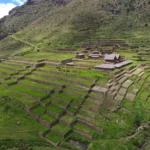
The Salkantay Trek is a 4 or 5 day walk from the high Andes to Machu Picchu, crossing a pass under the south face of Mount Salkantay at 6,271 m (20,574 ft) and dropping into cloud forest on the other side. Most people who choose it over the Inca Trail do so for one simple reason: it needs no permit, so there is no daily quota, no booking deadline and no risk of finding your dates sold out ten months before you travel.
We are Local Trekkers Peru, a locally owned operator based in Cusco. This guide covers the route and the named places along it, how hard day 2 really is, what it costs, when to go, how to get back from Machu Picchu, and whether camping or glamping suits you better. Each section links to a longer article if you want the detail.
What Is the Salkantay Trek?
The Salkantay Trek runs roughly 60 km (37 miles) from the village of Mollepata, or from Challacancha where the road now reaches, about 3 hours from Cusco by road, to Machu Picchu.
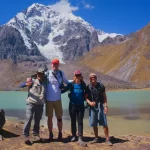
The high point is the Salkantay Pass at 4,630 m (15,190 ft), directly beneath Mount Salkantay itself, at 6,271 m (20,574 ft). Salkantay is the second highest peak in the Cusco region and one of the apus, the sacred mountains, for Quechua communities in the area. On a clear morning it fills the sky above the pass, close enough that the glacier noise carries.
The first night is at Soraypampa, 3,900 m (12,795 ft), a broad grassy basin at the foot of the mountain and the base for the side hike up to Humantay Lagoon at 4,120 m (13,517 ft). After the pass, the route descends for two days through cloud forest to the coffee-growing valleys near Santa Teresa, then reaches Machu Picchu at 2,430 m (7,972 ft), which is by some distance the lowest point of the whole trip.
That descent is what makes this route unusual. You start in high puna with frost on the tents and finish among banana plants and coffee bushes, having passed through four or five ecological zones in as many days.


Why Choose Salkantay Over the Inca Trail
Three concrete reasons, none of them about scenery.
No permits and no quota. The Inca Trail is capped at 500 permits per day for the whole route, and that number includes guides, porters and cooks, leaving roughly 190 to 210 spots for actual trekkers.
Those sell out 8 to 10 months ahead in high season. Salkantay has no permit system, no daily quota and no booking deadline. You can decide in June to trek in July. That single difference is why a large share of our Salkantay bookings are travelers whose Inca Trail dates were already gone, and a growing share are people who never tried for a permit at all.
It runs in February. The Inca Trail closes completely from February 1 to 28 every year for maintenance. Salkantay stays open. If February is when your leave falls, this is not a compromise, it is the only trekking route to Machu Picchu available to you. It rains, and we cover how to handle that below.
The pass is higher. Salkantay tops out at 4,630 m (15,190 ft) against 4,215 m (13,828 ft) on the Inca Trail. If your goal is high mountain country and a glaciated 6,000er at arm’s length rather than Inca archaeology, Salkantay is the better trip on its own merits. The trade is real, though: the Inca Trail ends by walking through the Sun Gate, and no other route offers that.
For a full comparison of the two, including which suits which traveler, see our Salkantay vs Inca Trail breakdown. If you are still weighing the classic route, our complete Inca Trail guide covers permits and timing in depth. And if the cultural side matters more to you than altitude, compare both against Lares in our Lares vs Salkantay comparison.


Itineraries: 4 Days or 5 Days
The 5-day itinerary is the complete version and the one we recommend. Five days gives you the pass, Humantay Lagoon, the full cloud forest descent, the Cocalmayo hot springs and, on the fourth day, the climb to Llactapata, the Inca site that looks straight across the valley at Machu Picchu from the opposite ridge. That view, with the citadel small and distant on the far mountainside, is the thing 4-day trekkers miss. The full breakdown is in our 5-day Salkantay route, campsites and difficulty guide.
The 4-day itinerary covers the same pass and the same highlights up to the hot springs, then moves faster through the lower section and reaches Machu Picchu a day earlier. It suits travelers on a tight schedule and is slightly cheaper. What you give up is Llactapata and one relaxed day. We compare the two side by side in our 4 vs 5 day Salkantay comparison.
For what actually happens on each day, hour by hour, including hiking times and where you sleep, see the Salkantay day by day itinerary.
Best Time to Hike the Salkantay
Dry season, May to September, is the classic window: clear mornings, stable weather, the best odds of seeing Salkantay without cloud, and the coldest nights. June through August are the busiest months and the ones where booking a few weeks ahead is worth it even without permits.
Wet season, November to March, means rain, but not the constant downpour people imagine. Rain concentrates in the afternoon and evening, so most mornings are walkable and the mountain is often clear at dawn. Trails are muddy, the cloud forest section is genuinely humid, and views are less reliable. In exchange you get green landscape, far fewer people and lower prices.
February deserves its own note. With the Inca Trail closed for the entire month, February is when Salkantay carries traffic that would otherwise be elsewhere. It is also the wettest month. Both things are true, and travelers should book it knowing that, not discovering it on day 2. Our guide to the best time to do the Salkantay Trek breaks the year down month by month.
Difficulty and What Day 2 Actually Feels Like
The honest version: Salkantay is a moderate to hard trek in which almost all of the difficulty sits in one day.
Day 2 is the pass day. You leave Soraypampa in the dark and climb steadily to 4,630 m (15,190 ft), which usually takes four to five hours at a pace that will feel absurdly slow if you are fit. Then you descend, and keep descending, for most of the afternoon. It is a long day. The rest of the trek is comfortable by comparison: rolling descent through cloud forest, with warmth and oxygen increasing as you go.
The thing worth understanding before you book is that altitude beats fitness. A marathon runner who flies into Cusco and starts trekking two days later can get altitude sick, while someone considerably less fit who spent four days acclimatizing walks over the pass without drama. Cardiovascular fitness makes the day more pleasant. It does not protect you from the altitude. Both matter, in that order.
What we would train for is not speed but hours on your feet and downhill tolerance, since the descents are longer than the climbs. Our Salkantay difficulty guide breaks the route into sections with real hiking times, and our training and physical preparation guide sets out what to do in the two or three months before you fly.
Altitude and Altitude Sickness
The numbers: Cusco sits at 3,400 m (11,152 ft), the first camp at Soraypampa is 3,900 m (12,795 ft), Humantay Lagoon is 4,120 m (13,517 ft), the pass is 4,630 m (15,190 ft), and Machu Picchu is only 2,430 m (7,972 ft). The trek gets easier as it goes.
Spend 2 to 3 full days in Cusco before you start, and take the first of them easy. This is the single highest-value thing you can do for the trek, and it is also the step travelers most often cut when their flights are tight. The Humantay side hike on day 1 doubles as a useful acclimatization gain, but it is not a substitute for days in Cusco beforehand.
We are a trekking company, not a medical provider, so we do not advise on medication. Speak to a travel clinic or your own doctor before you fly, particularly if you have heart or lung conditions or are pregnant. For the practical side, meaning how to pace the first days and which symptoms mean stop, see our guide to altitude sickness in Cusco.
Cost and What’s Included
For context, the Inca Trail is structurally more expensive: the permit, the entrance fee and the return train are fixed costs that no operator can discount. Salkantay has no permit cost, which is why the entry-level price sits lower and why the spread between the cheapest and the most expensive Salkantay tour is so wide. That spread is not marketing. It is the difference between a shared dome with no heating and a private one, between a guide with a group of eighteen and a guide with eight.
What is almost never included, regardless of operator: the bus from Aguas Calientes up to Machu Picchu, the return train if you booked the Hidroeléctrica bus option, sleeping bag rental, trekking pole rental, travel insurance, tips for the crew, and anything you buy at Cocalmayo or in Santa Teresa. Our Salkantay Trek price guide explains what sits behind each price band and what a suspiciously cheap quote is actually cutting.
What to Pack
The short version, since your duffel has a weight limit:
- Broken-in hiking boots with real tread. The descent is long and wet underfoot.
- Layers: base layer, fleece or down jacket, waterproof shell and pants.
- Warm hat and gloves for the pass, sun hat for everywhere else.
- Trekking poles, particularly for the descent off the pass.
- Sun protection: high-factor sunscreen, sunglasses, lip balm with SPF.
- Headlamp, refillable bottle or bladder, personal medication.
- Swimwear and a quick-dry towel for Cocalmayo.
- Small soles notes for tips, drinks and the hot springs entry.
Nights at Soraypampa can drop to around -5 °C (23 °F). The complete list, with what to leave in Cusco, is in our Salkantay packing list guide. Boots are the one item worth agonizing over, and our guide to choosing hiking boots covers fit and break-in time.
The Highlights You Shouldn’t Miss
Humantay Lagoon, 4,120 m (13,517 ft). A turquoise glacial lake in a bowl below Humantay peak, reached by a steep hour-plus climb from Soraypampa on the afternoon of day 1. It is the single most photographed place on the route and it earns it. Full detail in our complete guide to Humantay Lagoon.
Salkantay Pass, 4,630 m (15,190 ft). The high point, directly under the south face. Trekkers traditionally add a stone to the apachetas, the cairns left as offerings to the apu. Arrive early: cloud usually builds by late morning and the mountain disappears.
Cocalmayo hot springs, near Santa Teresa. Thermal pools beside the river, reached on day 3 or 4 depending on itinerary, and the reason many trekkers rate the second half of this route higher than the first. After two days of cold nights, an hour in hot water changes the mood of the whole group.
Llactapata. An Inca site on the ridge facing Machu Picchu, on the 5-day itinerary only. From the terraces you look straight across the Aobamba valley at the citadel, several kilometers away and roughly at eye level. Almost nobody sees Machu Picchu from that angle.
Getting There and Logistics
The trek starts at Mollepata or, on most current itineraries, at Challacancha further up the same road, around 3 hours from Cusco by private transport. Pickups are early, usually before dawn, so that day 1 finishes at Soraypampa with time for the Humantay hike.
Getting back is where itineraries differ, and it is worth understanding before you book because it affects both price and your last day. Option one: the train. From Aguas Calientes you take the train to Ollantaytambo and continue by road to Cusco, roughly 4 to 5 hours in total. It is comfortable, predictable and the more expensive of the two. Our guide to the trains to Machu Picchu explains the services and classes.
Option two: Hidroeléctrica. You walk or take a short train from Aguas Calientes to Hidroeléctrica, then travel by road back to Cusco, roughly 6 to 7 hours. It is cheaper and it is what most budget itineraries use. The road is winding and the day is long, but plenty of trekkers prefer arriving in Cusco late with money left over.
Camping or Glamping
The trek itself is identical in both formats. Same route, same pass, same guides, same distances. The only thing that changes is where you sleep.
Camping means standard tents at established campsites, with the crew setting up and breaking camp. It is the traditional format, it is cheaper, and for many people the cold night at Soraypampa is part of the story. See our 4-day Salkantay camping trek and the 5-day Salkantay camping trek, which is the version most travelers book.
Glamping means fixed domes or cabins with proper beds, usually with better insulation and, at some sites, a private bathroom. On this route it makes the most difference at Soraypampa, where the altitude and the cold hit hardest and where sleeping badly costs you on pass day. It is the right choice for travelers who want the trek without the camping. See the 4-day Salkantay glamping trek and the 5-day Salkantay glamping trek.
[YOUR DATA: what exactly the glamping accommodation is at each night of the route, since “glamping” ranges from a heated dome with an ensuite to a tent with a mattress, and travelers paying the premium want to know which they are getting.]
Can You Do It Without a Guide?
Yes. Unlike the Inca Trail, Salkantay requires no permit and no licensed operator, and independent trekking is entirely legal. People do it every season, carrying their own gear and camping at the same sites.
The honest case for going with an operator is not that the route is impossible alone. It is logistics and margin for error. You are at altitude, on a pass where weather turns fast, several hours from a road on days 2 and 3, with no phone signal for long stretches. An operator handles transport at both ends, cooking at altitude, the return train or bus, and, if someone gets genuinely altitude sick, getting them down. Independent trekkers also tend to underestimate the cost once transport, entrance fees, the return journey and Machu Picchu tickets are added up: the gap narrows more than expected.
Whichever you choose, if you go with a company, check it properly. Our guide to choosing a Cusco trekking agency sets out what to ask and what the answers should sound like.
Frequently Asked Questions
Do I need a permit for the Salkantay Trek? No. There is no permit, no daily quota and no booking deadline. This is the main practical advantage over the Inca Trail, where permits sell out 8 to 10 months ahead.
How hard is the Salkantay Trek really? Moderate to hard, with the difficulty concentrated in day 2, the climb to 4,630 m (15,190 ft). If you can hike 6 to 8 hours on varied terrain and you acclimatize properly in Cusco first, it is manageable.
Can I hike Salkantay in February? Yes, and it is the only trek to Machu Picchu you can do that month, since the Inca Trail closes completely from February 1 to 28. Expect rain, mostly in the afternoons.
Does the trek end at Machu Picchu? You finish the walking at Aguas Calientes and visit Machu Picchu the following morning, going up by bus. Salkantay does not enter through the Sun Gate: only the Inca Trail does that.
How cold does it get? Coldest at Soraypampa on night 1, around -5 °C (23 °F) in dry season. By the third night you are in cloud forest and it is warm and humid.
Is the 5-day worth the extra day over the 4-day? If you want Llactapata and the view of Machu Picchu from across the valley, yes. If your schedule is tight, the 4-day covers the pass, Humantay and the hot springs.
What if I can’t continue partway through? Descent is the treatment for altitude problems, and the route loses height quickly after the pass.
How far in advance should I book? Because there are no permits, weeks rather than months. In June, July and August, booking a few weeks ahead secures your preferred date and format, particularly for glamping, which has limited capacity.
How to Book with Local Trekkers
We are based in Cusco, we run this route ourselves rather than passing it to a third party, and we operate it in both camping and glamping formats across 4 and 5 days.
If you already know which version you want, the 5-day Salkantay Trek is where most travelers start, and it is the itinerary we would pick ourselves.
If your dates are flexible and you want to compare this route against everything else that reaches Machu Picchu on foot, our guide to alternative routes to Machu Picchu puts them side by side. For the cultural route through weaving communities instead, see the Lares Trek guide.