


Manu Reserved Zone 6 Days – Amazon Wildlife Expedition from Cusco
Journey into one of the most biodiverse places on Earth — the Manu Reserved Zone, a UNESCO World Heritage Site accessible only to a handful of visitors each year. This 6-day Manu National Park tour from Cusco takes you from Andean cloud forest down to the heart of the Peruvian Amazon: navigating wild rivers by motorized canoe, exploring hidden oxbow lakes, watching giant river otters at Cocha Salvador, spotting black caimans, scarlet macaws at clay licks, and — with extraordinary luck — a jaguar on the riverbank.
Fewer crowds. Pristine rainforest. Unmatched biodiversity. Expert local naturalist guides. Best price guaranteed for 2026 & 2027.
 Locations Visited:
Manu Park
Locations Visited:
Manu Park
 Starting Altitude:
3400 masl = 11154 Feet
Starting Altitude:
3400 masl = 11154 Feet
 Highest Point:
4000 masl = 13123 Feet
Highest Point:
4000 masl = 13123 Feet
 Group:
Minimum 2 paxs & Maximum 10 paxs
Group:
Minimum 2 paxs & Maximum 10 paxs
 Physical Grading:
3/5
Physical Grading:
3/5
- We have competitive prices
- Fast customer service all the time
- Guaranteed lifetime experience
- We have social responsibility, we do social work
Itinerary
Manu Reserved Zone 6-Day Itinerary: From Cusco’s Cloud Forest to the Heart of the Amazon
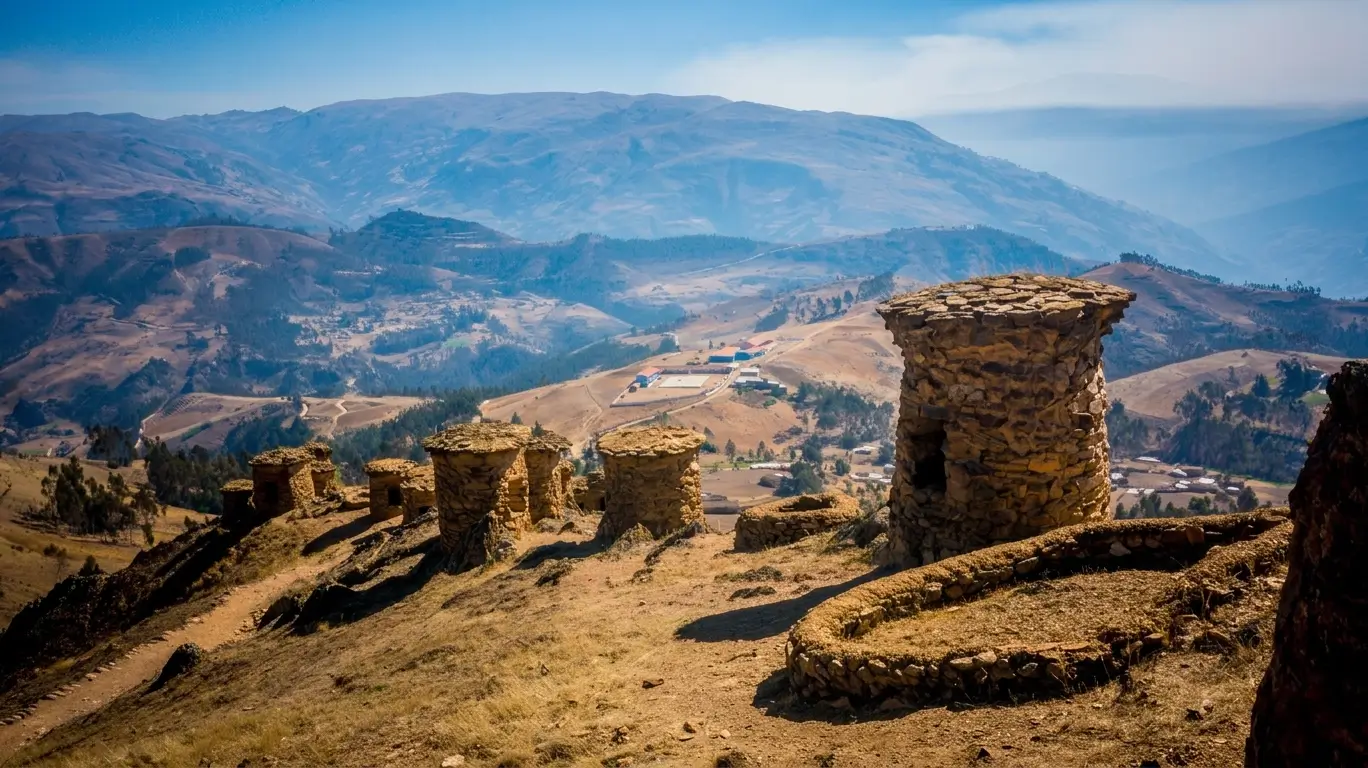
Day 01: Cusco – Paucartambo – Pre-Inca Tombs – Bamboo Lodge
- [4:30 to 5:00 am] – Hotel Pick-up & Departure: We begin early, picking you up directly from your accommodation in Cusco. Settle into our private van for a scenic journey spanning about 8 hours in total.
- [Morning] – Huancarani & Paucartambo: After 1 hour, we stop in Huancarani where you can order breakfast at a local restaurant. Two hours later, we explore Paucartambo, a vibrant colonial town famous for the Virgen del Carmen festival. Next, enjoy a guided visit to the mystical Pre-Inca Tombs of Ninamarca.
- [Mid-Day] – Acjanaco Pass & Cloud Forest: We reach the park’s entrance at Acjanaco (4000 masl = 13123 feet) for a quick briefing. Begin your descent into the mystical Cloud Forest, keeping watch for the vibrant Cock of the Rock, woolly monkeys, and the elusive spectacled bear.
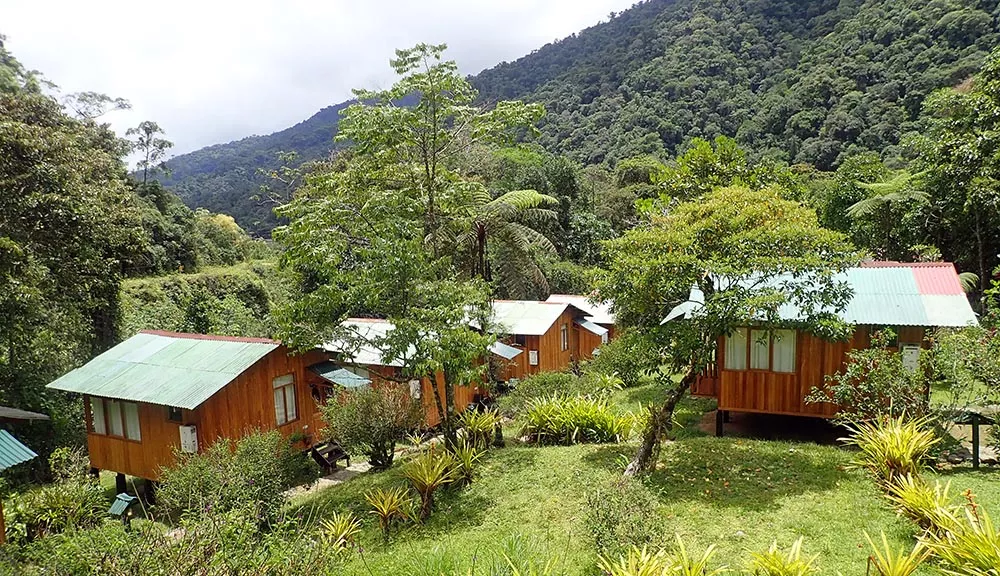
- [Afternoon] – Arrival at Bamboo Lodge: After crossing the lush cloud forest, we arrive at Bambu Lodge. Settle into your private rooms with toilets, showers, and electricity before enjoying a restful dinner surrounded by nature.
Day 02: Bamboo Lodge – Atalaya Port – Machuwasi Lake – Dorado Lodge
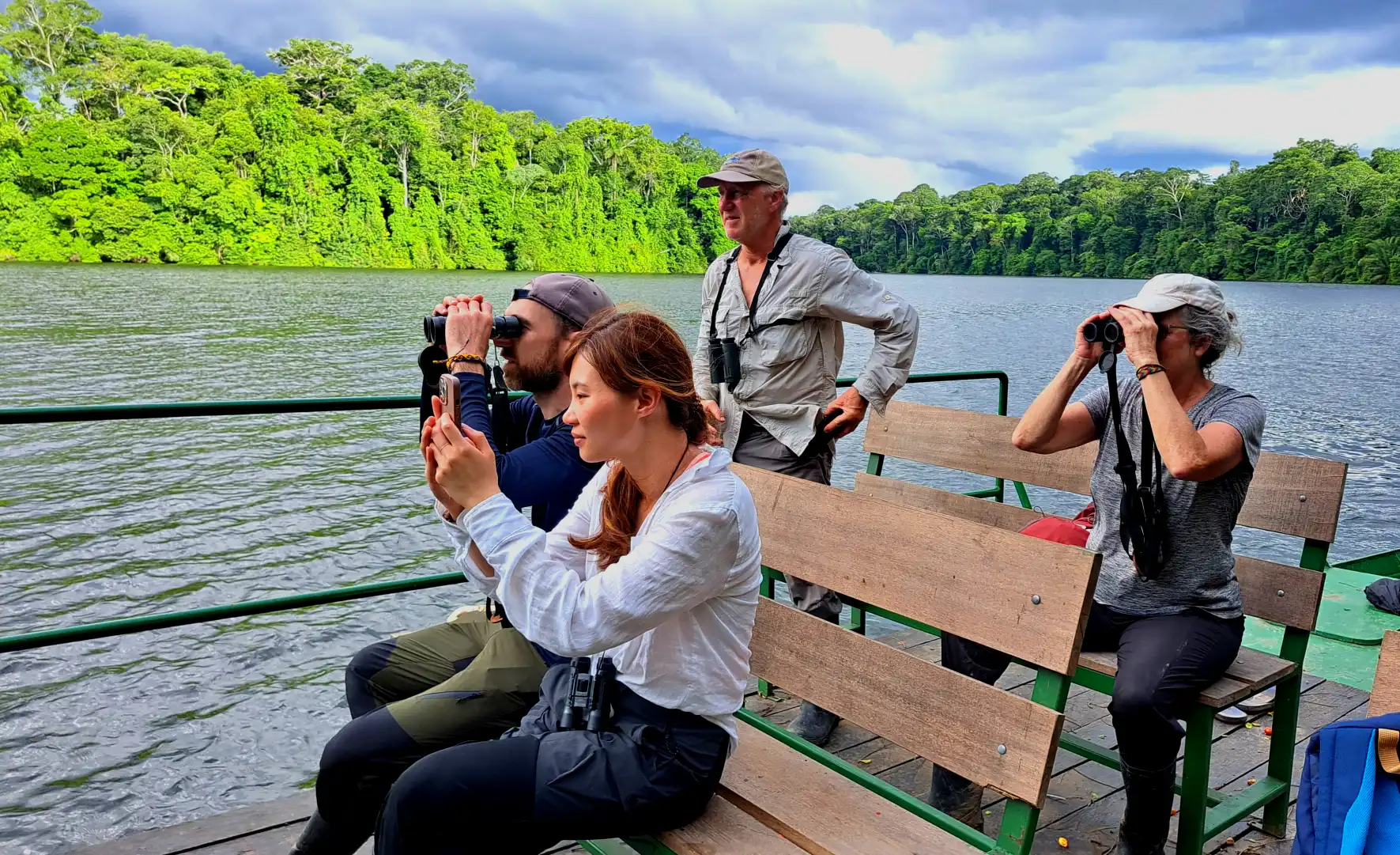
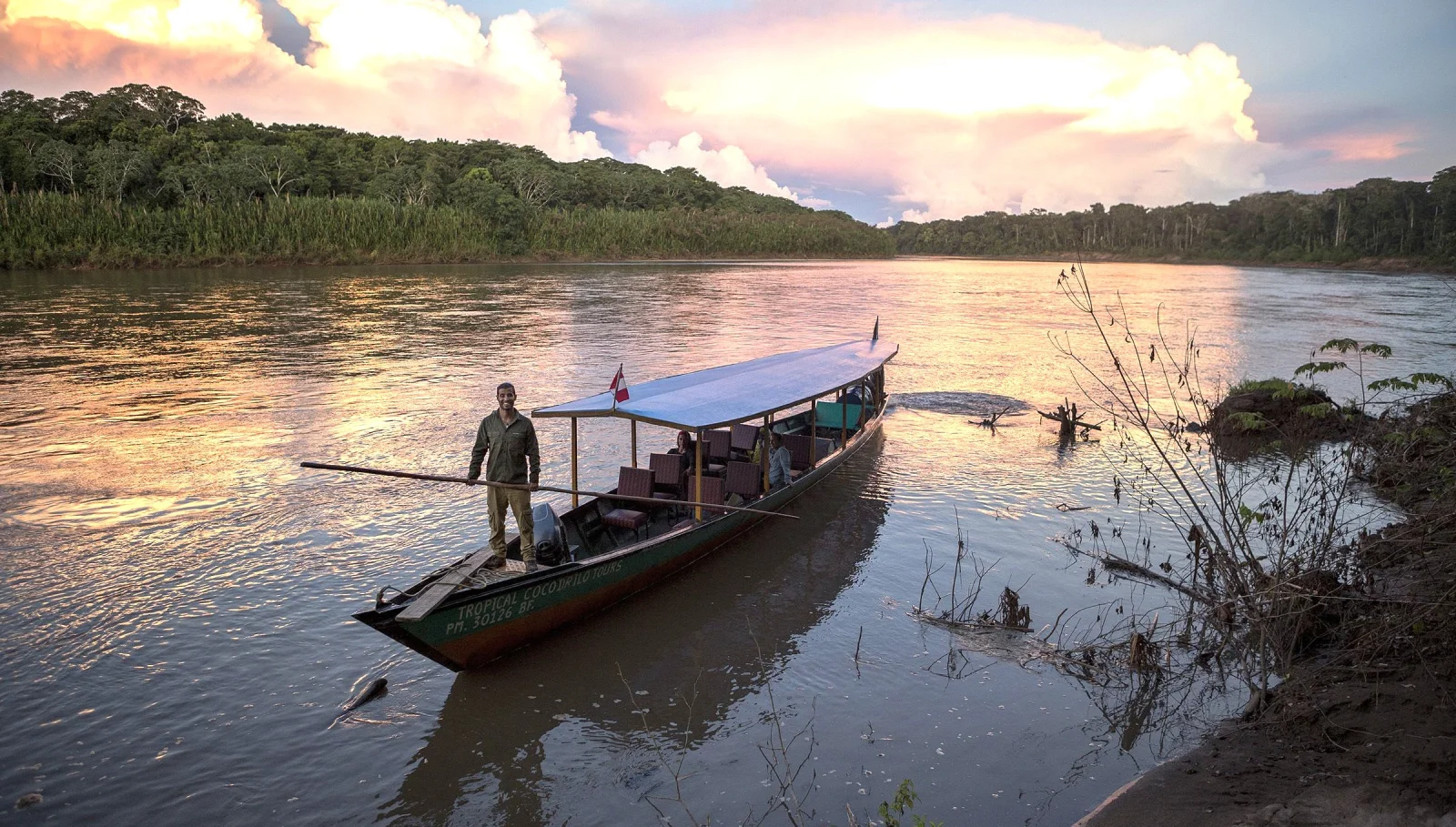
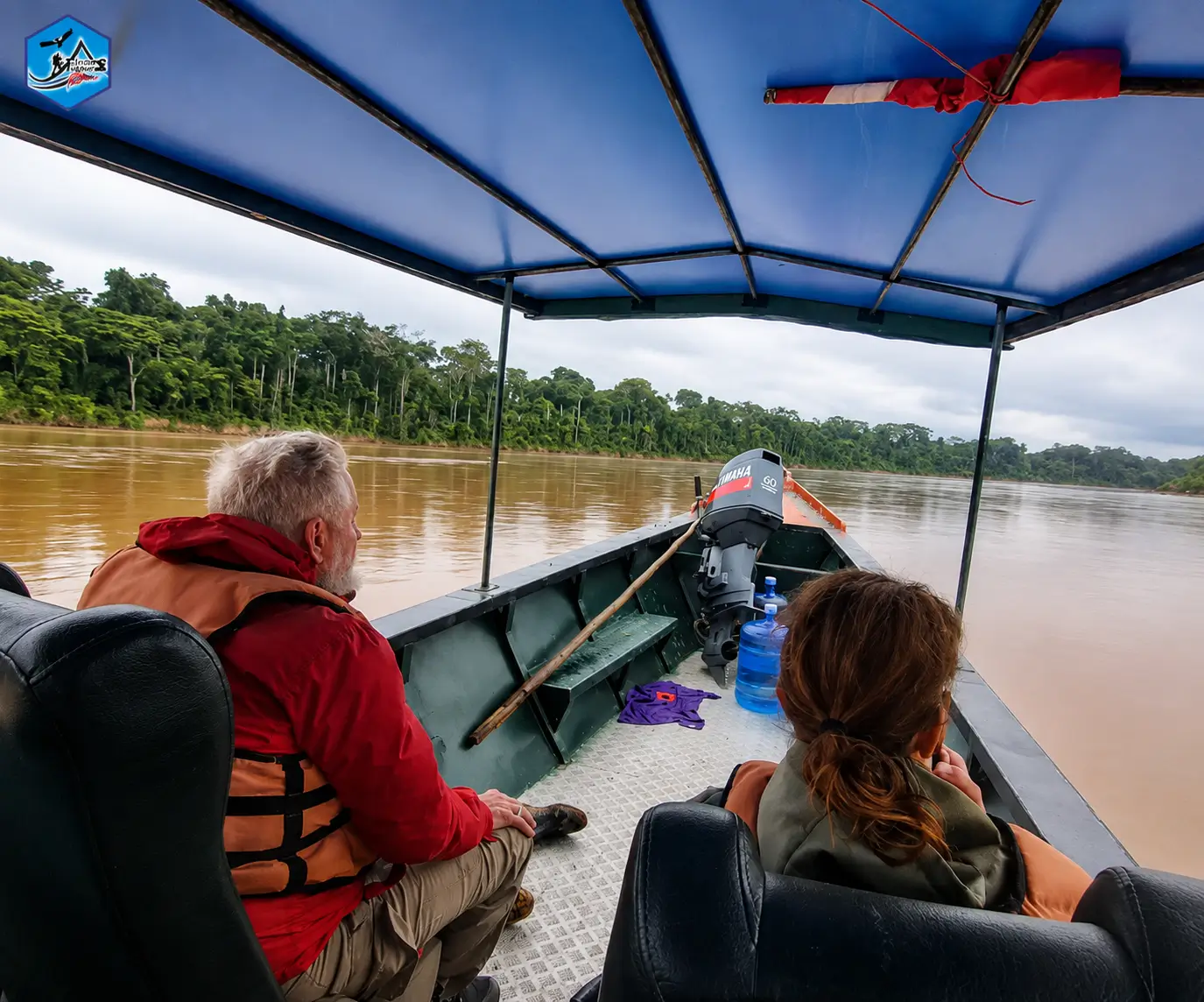
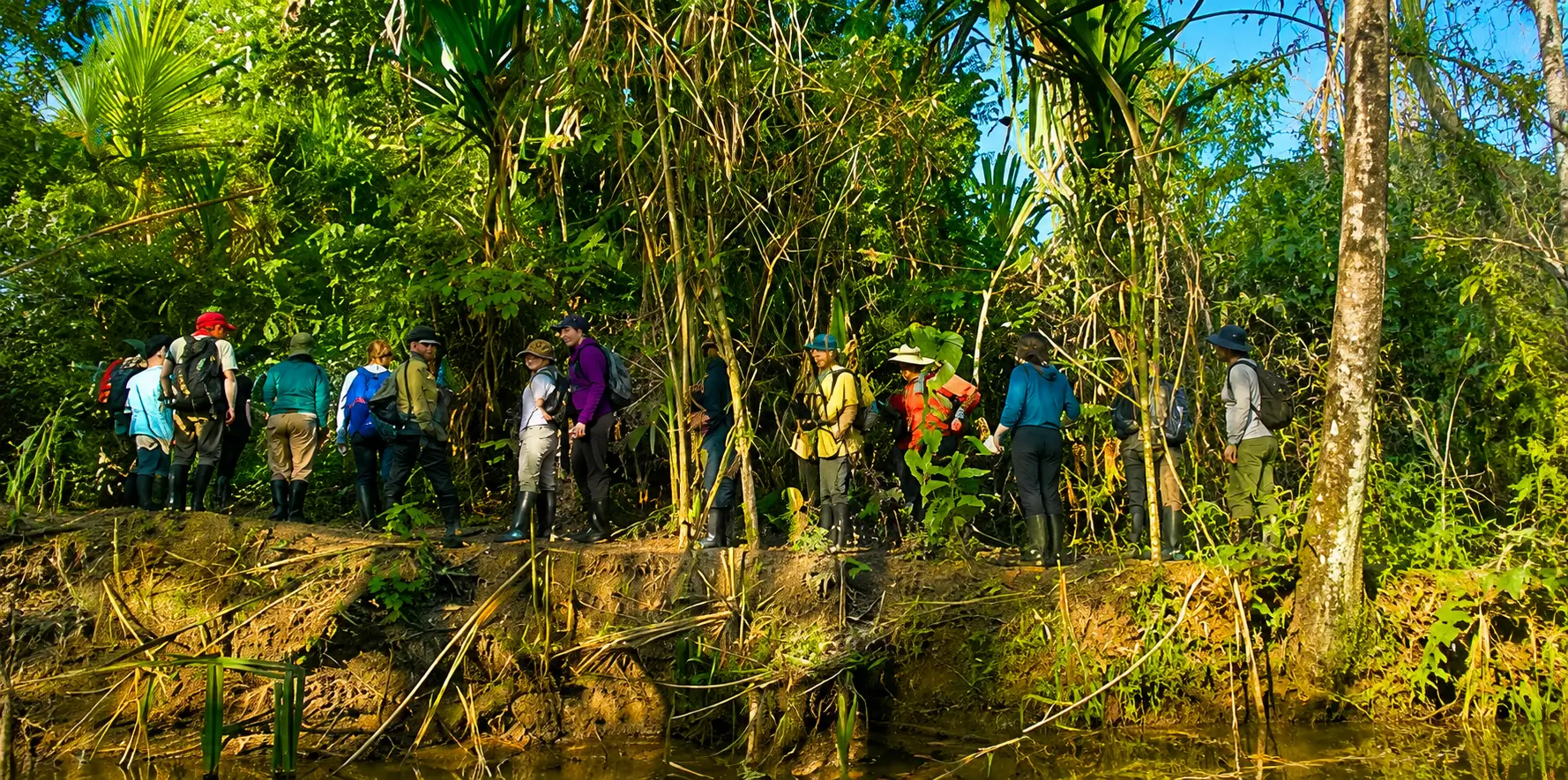
- [Morning] – Journey to Atalaya & River Navigation: After an early breakfast, a 1-hour van ride takes us to Atalaya port (500 masl = 1640 feet), with an optional stop at an animal rescue station. From Atalaya, we sail for 40 minutes in a motorized boat along the Alto Madre de Dios River.
- [Mid-Day] – Machuwasi Lake & Aguas Calientes: After a 45-minute jungle walk spotting monkeys, we embark on rustic catamarans to explore Machuwasi Lake, searching for prehistoric Hoatzin birds and capybaras. Next, a 1.5-hour boat ride brings us to Shintuya to enjoy lunch and relax in the natural thermal baths of Aguas Calientes.
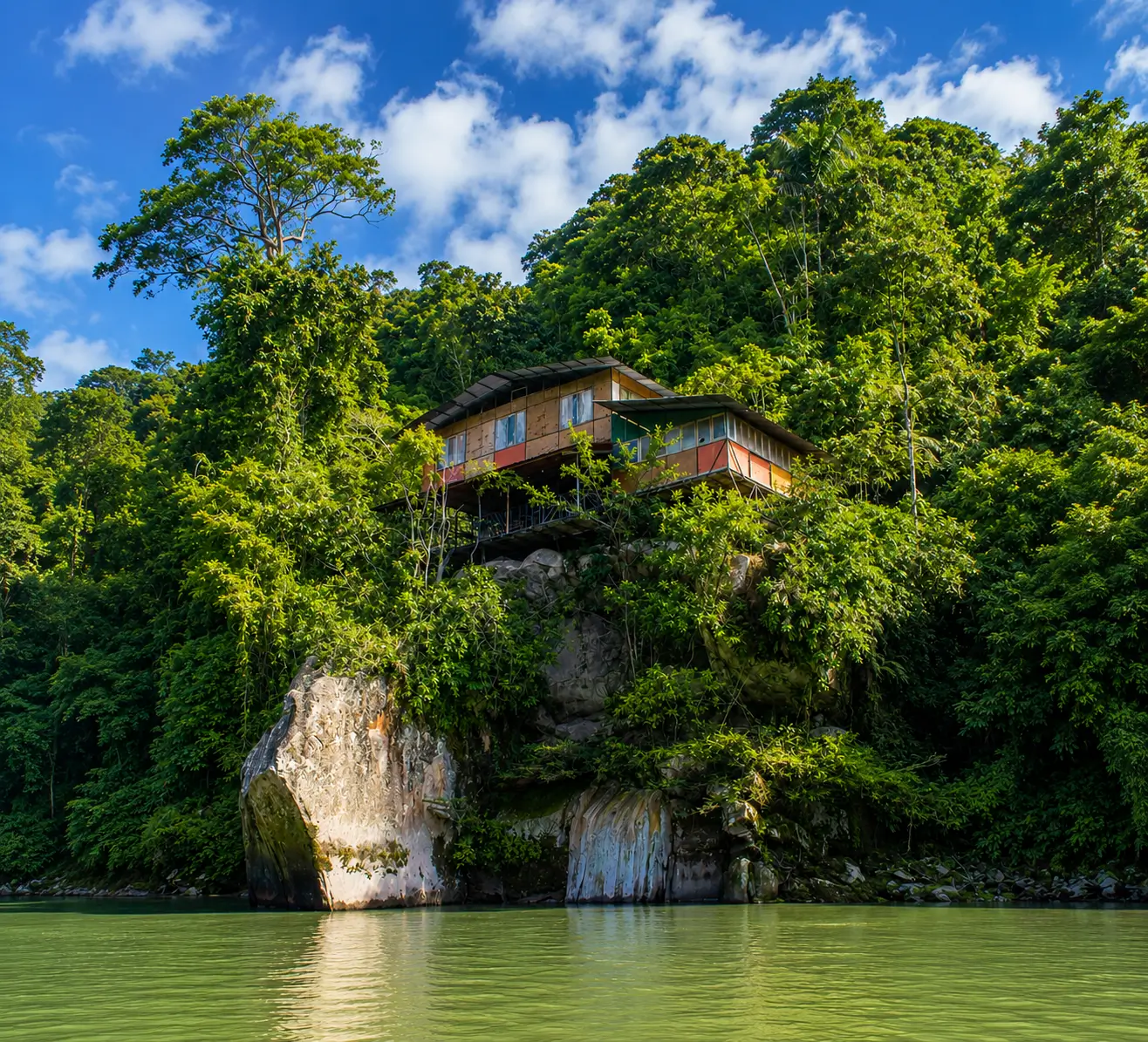
- [Afternoon to Evening] – Dorado Lodge & Night Walk: A final 2-hour boat trip brings us to Dorado Lodge. After a delicious dinner, experience the thrill of a night walk to observe nocturnal snakes, tarantulas, and night monkeys. We will also visit a mammal clay lick for a chance to spot tapirs and wild pigs.
Day 03: Dorado Lodge – Otorongo Lake – Casa Matsiguenka Lodge
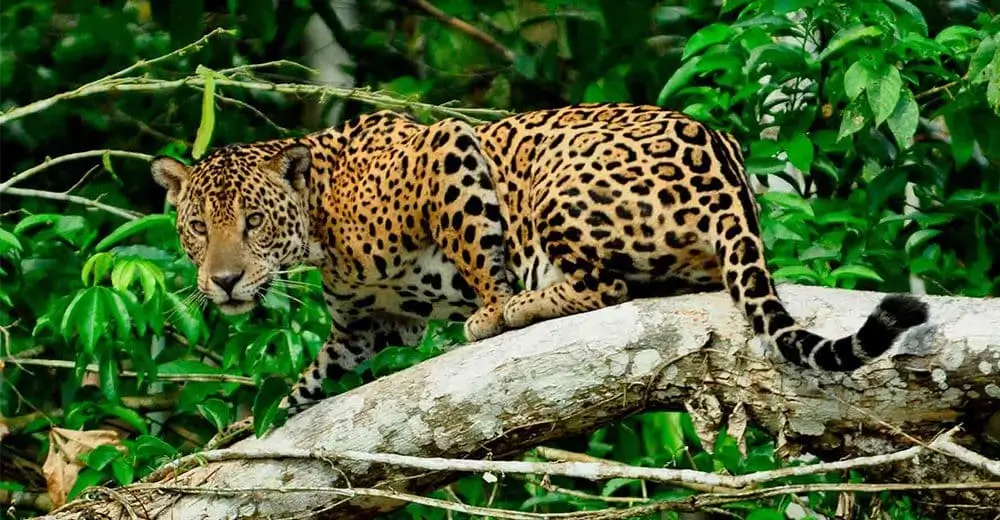
- [Early Morning] – Entering the Reserved Zone: Wake up to the roar of howler monkeys. We travel by boat for 2 hours to the Limonal Checkpoint. After checking in, we navigate strictly within the highly protected manu park, where low river beaches offer prime chances to spot the hidden Jaguar.
- [Mid-Day] – Otorongo Lake Canopy Tower: After 4 to 5 hours of scenic navigation spotting massive caimans and sloths, we reach Otorongo Lake. Climb a towering 20-meter observation tower for spectacular panoramic views, searching for giant river otters and aquatic turtles.
- [Afternoon to Evening] – Casa Matsiguenka Lodge: A 45-minute boat ride takes us to Casa Matsiguenka Lodge, where we will spend the next two nights. Following dinner, enjoy an optional night hike to discover fascinating frogs, bats, and exotic insects.
Day 04: Casa Matsiguenka – Salvador Lake – Macaws Clay Lick
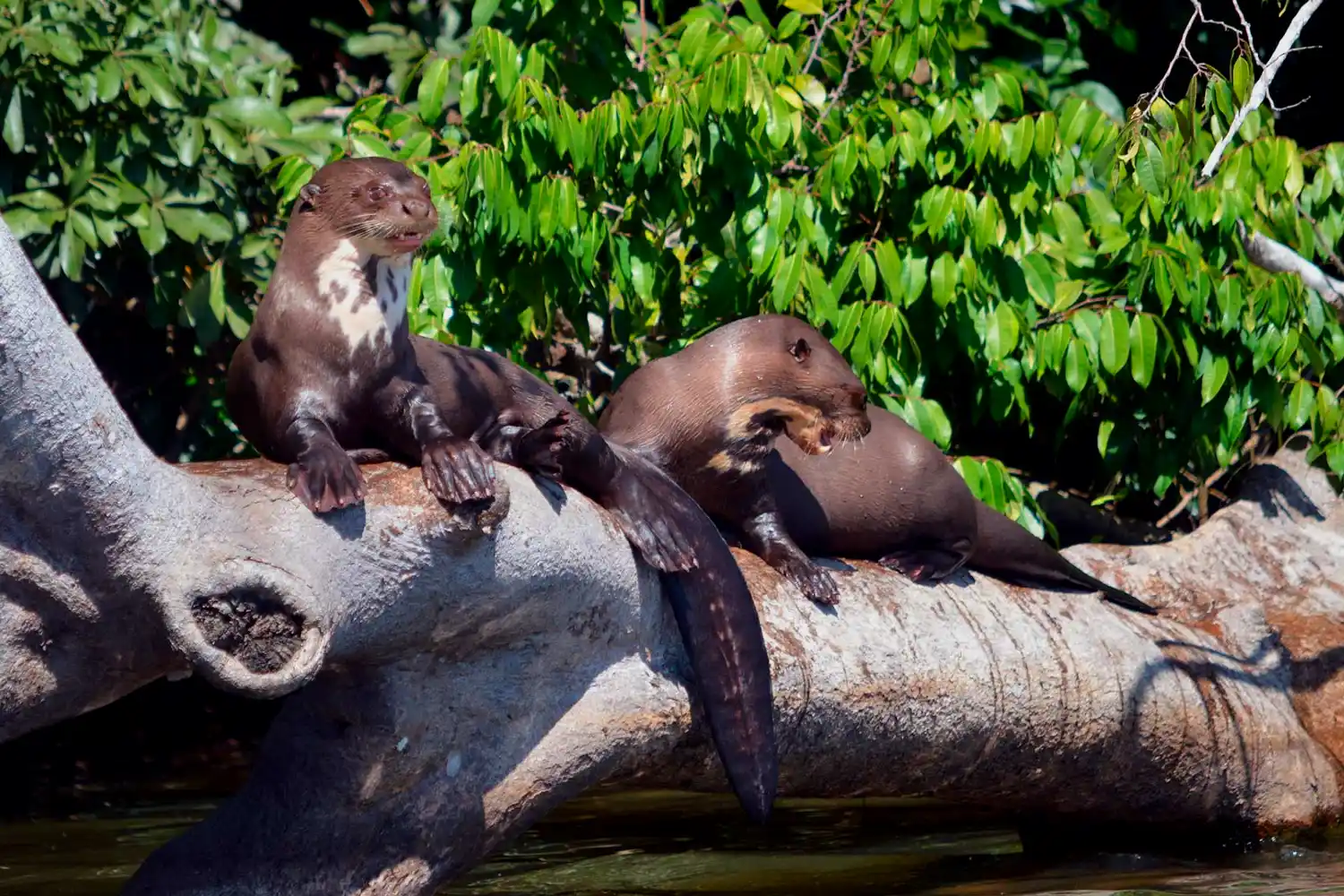
- [Early Morning] – Catamaran at Salvador Lake: Catch the first rays of the sun with a 20-minute boat ride to Salvador Lake. Board a catamaran to silently observe the lake’s dominant predators: the highly endangered giant river otters, alongside anacondas and turtles.
- [Mid-Morning] – Macaws Clay Lick: Return to the lodge and walk for 30 minutes to a vibrant clay lick. Witness a symphony of colors and sounds as blue, yellow, and scarlet macaws gather to feed on essential minerals.
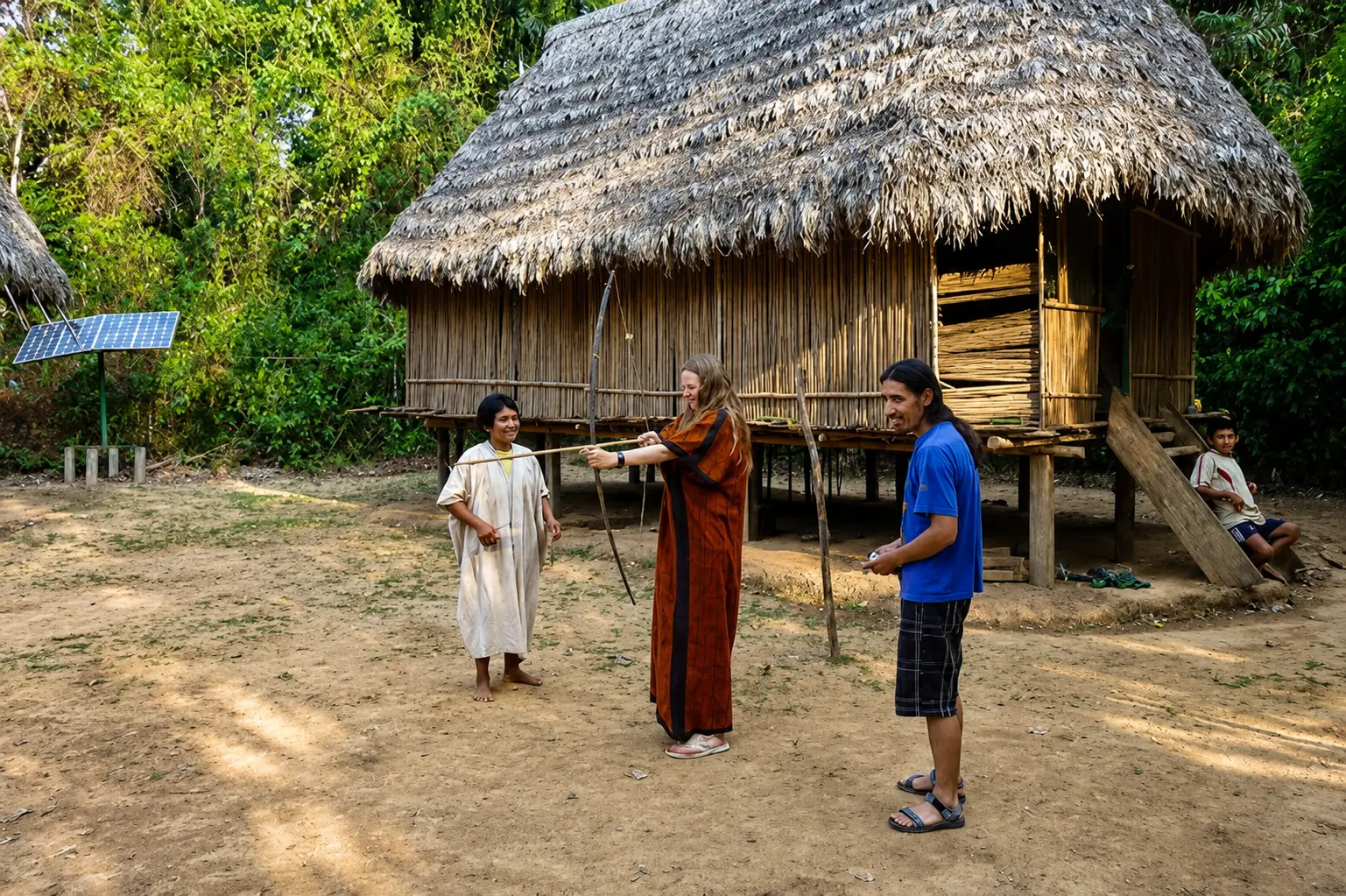
- [Afternoon] – Matsiguenka Culture & Monkey Search: After lunch, enjoy free time learning survival techniques and archery from the local Matsiguenka tribe. Later, we cross the river to hike a specialized trail dedicated to spotting troops of spider, squirrel, and howler monkeys before dinner and an optional night walk.
Day 05: Casa Matsiguenka Lodge – Papaya Lodge
- [Early Morning] – Downriver Wildlife Spotting: We depart very early to maximize our chances of spotting Jaguars and large mammals along the riverbanks. Enjoy lunch on the boat as we sail downriver for 4 hours back to the Limonal Checkpoint.
- [Afternoon] – Upstream to Papaya Lodge: We continue upstream along the Alto Madre de Dios River for another 4 hours, arriving at the beautiful Papaya Lodge between 3:00 to 4:00 pm, where our chef will prepare an exquisite dinner.
- [Evening] – Optional Shelter House Experience: Choose to walk 45 minutes to a specially built shelter house near a mammal clay lick. Spend the night here in comfortable mattresses with mosquito nets to safely observe nocturnal tapirs, ocelots, and armadillos. Alternatively, enjoy a night walk around Papaya Lodge and sleep there.

Day 06: Papaya Lodge – Atalaya Port – Cusco
- [Morning] – River Journey to Atalaya: This is the bittersweet final day of our expedition. After breakfast, we take our boat for about 4 hours back to Atalaya Port, leaving the deep jungle behind.
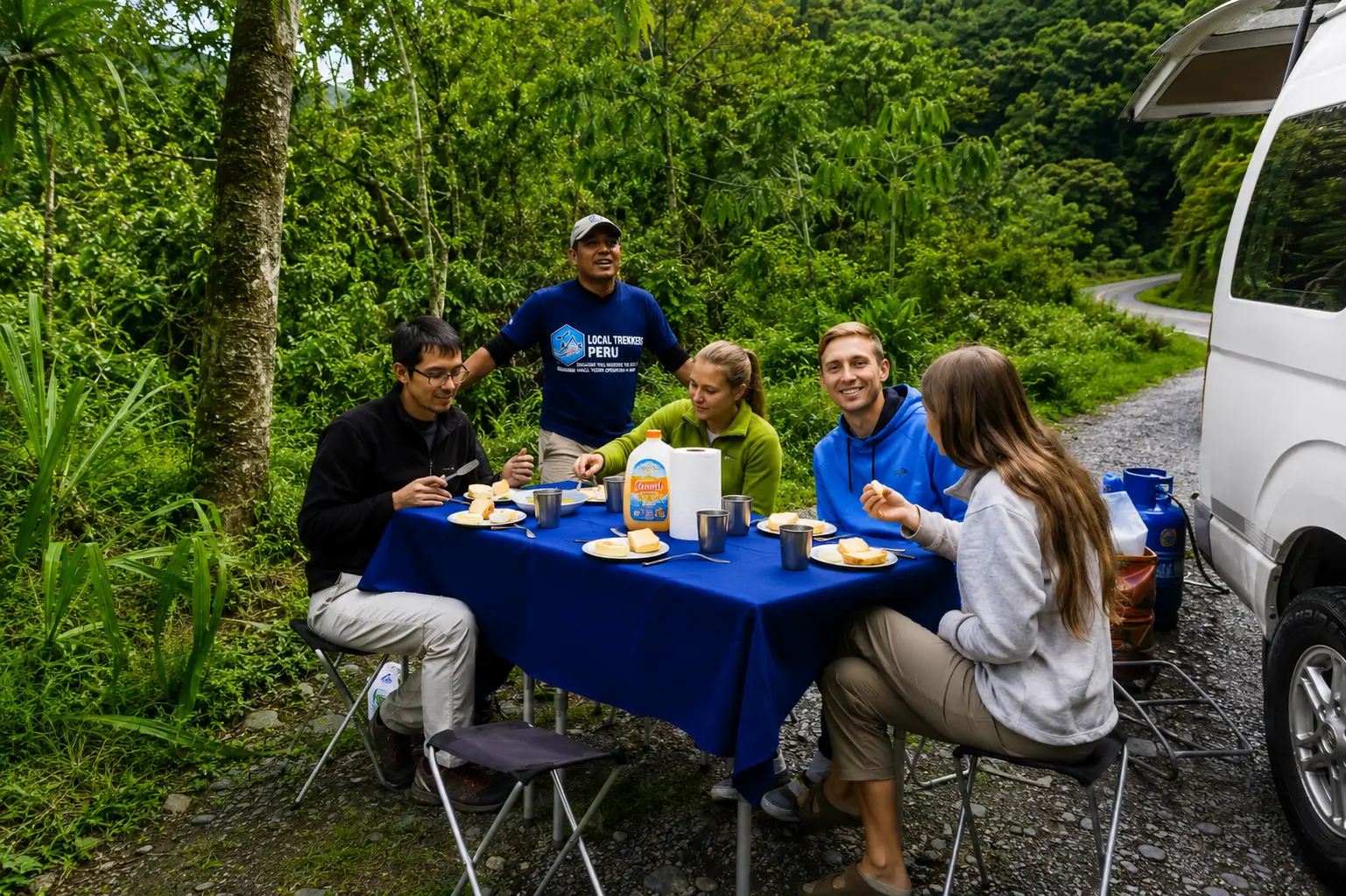
- [Mid-Day] – Andes Ascent & Box Lunch: Our private transport will be waiting at the port to begin the scenic drive back up into the Peruvian Andes. We will stop in the middle of the route to enjoy a fulfilling box lunch.
- [Evening] – Arrival in Cusco: We continue our scenic drive toward the city, arriving back in Cusco around 6:00 pm. Your guide will ensure you are dropped off safely at or right next to your hotel.
Experience the Pinnacle of the Peruvian Amazon
A 6-day expedition into the deeply restricted areas of manu is an absolute privilege that few travelers get to experience. From navigating wild rivers and climbing canopy towers to connecting with native communities, this journey guarantees a life-altering encounter with raw, untouched nature.
Map
Manu Reserved Zone Route Map: Cusco → Cloud Forest → Manu River → Amazon Basin
Trace the full journey on our interactive map: departing Cusco at dawn, crossing the Andes through Paucartambo and the Tres Cruces viewpoint, descending into the Manu cloud forest, reaching the Madre de Dios River at Puerto Atalaya, and navigating deep into the Manu Reserved Zone past the Limonal checkpoint to Cocha Otorongo and Cocha Salvador. Understanding the geography — 1.7 million hectares transitioning from 3,500 masl to 300 masl — is essential to appreciating what makes this expedition so extraordinary.

Inclusions
Includes:
- Bilingual and certified Tour Guide
- A briefing about the trek with your guide the day before
- Pick up from your accomodation
- Private transportation to go to the Park (First and last day)
- Mineral water and snacks for the whole tour
- Lodges (Private, double, triple, quadruple rooms availables)
- Confortable Matrasses and mosquito nets
- Blankets
- Rubber boots to walk inside the jungle
- Permits and entrances fees to the Manu National Park
- Permits and entrances for the Reserved Zone
- 2 nights inside the Reserved Zone at Casa Matsiguenka Lodge
- Boat to move along the river
- Boat driver and his assistant
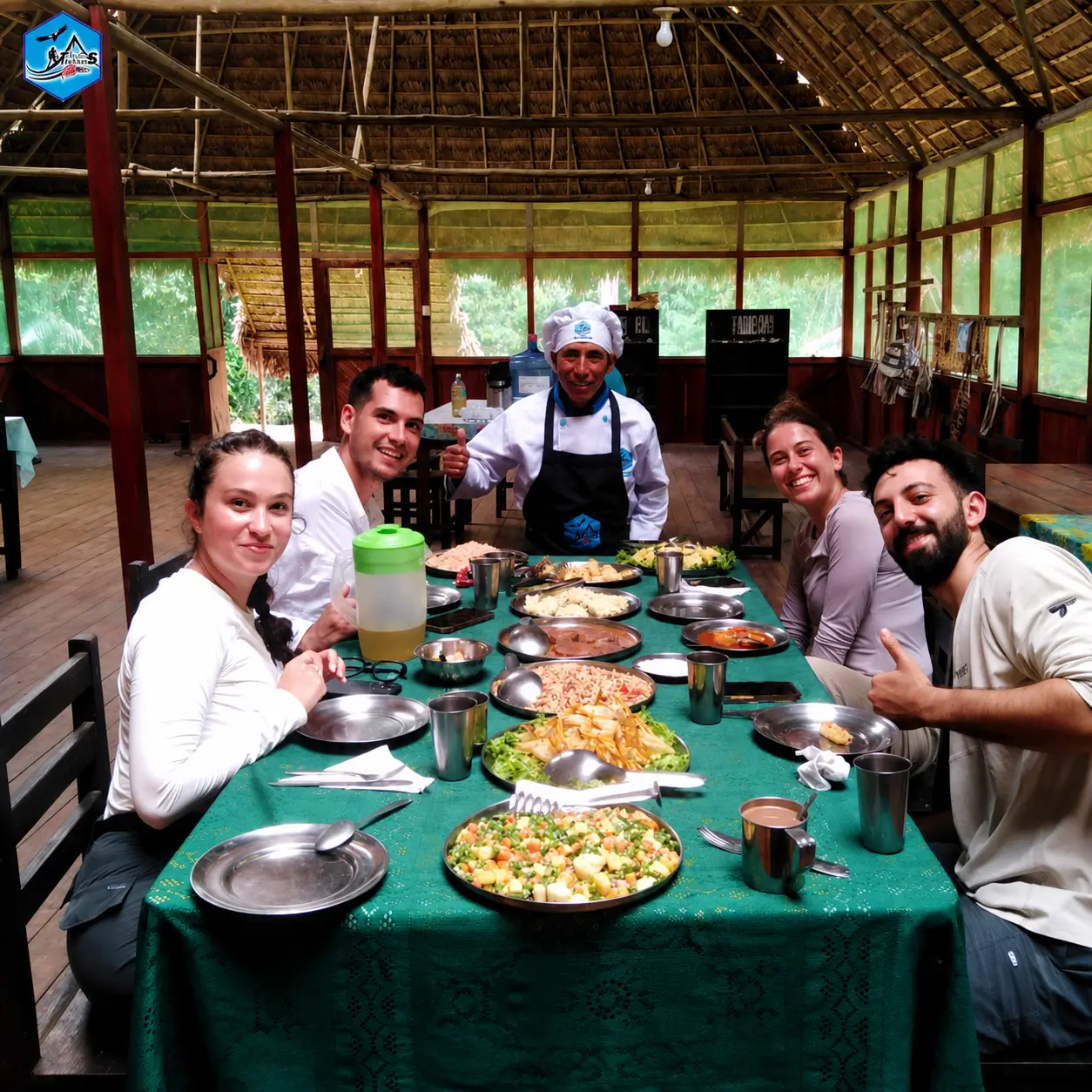
- Professional Cook
- Snack for each day of trip
- Availability of meals to your preference (vegetarian, vegan, gluten free, pesquetarian, etc)
- First Aid kit
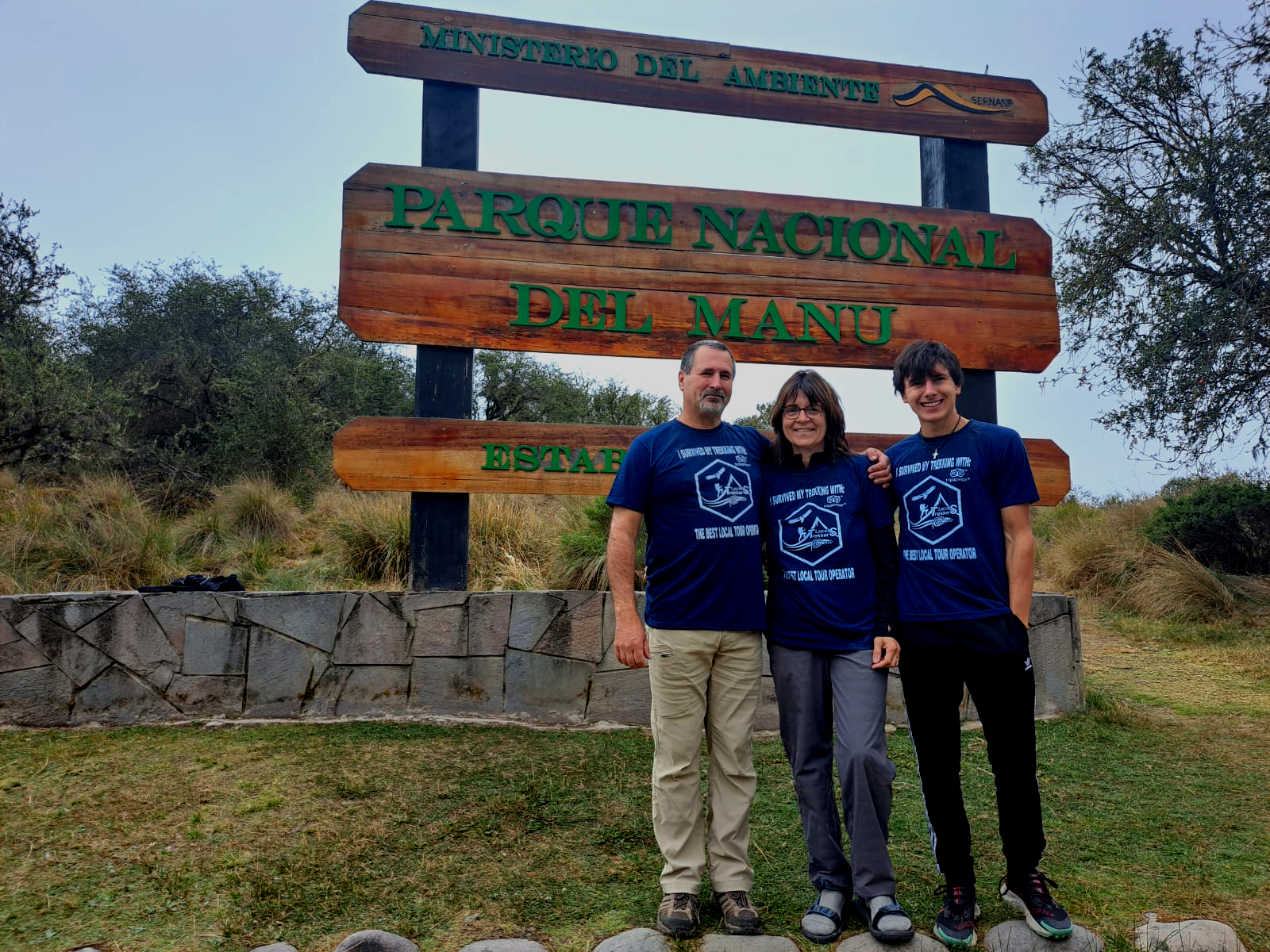
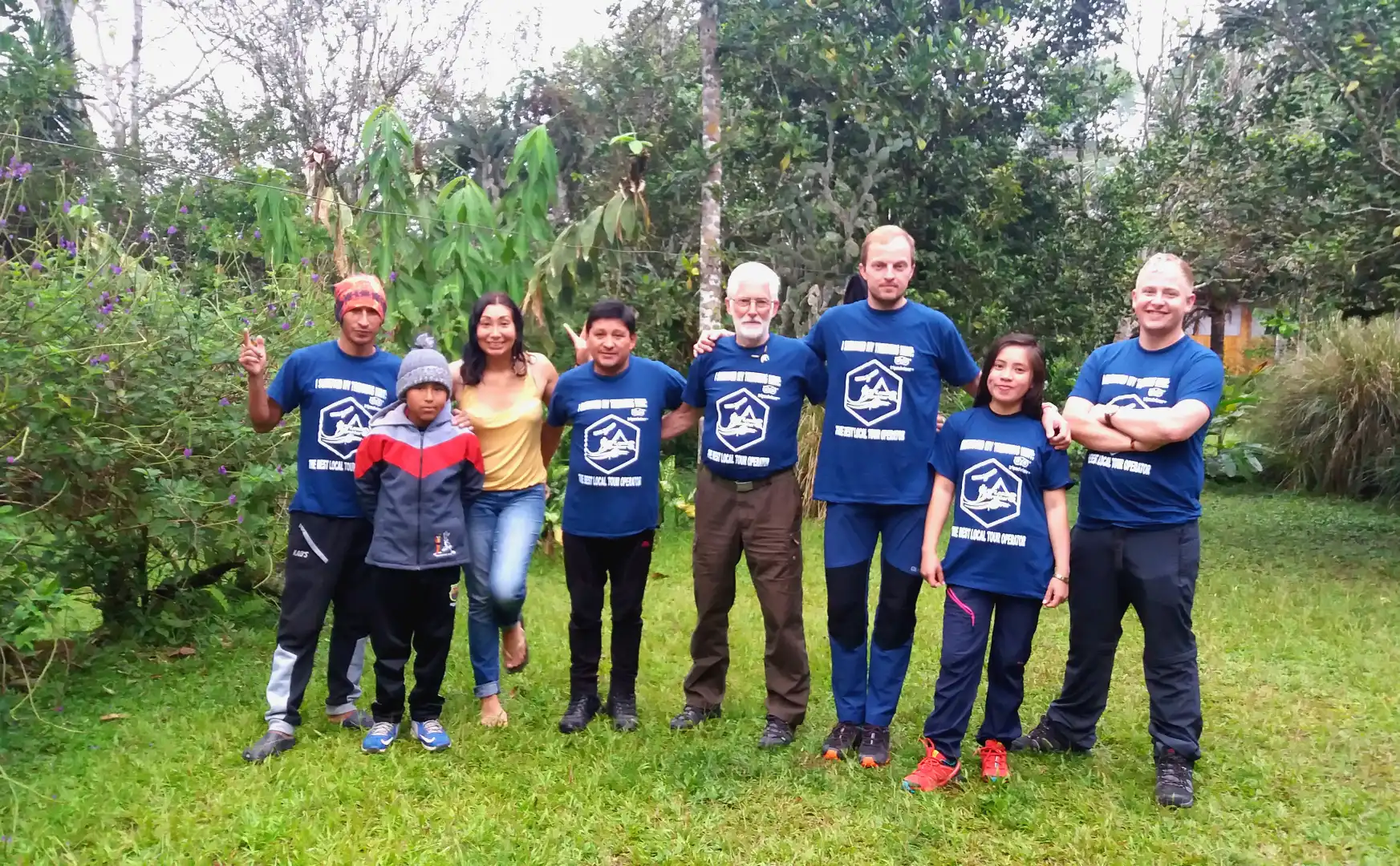
- Survivor T – Shirt for each member of the group.
Doesn’t includes:
- Extra expense if you want to buy things during the tour
- First Breakfast and last dinner
- Tips for the team (Is not obligatory but if you wish to do it, it will be welcome).
packing list
Manu Reserved Zone Packing List: What to Bring for 6 Days in the Amazon Rainforest
- Original Passport
- Travel Insurance card (you have to le tus know the name of your Travel Insurance company and you travel Insurance Number)
- A back pack
- Rain coat or Rain Poncho
- Cold Clothes (For the first day)
- Bottle of Water
- Sandals
- Bottle of Water
- Flash Light with extra batteries
- Insect Repellent (30% Deet as minimum Recommended)
- Towel
- Toilet Paper
- Sun Block
- Sun Glasses
- Caps or Hats
- Binoculars
- Rain Pants
- Medicines for Personal Use
- Personal use stuff (Face moisturizer, Handsanitizer, Tooth brush and paste, etc)
- Camera with extra bateries (electricity available in some lodges)
- Extra money especially in soles to buy thing along the trek
POSITIVE MENTAL ATTITUDE.
Price
Manu Reserved Zone Tour Price 2026 & 2027 – What’s Included in Our 6-Day Package
| Number of People for GROUP SERVICE : | ||||
|---|---|---|---|---|
| 2 | 3 | 4 | 5-6 | 7-10 |
| Price USD$ (per person): | ||||
| 1200 USD$ | 1150 USD$ | 1100 USD$ | 1000 USD$ | 950 USD$ |
| Number of People for PRIVATE SERVICE: | ||||
|---|---|---|---|---|
| 2 | 3 | 4 | 5-6 | 7-10 |
| Price USD$ (per person): | ||||
| 1600 USD$ | 1450 USD$ | 1350 USD$ | 1200 USD$ | 1150 USD$ |
More Info
Everything You Need to Know Before Booking Your Manu Reserved Zone Tour
Everything You Need to Know Before Booking Your Manu Reserved Zone Tour
Access to the Manu Reserved Zone is among the most exclusive wildlife experiences in South America. Before you go, here’s what every traveler searches for: what wildlife to expect, how the Reserved Zone differs from other Amazon options, what health precautions to take, and exactly what 6 days in the world’s most biodiverse place looks like.
What Is the Manu Reserved Zone? Why Is It Different from Other Amazon Tours?
The Manu Reserved Zone is the innermost, most protected section of the Manu National Park — a UNESCO World Heritage Site covering 1.7 million hectares in southeastern Peru. It is widely considered the most biodiverse terrestrial ecosystem on Earth, and access is strictly controlled: only authorized tour operators with official permits from Peru’s Ministry of Culture can enter.
This is the critical distinction that separates a Manu Reserved Zone tour from every other Amazon experience in Peru:
| Feature | Manu Reserved Zone | Manu Cultural Zone | Puerto Maldonado (Tambopata) |
|---|---|---|---|
| Access | Permit + licensed operator only | Open with guide | Open |
| Daily visitor limit | Strictly controlled | Limited | No limit |
| Wildlife density | Exceptional | Good | Good |
| Human impact | Near zero | Low | Moderate |
| Primary forest | 100% intact | Mostly intact | Partly degraded |
| Jaguar sighting chance | Highest in Peru | Low | Very low |
| Giant otter sighting | Frequent (oxbow lakes) | Occasional | Occasional |
| Macaw clay lick | Spectacular | Some locations | Some locations |
| Trip duration | Min. 6 days | 3–5 days | 3–5 days |
| Journey from Cusco | Overland + river (2 days) | Overland (1 day) | 1h flight |
| Price | Higher (exclusivity + logistics) | Mid-range | Budget–Mid |
Why the Reserved Zone produces better wildlife encounters: Because strict access limits mean the animals here are significantly less habituated to human presence than in heavily visited areas. Wildlife on the Manu River doesn’t associate boats with people — which means giant otters don’t dive away, black caimans rest calmly on riverbanks, and jaguars are more likely to be observed undisturbed.
Because the park is more isolated than regions like Puerto Maldonado, the animals here are often less shy, offering superior viewing opportunities.
What Wildlife Can I See in the Manu Reserved Zone?
The biodiversity statistics of the Manu Biosphere Reserve are genuinely staggering: over 1,000 bird species (more than the entire continental United States), 200+ mammal species, hundreds of reptiles and amphibians, and an estimated 15,000+ plant species. The Reserved Zone holds the highest concentration of all of these.
Wildlife you’re likely to encounter:
Almost certain — oxbow lakes:
- Giant River Otters (Pteronura brasiliensis) — the world’s largest otter, up to 1.8m long, living in family groups at Cocha Salvador and Cocha Otorongo. Watching them fish and play is one of the expedition’s most celebrated moments
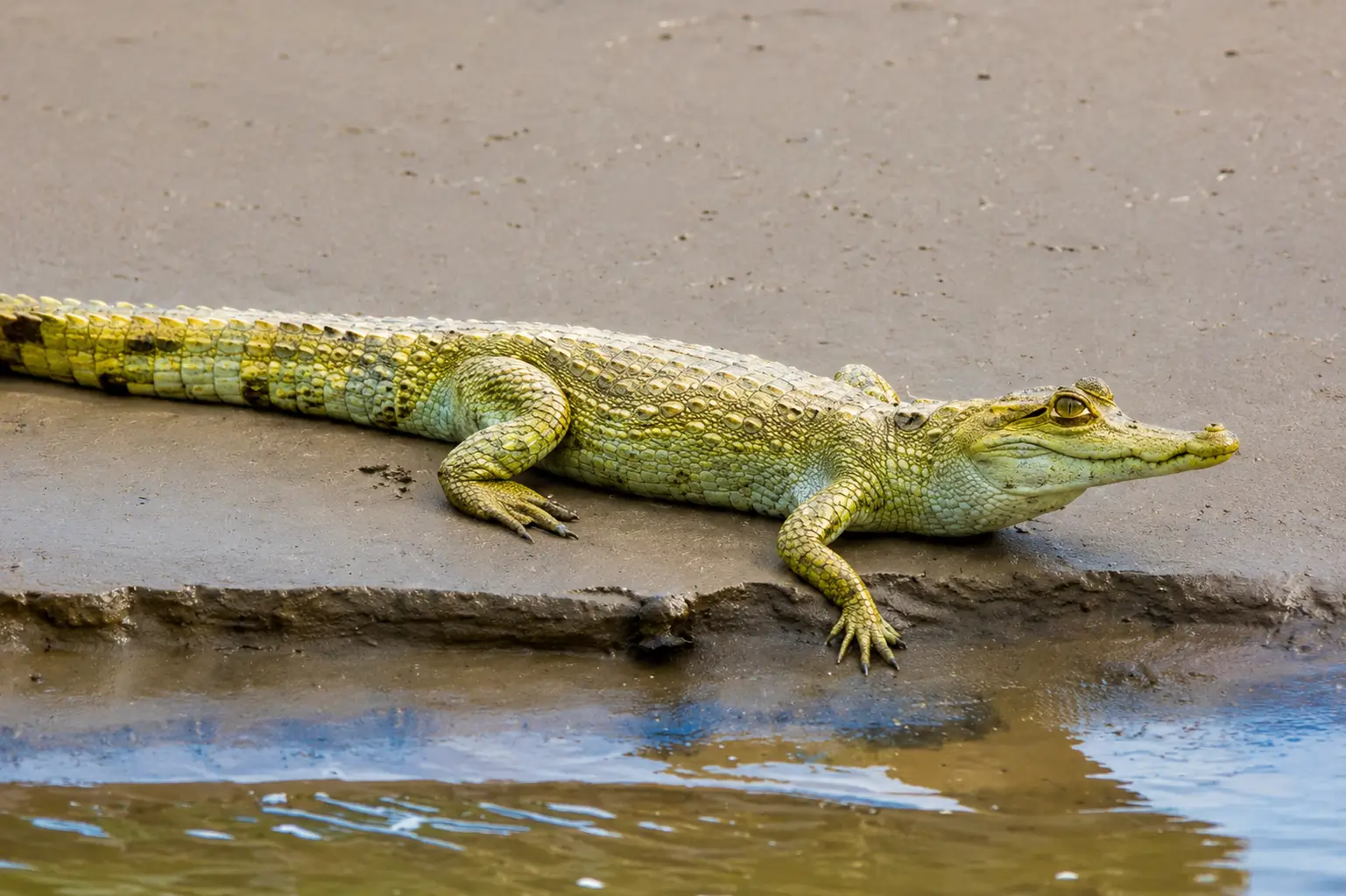
- Black Caimans — up to 6 meters; regularly seen sunning on lake banks
- Hoatzins — prehistoric-looking birds perching in the vegetation around every oxbow lake
Frequently seen — river and forest:
- Multiple monkey species: howler monkeys, spider monkeys, squirrel monkeys, capuchins, woolly monkeys, emperor and saddle-back tamarins (up to 8 species in the Reserved Zone)
- Capybaras — world’s largest rodent; grazes on riverbanks in groups
- Turtles and river dolphins along the Manu River
Birdwatcher highlights:
- Scarlet Macaws and Blue-and-Yellow Macaws at the clay lick — hundreds gathering simultaneously is one of the great wildlife spectacles of South America
- Andean Cock-of-the-Rock (Rupicola peruvianus) — Peru’s national bird; seen at leks in the cloud forest on Day 1
- Toucans, trogons, quetzals, kingfishers, herons, harpy eagle (rare)
- Over 500 bird species recorded in the Reserved Zone alone
With extraordinary luck:
- Jaguar — the apex predator of the Amazon; riverbanks during dry season (July–October) offer the best opportunities. No operator can guarantee a sighting, but the Manu River offers the highest probability in Peru
- Tapir — shy but occasionally spotted at clay licks or riverbanks at night
- Anaconda — mostly aquatic; possible during night boat excursions
- Puma and Ocelot — rare sightings, mostly on night walks
Best Time to Visit the Manu Reserved Zone — Month by Month Guide
The Manu Reserved Zone has two distinct seasons, and both offer worthwhile but different experiences.
| Month | Season | Wildlife Activity | Conditions | Recommended? |
|---|---|---|---|---|
| January | Wet | High (lush forest) | Heavy rain, flooded trails | With caution |
| February | Wet | High forest activity | Heaviest rains | With caution |
| March | Wet/Transition | Good | Rain easing | Possible |
| April | Transition | Excellent | Clearing skies, green landscape | Good |
| May | Dry | Exceptional | Clear, reliable, best conditions | Best |
| June | Dry | Exceptional | Peak season begins | Best |
| July | Dry | Outstanding — jaguar peak | Dry, sunny, busiest month | Best |
| August | Dry | Outstanding | Excellent but cold snaps possible | Best |
| September | Dry | Excellent | Fewer visitors, great wildlife | Excellent |
| October | Dry/Transition | Very good | Some rain starting | Good |
| November | Wet | Good (forest active) | Increasing rain | With caution |
| December | Wet | Good | Rains established | With caution |
Dry season advantages (May–October):
- Animals concentrate along riverbanks as forest water recedes — better sightings from the boat
- Trails are navigable and dry
- Clearer skies for photography
- River levels allow easier navigation
- July–October offers the highest jaguar sighting probability along Manu riverbanks
Wet season advantages (November–March):
- Lush, intensely green forest at peak beauty
- Fewer visitors — more solitary experience
- Birds are highly active and many species breed
- Lower prices in some lodges
- River navigation is generally easier (higher water levels)
The best time to visit Manu is during the dry season from May to October, when there is less rain, making travel easier and wildlife easier to spot. However, the rainforest is active year-round, and the wet season offers lush landscapes and fewer tourists.
The Manu Cloud Forest — The Spectacular Ecosystem You Cross on Day 1
One of the most underappreciated aspects of the Manu Reserved Zone tour is that the journey itself begins with one of the most diverse ecosystems on Earth: the Manu Cloud Forest, also called the ceja de selva (eyebrow of the jungle).
What is the cloud forest? Descending from Cusco (3,400 masl), the road drops through the Andes into a zone of permanent mist and extraordinary biodiversity — typically between 1,500 and 3,500 masl. The moisture from the Amazon Basin condenses against the mountain slopes, creating a perpetually humid environment where trees are covered in moss, orchids, and bromeliads.
Why it matters for your tour:
- Andean Cock-of-the-Rock lek: Peru’s national bird performs flamboyant courtship displays at established leks in the cloud forest. This is one of the most photographed wildlife moments in all of Peru — brilliant orange-red males displaying for females at close range.
- Tres Cruces viewpoint: At dawn, this high-altitude lookout can offer views of the cloud forest stretching below, occasionally with a “glory” (circular rainbow) visible in the mist — a phenomenon caused by light diffraction in cloud droplets.
- Orchid diversity: The Manu road is one of the most species-rich orchid corridors in the world — hundreds of species within a few kilometers of road.
- Woolly monkeys and spectacled bears are possible in the cloud forest transition zone.
Cloud forest bird highlights:
- Andean Cock-of-the-Rock, Quetzals, Trogons, Motmots
- Multiple hummingbird species (Sword-billed Hummingbird possible)
- Tanagers in extraordinary color variety — up to 15 species in a single morning
- Toucan Barbet, Golden-headed Quetzal
The transition from Andean puna to cloud forest to Amazon rainforest in a single 2-day journey is something no other Peru experience offers. Experienced guides conduct wildlife stops throughout the descent.
Oxbow Lakes — Cocha Salvador & Cocha Otorongo — The Heart of the Reserved Zone
The oxbow lakes (called cochas in Quechua) are the defining wildlife attractions of the Manu Reserved Zone. These crescent-shaped lakes form when river meanders are cut off by natural course changes, creating isolated water bodies in the middle of primary forest. Because they have no current and connect to no active fishing routes, they become wildlife sanctuaries.
Cocha Salvador — the crown jewel:
- Largest oxbow lake in the entire Manu National Park
- Home to a resident family of giant river otters — the most reliable giant otter viewing in Peru
- Also: black caimans, dozens of bird species, multiple monkey species visible from the water’s edge
- Explored by catamaran (silent, low-impact) in early morning mist
- An elevated observation platform (canopy tower) overlooks the lake — 360° views of the canopy
Cocha Otorongo:
- Named after the Quechua word for jaguar — a reflection of historical sightings
- Excellent for giant otters, large caimans, herons, kingfishers, hoatzins
- Denser forest edges than Salvador — better for shy species
- Another canopy tower for elevated observation
What the lake experience looks like in practice:
- Wake before dawn (5:00–5:30 AM) at the lodge
- Silently paddle out as the mist rises off the water
- Watch the forest come alive with the day’s first birds and animals
- Giant otters often begin hunting within the first 30 minutes of daylight
- Return for breakfast as the full chorus of Amazon birds reaches its peak
Photography tip: The early morning mist over Cocha Salvador, with giant otters fishing in the foreground and primary forest behind, is one of the most photogenic wildlife scenes in South America. A telephoto lens (200–400mm) is ideal.
The Macaw Clay Lick — One of Nature’s Greatest Spectacles
The macaw clay lick (collpa) is one of the most extraordinary natural phenomena in the Amazon — and the Manu Reserved Zone contains some of the most active clay licks in all of South America.
What is a clay lick? Clay licks are riverbank or cliff faces where mineral-rich clay is exposed. Parrots, macaws, and parakeets gather in large groups to consume the clay, which provides essential minerals (particularly sodium and calcium) that are scarce in their fruit-heavy diet. The clay may also help neutralize toxins in seeds.
What you’ll witness:
- Hundreds of Scarlet Macaws and Blue-and-Yellow Macaws arriving simultaneously at dawn — the sky fills with color and noise
- Also: Red-and-Green Macaws, Mealy Parrots, Blue-headed Parrots, and multiple parakeet species
- The birds land nervously, take flight at any disturbance, then return — the display can last 1–2 hours
- Occasional capybaras and tapirs visit nearby mineral licks at different times
Practical observation details:
| Detail | Information |
|---|---|
| Best time | Dawn — first light, 6:00–7:30 AM |
| Duration of spectacle | 30–90 minutes of peak activity |
| Distance from hide | 30–60 meters (respectful distance) |
| Photography | Telephoto required; low light conditions |
| Guarantee | Never guaranteed — weather and disturbance affect activity |
| Season | Most active in dry season (May–October) |
Ethical note: Our guides maintain strict distance protocols at clay licks. We never approach closer than the designated observation area, and groups never exceed the permitted size. The birds’ natural behavior takes precedence over photography convenience.
The Matsigenka Community — Cultural Encounter in the Heart of the Amazon
The Matsigenka (also written Matsiguenka) are one of the indigenous peoples who have lived in the Manu watershed for thousands of years. Unlike many “cultural experiences” in Peruvian tourism that are staged for visitors, the encounter at Casa Matsigenka — a lodge owned and operated by a Matsigenka community deep in the Reserved Zone — is a genuine exchange.
Who are the Matsigenka? One of the Amazon’s most resilient indigenous groups, the Matsigenka number approximately 15,000 people across the Manu and Urubamba watersheds. They are primarily hunter-gatherers and subsistence farmers, and their deep ecological knowledge of the forest is extraordinary — many of our naturalist guides have learned from Matsigenka elders.
What the cultural encounter includes:
- A visit to Casa Matsigenka lodge, built and managed entirely by the community
- Introduction to traditional crafts: weaving, body painting, and medicinal plant knowledge
- Stories about the forest told through community members (with translation)
- Explanation of the Matsigenka’s relationship with Manu National Park administration
Why this matters beyond tourism: Staying at Casa Matsigenka offers an unparalleled opportunity to learn about their culture, traditions, and deep knowledge of the rainforest alongside excellent wildlife viewing. Revenue from the lodge directly funds community projects including a school and medical supply program. Your visit is a direct economic contribution to the community’s ability to remain on their ancestral land.
Etiquette: Ask before photographing community members. Learn a greeting in Matsigenka — your guide will teach you one. The reciprocal respect this shows is genuinely appreciated.
What’s Included (and Not Included) in the Manu Reserved Zone 6-Day Tour
INCLUDED in Local Trekkers Peru’s package:
- Private round-trip transportation: Cusco → cloud forest → Manu → Cusco
- All accommodation: eco-lodges and jungle lodges (Days 1–5)
- All meals: 6 breakfasts, 5 lunches, 5 dinners
- Entry permits to the Manu Reserved Zone (official Ministry of Culture documentation)
- Licensed bilingual naturalist guide throughout the entire tour
- Motorized canoe navigation on Manu and Madre de Dios Rivers
- Catamaran excursions on Cocha Salvador and Cocha Otorongo
- All guided wildlife activities: walks, lake excursions, clay lick visits
- Casa Matsigenka community visit
- Canopy tower access at the oxbow lakes
- Optional night walks with guide (at designated zones)
- Survivor T-shirt for each participant
NOT INCLUDED:
| Item | Estimated Cost |
|---|---|
| Personal travel insurance (mandatory for remote areas) | Variable |
| Yellow fever vaccination (recommended) | $30–80 USD depending on country |
| Malaria prophylaxis medication | Variable (consult doctor) |
| Personal insect repellent (DEET 30–50%) | $5–15 USD |
| Tips for guide, cook & support staff | $20–40 USD recommended |
| Personal snacks and drinks | $10–20 USD |
| Personal medications | Variable |
| Extra souvenirs from communities | Variable |
| Cash in Peruvian soles (no ATMs in the jungle) | Budget $50–100 USD |
Health Preparation — Vaccines, Mosquitoes & Medical Considerations for Manu
The Manu Reserved Zone is a remote, tropical environment. Unlike the Inca Trail or Salkantay Trek, the health considerations here go beyond altitude — the Amazon introduces a different set of factors that require preparation before you travel.
Recommended vaccinations (consult your doctor):
| Vaccine | Status | Notes |
|---|---|---|
| Yellow Fever | Strongly recommended | Get the shot before you arrive as it takes 10 days to become effective. Some tour operators may require a certificate |
| Hepatitis A | Recommended | Standard for travel to tropical areas |
| Typhoid | Recommended | Especially if eating at community stops |
| Tetanus (up to date) | Recommended | Standard travel health |
| Rabies | Optional | Only if extended wildlife handling; consult doctor |
Malaria risk — honest assessment: The malaria risk in Manu is extremely low (less than 0.1%). We recommend bringing insect repellent and protecting yourself with long sleeves instead of taking heavy malaria prophylaxis — check for the side effects of these medications. Consult your travel doctor for personalized advice.
Mosquito protection — your primary defense:
- DEET-based repellent (30–50%) — apply before every outdoor excursion
- Long-sleeved shirts and long trousers at dawn and dusk (peak biting times)
- Mosquito net — provided by our lodges; bring your own as backup
- Permethrin-treated clothing — optional but highly effective for extended jungle stays
- Head net — useful during river crossings and early morning activities
Other health considerations:
- Dehydration: Amazon humidity is deceptive — you sweat constantly without noticing. Drink 2–3 liters of water daily minimum (filtered water provided at lodges)
- Sun exposure: Even under forest canopy, UV radiation is significant on the river. Wear a hat and apply SPF 50+ on exposed skin
- Intestinal health: Our lodges serve filtered water and well-prepared food. Stick to lodge-provided meals and bottled/filtered water throughout
Night Walks in the Amazon — What to Expect After Dark
The Amazon rainforest at night is an entirely different world from what you experience during the day — and the night walk is consistently cited as one of the most memorable experiences of the entire Manu expedition.
Why the night jungle is extraordinary: An estimated 70% of Amazon species are nocturnal or crepuscular. Once the sun sets, species that are completely hidden during daylight become active — the sounds alone (frogs, insects, night birds) create an overwhelming sensory experience.
What you’ll find on a guided night walk:
Amphibians:
- Glass frogs (their internal organs visible through transparent skin)
- Poison dart frogs (brilliant red, blue, and yellow warnings visible even at night)
- Giant cane toads
- Tree frogs in dozens of species
Invertebrates:
- Tarantulas emerging from burrows
- Giant insects — walking sticks, rhinoceros beetles, moths with 20cm wingspans
- Bioluminescent fungi on decomposing logs
Birds:
- Owls: multiple species including the Spectacled Owl
- Night Monkeys (Aotus — the world’s only truly nocturnal monkey)
- Potoos — masters of camouflage, detected by their eerie calls
Reptiles:
- Caiman eyes reflecting torch light on still water
- Tree boas and vine snakes
- Geckos and nocturnal lizards
Practical night walk details:
| Detail | Information |
|---|---|
| Duration | 1.5–2 hours |
| Start time | 8:00–9:00 PM after dinner |
| Equipment | Headlamp (bring your own), sturdy shoes |
| Group size | Small — 4–8 people maximum |
| Safety | Guide leads at all times; snake gaiters available |
| Optional | Yes — never mandatory, always worthwhile |
Bring a headlamp with a red light setting — it illuminates without disturbing nocturnal animals as severely as white light. Your guide’s spotlight does the heavy lifting, but a headlamp keeps your hands free.
FAQs
Frequently Asked Questions About the Manu Reserved Zone Tour from Cusco
It is among the strongest contenders for that title. The Manu Biosphere Reserve holds records that are difficult to comprehend: more bird species have been recorded within a single day in Manu than in entire countries. The numbers speak for themselves:
| Category | Number of Species in Manu |
|---|---|
| Birds | 1,000+ (more than all of North America north of Mexico) |
| Mammals | 200+ |
| Reptiles | 300+ |
| Amphibians | 155+ |
| Fish | 210+ |
| Butterflies | 1,300+ |
| Plant species | 15,000+ (estimated) |
The Reserved Zone — the innermost section — holds the highest densities of all these species because it is the least disturbed. One of the most biodiverse ecosystems on Earth and a UNESCO World Heritage Site, the Manu Reserved Zone is recognized globally for its unmatched biodiversity.
For wildlife travelers, photographers, and birdwatchers, it represents a once-in-a-lifetime destination that simply has no equivalent anywhere in the world.
A jaguar sighting is possible — but it is never guaranteed by any honest operator. The Manu River during the dry season (July–October) offers the highest probability of jaguar sighting in all of Peru, precisely because the Reserved Zone’s strict access limits mean jaguars are less wary of river traffic than in other areas.
Your realistic chances:
- Dry season (July–October): 10–25% chance depending on conditions, timing, and luck
- Wet season (November–April): significantly lower — jaguars retreat deeper into forest as river levels rise
- Peak opportunity: early morning and late afternoon boat travel along Manu River beaches
What increases your chances:
- Longer tours (8 days) allow more river transits and observation time
- Experienced naturalist guides know where to look and recognize fresh tracks and signs
- Patience and silence on the boat — any sudden noise causes jaguars to disappear instantly
- Dry season travel concentrates wildlife activity along riverbanks
The honest expectation: Many travelers complete the 6-day tour without seeing a jaguar. Many others do. The wildlife experience is extraordinary regardless — giant otters, macaws, monkeys, caimans, and hundreds of birds are virtually guaranteed.
There is no direct flight or simple road connection to the Manu Reserved Zone — its remoteness is precisely what makes it the world’s most intact tropical ecosystem. The journey is part of the experience.
The route from Cusco:
| Segment | Transport | Duration |
|---|---|---|
| Cusco → Paucartambo | Private van (mountain road) | 3 hours |
| Paucartambo → Pilcopata | Continue by van through cloud forest | 4 hours |
| Pilcopata → Puerto Atalaya | Road continues to river port | 1.5 hours |
| Puerto Atalaya → Boca Manu | Motorized canoe on Madre de Dios River | 5–6 hours |
| Boca Manu → Cocha Salvador | Deeper navigation on Manu River | 3–4 hours |
Total travel time from Cusco to the heart of the Reserved Zone: approximately 2 days
This journey is not just transportation — it IS the expedition. Each segment reveals a new ecosystem: Andean highlands, cloud forest, subtropical jungle, then primary Amazon rainforest. Wildlife observations happen throughout the entire route.
Local Trekkers Peru manages all logistics — private transport, boat navigation, permits, and driver coordination. All you need to do is arrive at your Cusco hotel the night before departure.
This is the most important distinction for travelers planning a Manu visit. Both are part of the Manu Biosphere Reserve, but they offer fundamentally different experiences.
| Factor | Reserved Zone | Cultural Zone |
|---|---|---|
| Location | Innermost, most protected area | Buffer zone |
| Access | Permit + licensed operator only | Open with guide |
| Primary forest | 100% intact, zero logging | Mostly intact |
| Wildlife density | Exceptional | Good |
| Giant otter sighting | Frequent (Cocha Salvador) | Occasional |
| Jaguar possibility | Best in Peru | Very rare |
| Oxbow lakes | Cocha Salvador + Cocha Otorongo | Limited access |
| Macaw clay lick | Inside zone | Some locations nearby |
| Matsigenka community | Casa Matsigenka lodge | Not available |
| Trip duration | Minimum 6 days | 3–4 days |
| Price | Higher | Lower |
In simple terms: The Reserved Zone offers remote wilderness immersion and one of the strongest wildlife viewing experiences in South America, with deep river navigation along the Manu River and tributaries, and remote boat-access lodges that are often solar-powered and focused on wildlife access.
If your priority is maximum wildlife, the Reserved Zone is the right choice. If you have less time or budget, the Cultural Zone is still extraordinary by any global standard.
The Manu Reserved Zone tour is not a trekking expedition — there is no hiking to altitude, no mountain passes, and no sustained physical effort comparable to the Salkantay or Lares treks. The main activities are boat travel, guided forest walks, and lake excursions.
Physical demands:
- Moderate walking on forest trails (1–3 hours at a time on flat terrain)
- Boarding and exiting motorized canoes — requires some agility
- Early morning starts (5:00–6:00 AM on most days)
- Humidity and heat — the Amazon averages 28–35°C with 80–90% humidity
Who this tour is ideal for:
- Nature lovers and wildlife enthusiasts of any fitness level
- Birdwatchers and wildlife photographers
- Families with children aged 10+ who are comfortable outdoors
- Travelers seeking something completely different from standard Peru tourism
- Anyone who wants to experience the Amazon at its most pristine
Who should discuss with us before booking:
- People with significant mobility limitations (canoe access can be challenging)
- Those with serious cardiovascular conditions (heat + humidity affect the heart)
- Travelers with severe insect allergies (bee/wasp stings possible in forest)
It is not a requirement to be in exceptional physical condition, but one should be able to walk a trail of several kilometers to fully enjoy what Manu has to offer.
Unlike the Inca Trail, the Manu Reserved Zone has no government-issued trail permit quota — but access is still controlled through authorized operators, and departure slots are genuinely limited.
| Season | Recommended Booking Lead Time |
|---|---|
| Peak season (June–September) | 8–12 weeks ahead minimum |
| Shoulder season (April–May, Oct–Nov) | 4–8 weeks ahead |
| Low/wet season (Dec–March) | 2–4 weeks possible |
Why advance booking matters:
- Reserved Zone entry permits require advance coordination with Manu National Park administration
- Eco-lodge capacity in the Reserved Zone is intentionally very small — Casa Matsigenka and other lodges hold 10–16 guests maximum
- The best naturalist guides are allocated months in advance for peak season tours
- Boat crew and logistics require pre-arrangement given the remoteness
We recommend booking at least 2 months ahead for any travel between June and September. For dry season travel, 3 months is even better. Contact us via WhatsApp and we’ll confirm availability for your dates immediately.
The Amazon requires a specific packing approach — very different from a city trip or even an Andean trek. The key principles: light, moisture-resistant, and insect-aware.
Essential clothing:
- Long-sleeved lightweight shirts (2–3) — light colors (dark attracts insects, white shows wildlife better for photography)
- Long lightweight trousers (2 pairs)
- Quick-dry underwear
- Wide-brim hat with neck protection
- Light rain jacket or poncho — sudden rain is frequent
- Swimsuit — for optional river tubing and hot springs
- Closed-toe shoes or light hiking boots (waterproof preferred)
- Flip-flops for lodge use
Essential gear:
- DEET insect repellent 30–50% — the single most important item you’ll bring
- Headlamp with red light setting + spare batteries
- Binoculars — 8×42 or 10×42 recommended for wildlife
- Camera with telephoto lens (200mm+ ideal for wildlife)
- Waterproof dry bags for electronics — river spray is inevitable
- Sunscreen SPF 50+
Health and hygiene:
- Personal first aid kit (blister pads, antiseptic, pain relief)
- Anti-itch cream or hydrocortisone (for insect bites)
- Biodegradable soap and shampoo (eco-lodges require this)
- Hand sanitizer
- Personal medications + copies of prescriptions
- Water purification tablets (backup — lodges provide filtered water)
Money and documents:
- Cash in Peruvian soles — absolutely no ATMs in the jungle; bring enough for tips and souvenirs
- Passport copy (original stays secure at the hotel)
- Travel insurance documentation
Yes — the Manu Reserved Zone tour is safe for well-prepared travelers, and thousands complete it each year without incident. The perception of “danger” from the Amazon is heavily exaggerated by media; the reality is that your biggest challenges are insect bites and humidity, not predators or disease.
Realistic safety considerations:
| Risk | Reality | Mitigation |
|---|---|---|
| Insect bites | Common — manageable with repellent | DEET + long sleeves + mosquito nets |
| Snakes | Present in forest; rarely encountered on trails | Guides lead at all times; never walk off-trail alone |
| Caimans and otters | Potentially dangerous if provoked | Maintain distance; guides enforce this strictly |
| Jaguar attack | Effectively zero risk for guided groups | Jaguars avoid humans; attacks are extraordinarily rare |
| Medical emergency | Remote location — evacuation takes hours | Travel insurance with air evacuation cover is essential |
| Getting lost | Zero risk on guided tours | Never leave guide’s sight in the Reserved Zone |
| Tropical disease | Very low risk with proper precautions | Vaccinations + repellent + filtered water |
The most important safety preparation:
- Travel insurance with medical evacuation coverage — this is not optional for the Manu Reserved Zone. Ensure your policy covers remote jungle environments and medical evacuation by air.
- Yellow fever vaccination at least 10 days before departure
- Do not leave the guide at any point inside the Reserved Zone
All Local Trekkers Peru guides are licensed by Peru’s Ministry of Culture and trained in wilderness first aid. We carry a communication device and emergency protocols for every departure.
The Manu Reserved Zone is one of the top 5 birdwatching destinations on Earth — full stop. With over 1,000 bird species recorded in the biosphere reserve and 500+ in the Reserved Zone alone, it is the single most species-rich birding destination that a 6-day tour can realistically access.
Target species that draw dedicated birders to Manu:
| Bird | Where | Difficulty |
|---|---|---|
| Andean Cock-of-the-Rock | Cloud forest lek (Day 1) | Easy — leks are predictable |
| Scarlet Macaw | Clay lick | Easy — mass gatherings |
| Hoatzin | Oxbow lake edges | Very easy |
| Harpy Eagle | Deep forest | Rare — with luck |
| Giant Potoo | Forest edge at night | Possible on night walk |
| Sunbittern | River edges | Occasional |
| Manu Antbird | Reserved Zone forest | Specialist — with effort |
| Blue-and-Yellow Macaw | River flight + clay lick | Easy |
| Multiple trogon species | Cloud forest + lowland forest | Frequent |
| Sword-billed Hummingbird | Cloud forest | Possible on Day 1 descent |
Birdwatching tips for the Manu tour:
- Early mornings are critical — bird activity peaks between 5:30 and 9:00 AM daily
- Bring a field guide (Schulenberg’s “Birds of Peru” is the standard)
- Our naturalist guides are expert birders — communicate your specific interests at the pre-departure briefing
- Even casual visitors can see dozens of species daily. A pair of binoculars and a zoom camera are highly recommended.
Choosing a responsible Manu tour is itself an act of conservation — and understanding the mechanism helps you evaluate operators and feel the full weight of your decision.
How your tour directly funds conservation:
- Entry permits: A portion of every Reserved Zone permit fee goes directly to Manu National Park administration, funding ranger patrols that prevent illegal logging and poaching
- Licensed operator model: Only authorized operators can enter the Reserved Zone — this system ensures that commercial pressure on the ecosystem is controlled and monitored
- Community employment: Matsigenka and other indigenous families employed as guides, cooks, and lodge staff have economic incentive to protect the forest. When the forest has economic value through responsible tourism, it competes with logging and agricultural conversion
- Casa Matsigenka lodge: Revenue funds community infrastructure and gives the Matsigenka community economic and political leverage to protect their territory
How you can maximize your conservation impact:
- ✅ Book with a locally-owned operator (Local Trekkers Peru is Cusco-based — your money stays in Peru)
- Tip your guide, cook, and boat crew generously — their wages support families in remote communities with few economic alternatives
- Follow all guide instructions regarding wildlife distance, noise, and off-trail movement — your compliance protects the ecosystem
- Take nothing from the forest — not leaves, not insects, not feathers
- Share your experience — word of mouth and online reviews drive awareness and support for responsible Manu tourism
The Manu Reserved Zone exists in its current pristine state because of a combination of government protection, indigenous stewardship, and responsible tourism. Your visit is a vote for that model.


