


Lares Trek to Machu Picchu 4 Days
Experience the most authentic cultural trek to Machu Picchu — the route that takes you off the beaten path and into the living heart of the Andes. The Lares Trek 4 Days winds through remote Quechua communities, past shimmering glacial lakes and snow-capped peaks, and ends with a soak in the famous Lares hot springs before your train to the Inca citadel. No permit required. Expert local guides. Genuine Andean culture. Best price guaranteed for 2026 & 2027.
Lares Trek to Machu Picchu 4 Days Experience the most authentic cultural trek to Machu Picchu — the route that takes you off the beaten path and into the living heart of the Andes. The Lares Trek 4 Days winds through remote Quechua communities, past shimmering glacial lakes and snow-capped peaks, and ends with a soak in the famous Lares hot springs before your train to the Inca citadel. No permit required. Expert local guides. Genuine Andean culture. Best price guarant See More
 Locations Visited:
Lares Valley, Ollamtaytambo, Machu Picchu
Locations Visited:
Lares Valley, Ollamtaytambo, Machu Picchu
 Starting Altitude:
3250 masl = 10662 Feet
Starting Altitude:
3250 masl = 10662 Feet
 Highest Point:
4450 masl = 14599 Feet
Highest Point:
4450 masl = 14599 Feet
 Group:
Minimum 2 paxs & Maximum 10 paxs
Group:
Minimum 2 paxs & Maximum 10 paxs
 Physical Grading:
3/5
Physical Grading:
3/5
- We have competitive prices
- Fast customer service all the time
- Guaranteed lifetime experience
- We have social responsibility, we do social work


Itinerary
Lares Trek 4-Day Itinerary: From Cusco to Machu Picchu Through Living Andean Villages
Day 01: Cusco – Lares Hot Springs – Quishuarani
Relaxation in thermal waters and immersion in local culture.
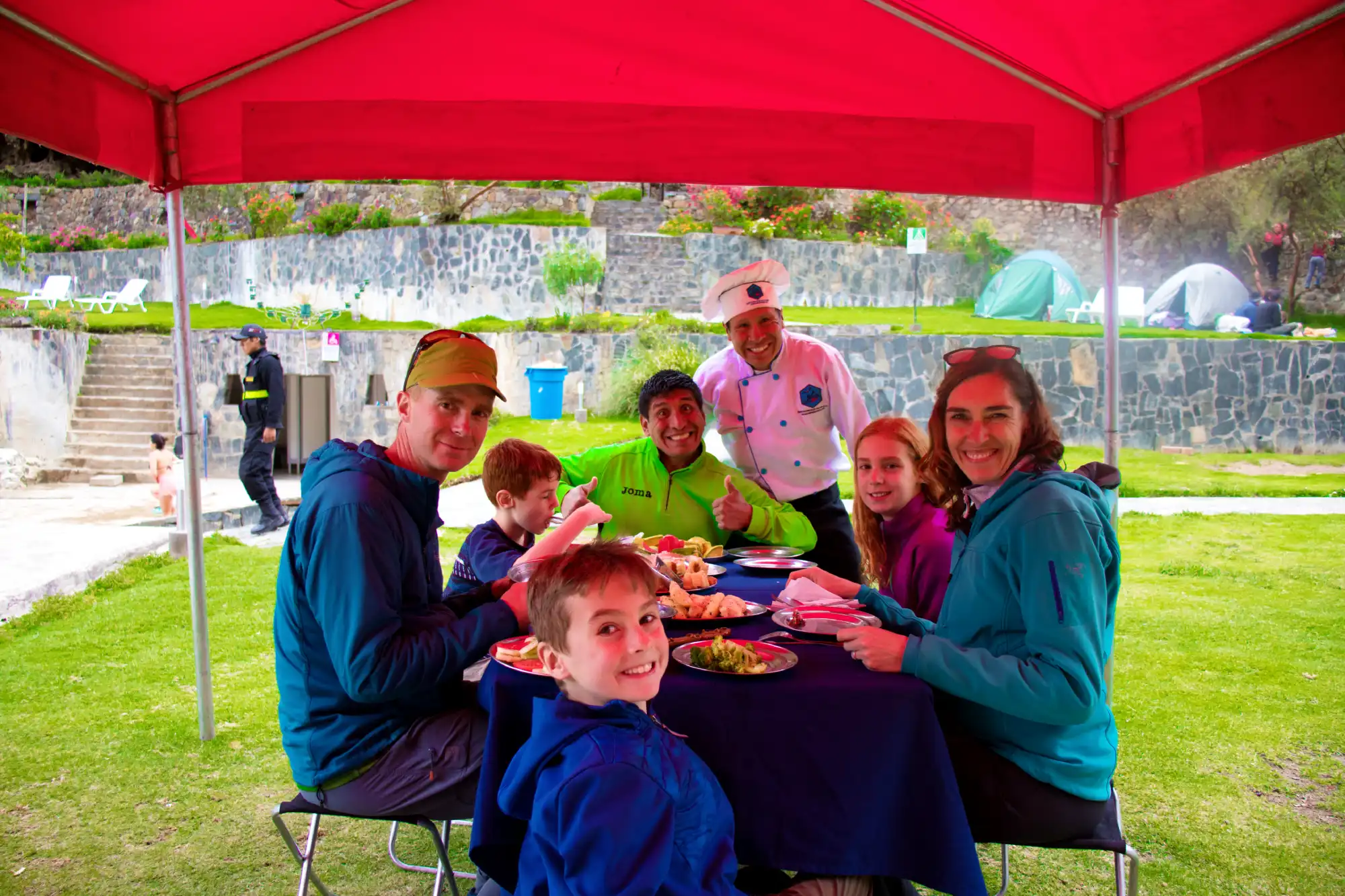
Early Morning – Pickup: Our guide will pick you up from your hotel to travel by private bus through the Sacred Valley. We will arrive at the city of Calca, where we stop at a local restaurant so you can order breakfast (optional) and stretch your legs.
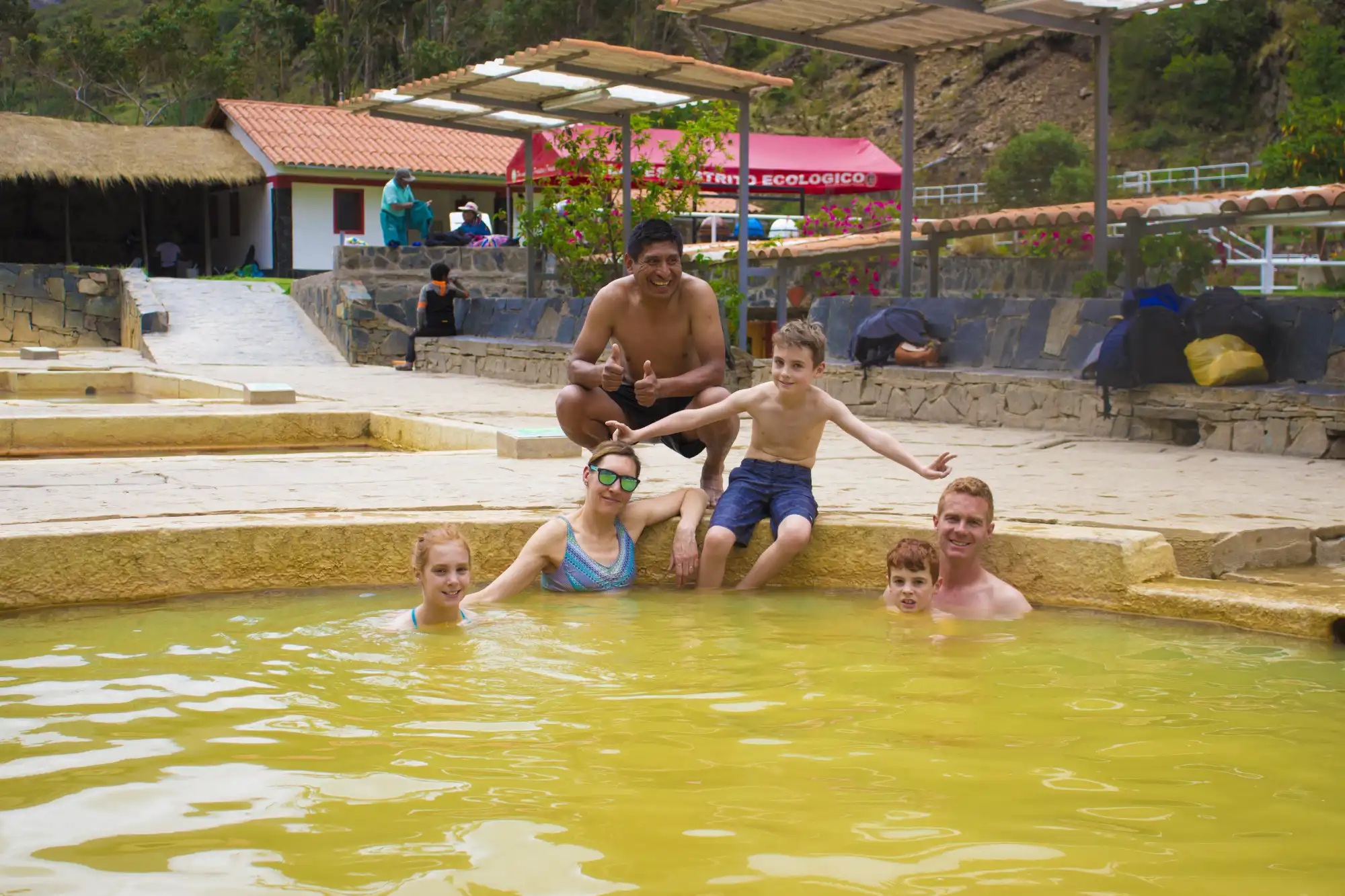
Journey to Lares: We continue our 3-hour journey to the town of Lares. Upon arrival, we climb to the famous Hot Springs. You will have time to relax in these beautiful outdoor medicinal pools and enjoy lunch in this peaceful setting.
The Trek Begins: We board our bus for a short 20-minute ride to Pascana, where our trek officially begins. We hike for about 2.5 hours through stunning landscapes to reach Quishuarani.
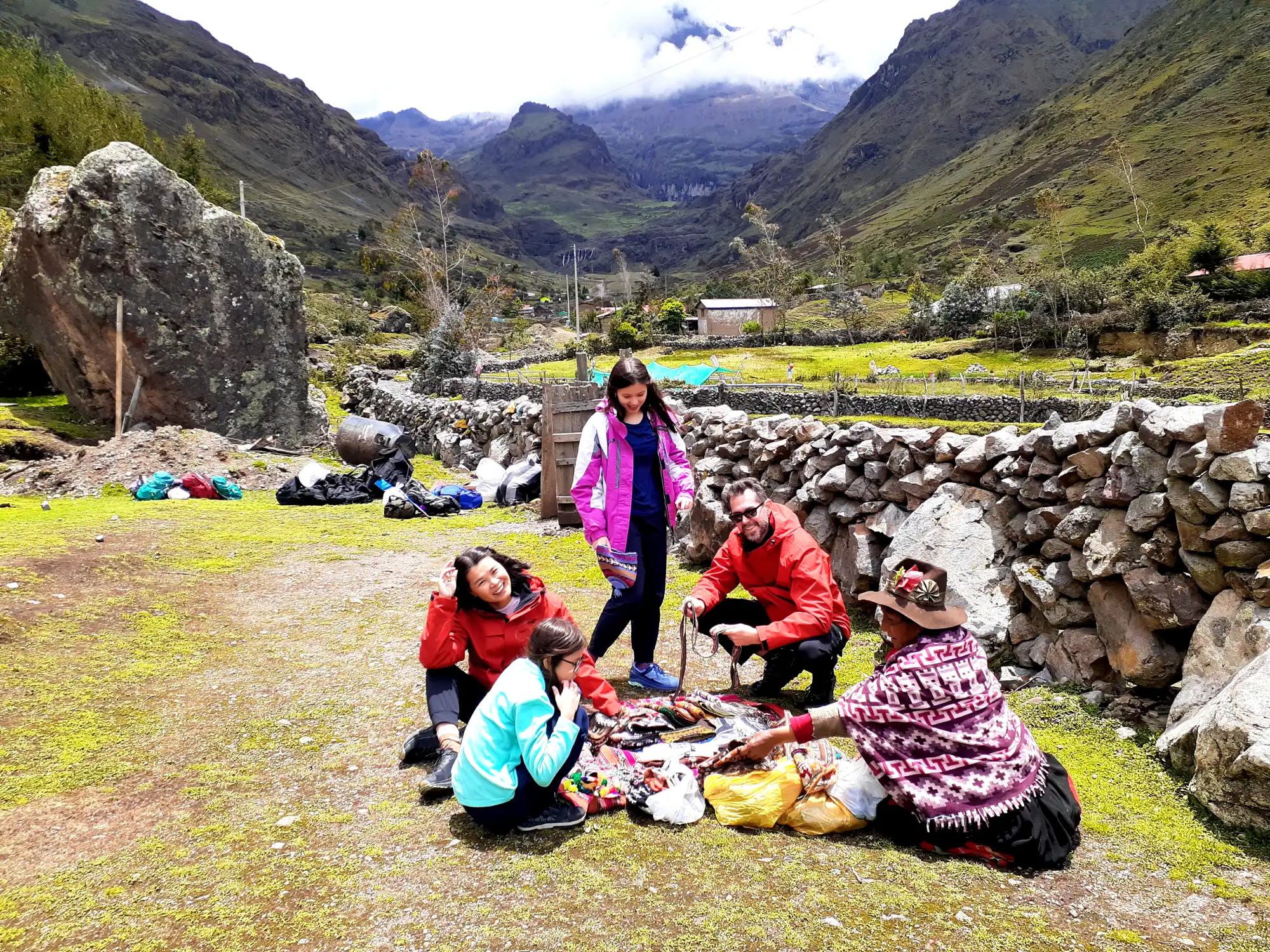
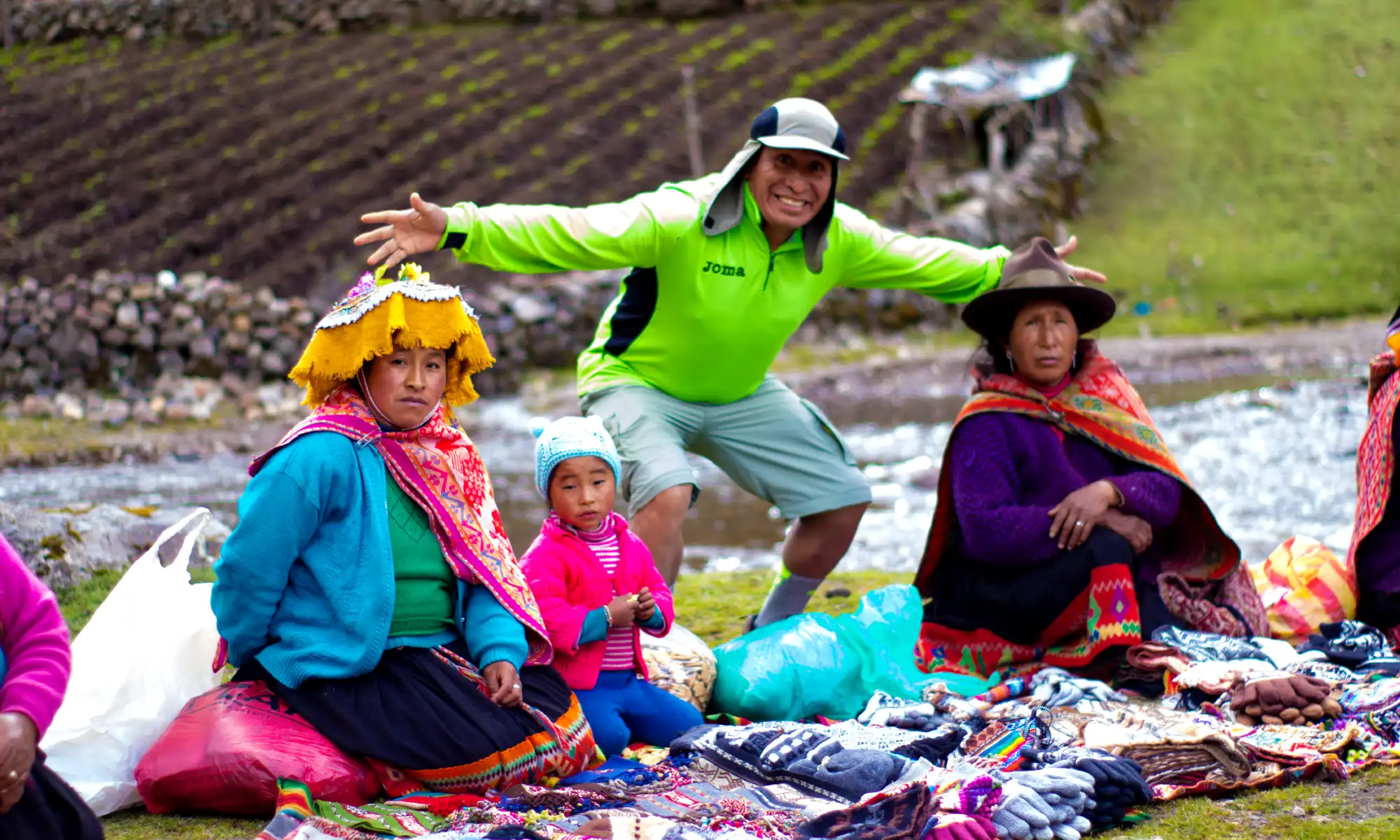
Cultural Connection: We arrive at our campsite, which will already be set up. In your free time, you can meet the local people and observe their ancestral weaving techniques—a true highlight of trekking Lares Cusco. We spend the night surrounded by mountains.
KEY DATA – DAY 1
- Total Distance: 14 km (8.70 miles).
- Walking Time: 6 to 7 hours (Total activity).
- Max Altitude: 3,700 m / 12,139 ft (Quishuarani).
- Highlight: Hot Springs & Weaver Communities.
Day 02: Quishuarani – Pachacutec Pass – Cancha Cancha
The Great Challenge: Conquering the roof of the Andes.
Early Rise: We wake up very early for a nutritious breakfast. Today is the longest and most rewarding day of the Lares trail Machu Picchu route.
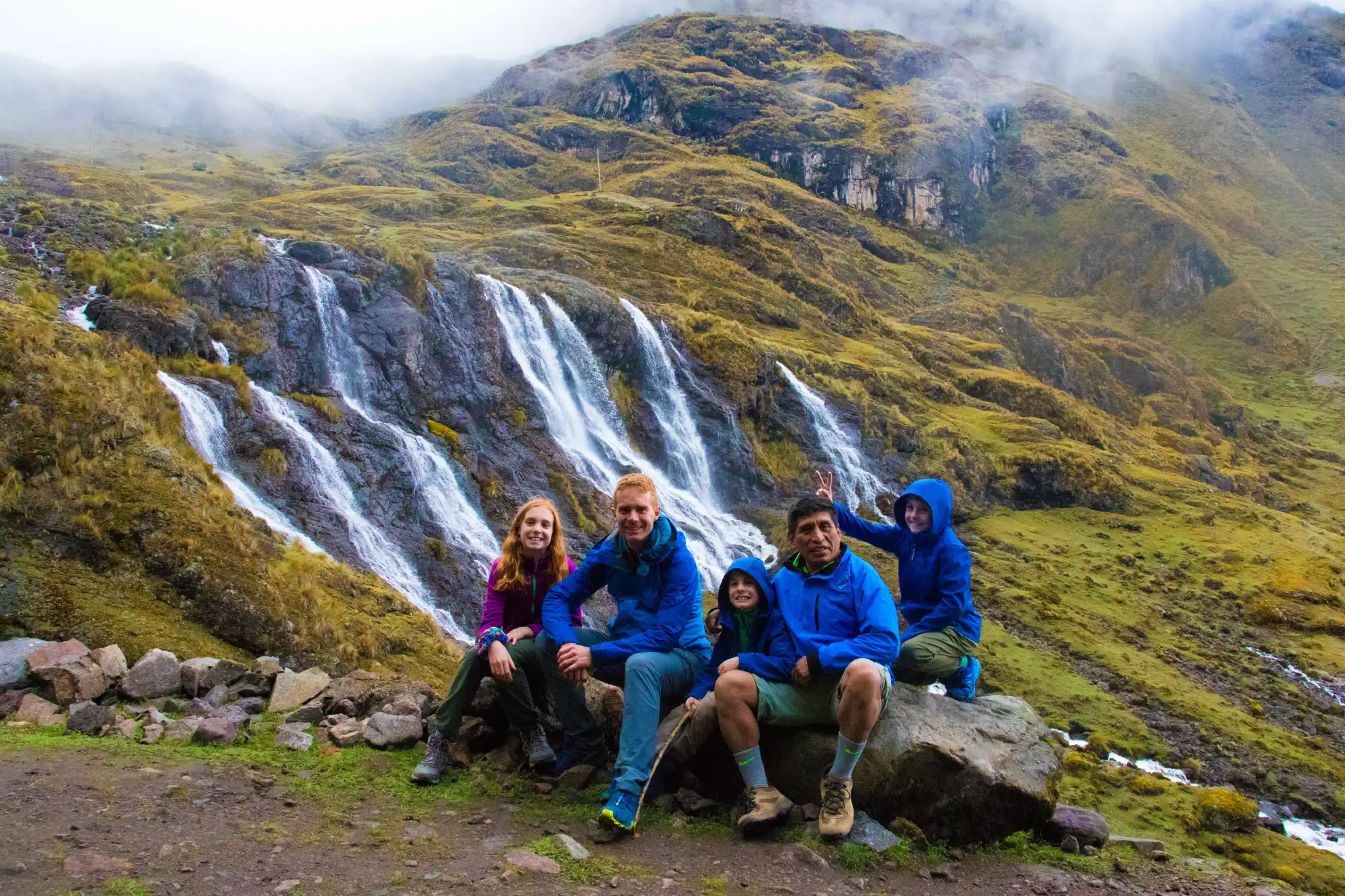
Ascent to the Summit: We begin our ascent towards the highest point of the trek: the Pachacutec Pass (4,450 m / 14,599 ft). Upon reaching the top, your effort is rewarded with magnificent views of Lake Pachacutec and the snowy peaks of Pitusiray, Sawasiray, and Chicon.
Descent to the Valley: We continue downhill for approximately 2.5 hours until we reach the village of Cancha Cancha. This isolated village has no road access, preserving its purity.
Camping & Wildlife: We will have dinner and spend the night at our campsite. Keep your eyes open; today offers great opportunities to spot Andean wildlife and unique flora.
KEY DATA – DAY 2
- Total Distance: 12 km (5.94 miles).
- Walking Time: 7 to 8 hours.
- Max Altitude: 4,450 m / 14,599 ft (Pachacutec Pass).
- Highlight: High Mountain Views & Glacial Lakes.


Day 03: Cancha Cancha – Huaran – Ollantaytambo – Aguas Calientes
Descent to the Sacred Valley and train to the jungle.
Scenic Descent: After a delicious breakfast, we start our walk downhill for approximately 5 hours. The landscape changes as we descend into the lush valley to reach the village of Huaran.
Transport to Ollantaytambo: From Huaran, we take local transport to Ollantaytambo, a beautiful and well-preserved Inca town that is still inhabited. You will have some time to explore its cobblestone streets and canals.
Train to Machu Picchu Town: We board the train to Aguas Calientes. Upon arrival, a member of our team will meet you and take you to your hotel.
Dinner & Briefing: We enjoy dinner at a local restaurant, where your guide will explain the plan for the visit to Machu Picchu the next morning. You will sleep in a comfortable bed, ready for the big day.
KEY DATA – DAY 3
- Total Distance: 12 km (5.94 miles).
- Walking Time: 6 to 7 hours.
- Accommodation: Hotel in Aguas Calientes.
- Highlight: The Sacred Valley & Train Ride.

Day 04: Machu Picchu!!! – Cusco
The sunrise at the Sanctuary and return home.
05:30 AM – The Big Day: You need to wake up early (before 05:30 am), have breakfast, and leave your luggage at the hotel. Your guide will take you to the tourist bus (Optional) to get up to the citadel early.
Sunrise & Guided Tour: Arriving early gives us the best opportunity to enjoy the beauty and magic of Machu Picchu while it is still relatively empty. We will have a guided tour of approximately 2.5 hours, visiting the most important temples and sectors.
Exploration Time: After the tour, you have about 3 hours to explore the site by yourself.
- Optional: The most enthusiastic hikers can climb Huayna Picchu or Machu Picchu Mountain (Entrance is limited and must be booked in advance).
Return to Cusco: After visiting the citadel, you will take the bus (optional) down to Aguas Calientes. Buses leave every 15 minutes. You will board the train to Ollantaytambo, followed by private transportation to Cusco. Our team will drop you off at your hotel in the evening, concluding our service.
KEY DATA – DAY 4
- Total Distance: 4 km (Walking in the Citadel).
- Max Altitude: 2,400 m / 7,872 ft (Machu Picchu).
- Activity: Guided Tour & Exploration.
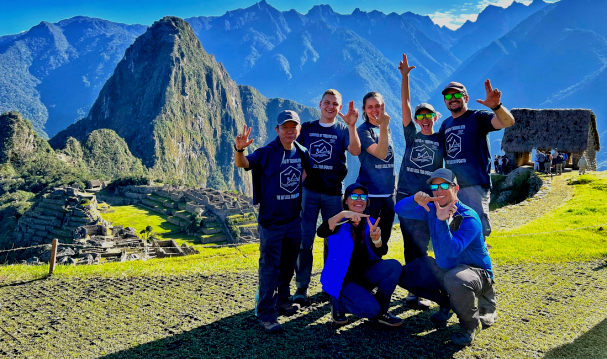
Why Choose the Lares Trek 4 Days?
The Lares Trek to Machu Picchu 4 Days and 3 Nights offers what other routes cannot: silence, authenticity, and a deep connection with the living culture of the Andes. It is the perfect balance of adventure and comfort, designed for those who want to see the real Peru.
Map
Lares Trek Route Map: Sacred Valley, Mountain Passes & Hot Springs
Trace the complete Lares Trek route on our map: from the trailhead in Quiswarani through the high Andean passes (up to 4,830 masl), past glacial lakes and traditional weaving communities of Cuncani and Patacancha, all the way to the famous Lares hot springs and your train connection to Aguas Calientes. Understanding the geography before you hike makes every step more meaningful.

Inclusions
Includes:
- Bilingual and certified Tour Guide
- A briefing about the trek with your guide the day before
- Collection from your hotel (we pick you up where you are staying from) from 6:30 to 7:00 am
- Private Transportation Van to lares valley (trailhead)
- Entrance tickets to Machu Picchu
- A duffel bag where you can put inside 08 kilos from your personal stuff (it will be carry by the horses or mules)
- Camping equipment (Kitchen tent, portable chairs and table)
- THERM-A-REST self-inflating air Sleeping mattresses (a whole new way to sleep in comfort)
- Four season tents (2 trekkers in each one) you will have enough space to put things inside
- Mattresses
- Horses or mules and muleteer to carry camping equipments and cooking stuff
- Professional Cook
- 3 Meals per day during the trek (food served in a buffet style)
- Availability of meals to your preference (vegetarian, vegan, gluten free, pesquetarian, etc)
- Snack for each day of trekking
- 1 night accommodation in a hostel Aguas Calientes and if you want to upgrade let us
- Touristic train from Aguas Calientes to Ollantaytambo
- Private Transportation from Ollantaytambo to Cusco
- Boiled water to drink during the trail
- First Aid Kit, with Oxigen ballon.
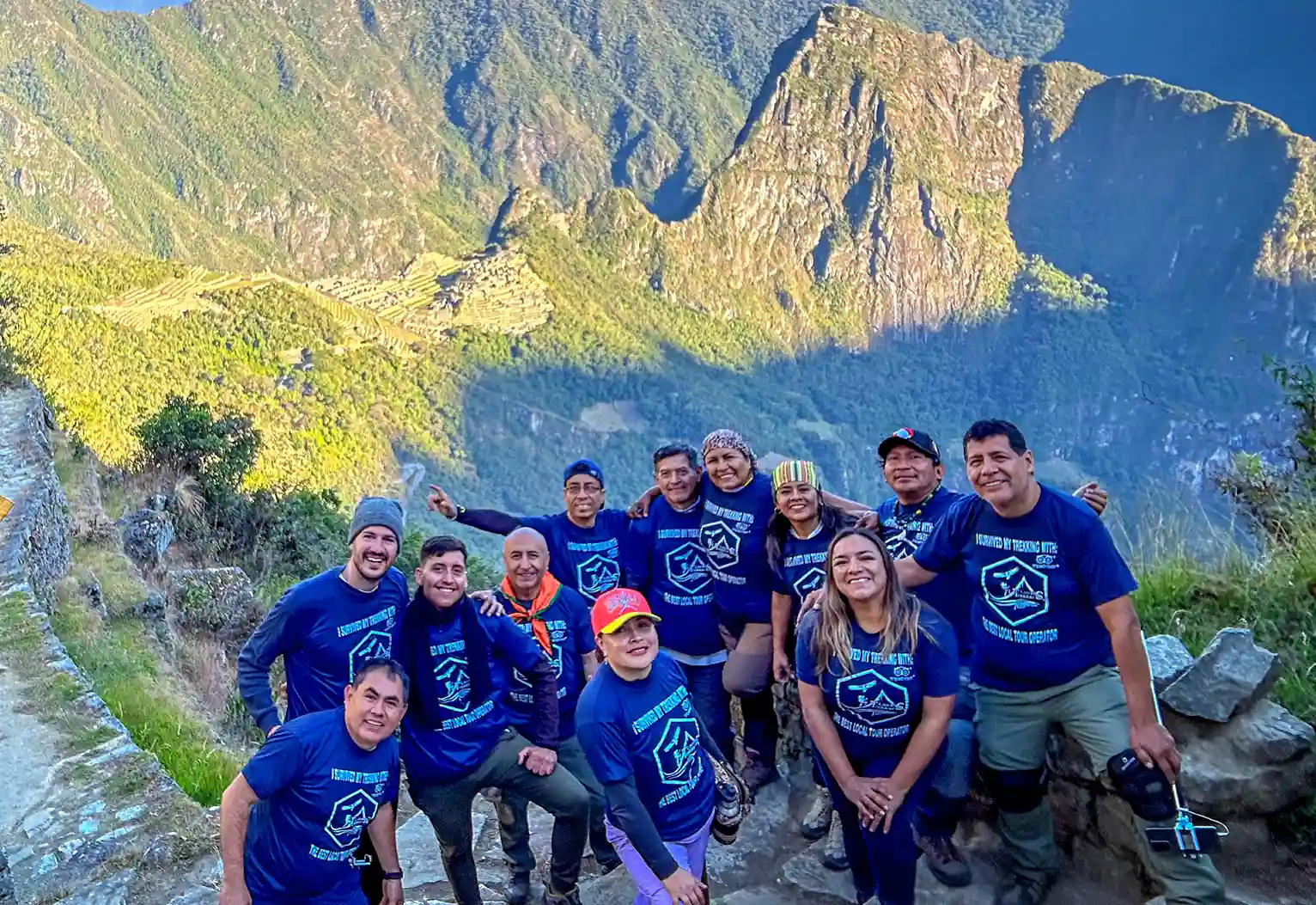
- A Survivor T – shirt, for each member of the group
Doesn’t includes:
- Extra expense if you want to buy things along the trail
- Entrance fees to Waynapicchu Mountain or Mountain Machu Picchu. (it has an extra cost of 70 dollars per person)
- Sleeping bags (you can rent from us which cost 20 dollars for a professional one, which can support until -15 degrees celcius or 5 degrees farenheit)
- Walking sticks (you can rent from us which cost 15 dollars for a professional black diamond pair)
- Mineral water (you can buy bottle of mineral water in Ollantaytambo)
- First Breakfast and last lunch and dinner
- Bus up and down from Aguas Calientes to Machu Pichu (Round trip bus cost 24 dollars but just one way cost 12 dollars)
- Upgrade your Touristic Train to a Luxury Vistadome Train to Ollantaytambo (70 $)
- Extra horse or mule to carry extra backpacks or to ride until the second campsite (150 dollars per horse or mule)
- Tips for the team (Is not obligatory but if you wish to do it, it will be welcome)
packing list
Lares Trek Packing List: What to Bring for 4 Days of Cold Nights & Cultural Encounters
- Original Passport
- A valid student card if you book this trek as student (25 years old as máximum)
- Travel Insurance card (you have to le tus know the name of your Travel Insurance company and you travel Insurance Number)
- Day Pack
- Rain coat or Rain Poncho
- Cold Clothes (For the first and Second day)
- Trekking shirts and trekking pants
- Waterproof hiking shoes
- Bottle of Water
- Flash Light
- Toilet Paper
- Sun Block
- Sun Glasses
- Caps or Hats
- Gloves (for the first and second day)
- Insect Repellent (30% DEET Recommended)
- Sleeping Bags
- Walking sticks
- Camera with extra batteries
- Extra money especially in soles to buy thing along the trek
POSITIVE MENTAL ATTITUDE.
Price
Lares Trek Low Cost Price 2026 & 2027 – What’s Included in Our Package
| Number of People for GROUP SERVICE : | ||||
|---|---|---|---|---|
| 2 | 3 | 4 | 5-6 | 7-10 |
| Price USD$ (per person): | ||||
| 650 USD$ | 650 USD$ | 650 USD$ | 650 USD$ | 600 USD$ |
| Number of People for PRIVATE SERVICE: | ||||
|---|---|---|---|---|
| 2 | 3 | 4 | 5-6 | 7-10 |
| Price USD$ (per person): | ||||
| 930 USD$ | 880 USD$ | 840 USD$ | 790 USD$ | 700 USD$ |
More Info
Everything You Need to Know Before Booking Your Lares Trek to Machu Picchu
How Difficult Is the Lares Trek? What Fitness Level Do You Need?
The Lares Trek is rated moderate — it’s the most accessible of Peru’s multi-day treks to Machu Picchu, but “moderate” still means real effort at high altitude. The route totals approximately 33 km (20.5 miles) over 3 days of hiking, with one major technical challenge: the high mountain pass on Day 2.
Difficulty breakdown by day:
| Day | Section | Distance | Difficulty |
|---|---|---|---|
| Day 1 | Cusco → Lares Hot Springs → Quiswarani | 10 km hiking | Easy–Moderate |
| Day 2 | Quiswarani → Condor Pass → Cuncani | 15 km | Hard |
| Day 3 | Cuncani → Patacancha → Ollantaytambo | 8 km | Moderate |
| Day 4 | Train → Aguas Calientes → Machu Picchu | Walking only | Easy |
What makes it challenging:
- The Condor Pass reaches 4,750 masl (15,584 ft) — higher than any point on the Inca Trail
- Rapid altitude gain on Day 2: approximately 2,000m of ascent over two days
- Cold winds and sub-zero morning temperatures at the pass
- Uneven dirt and rocky trails, especially in the descent
What makes it genuinely achievable:
- Shorter daily distances than Salkantay or the Classic Inca Trail
- Slower, more relaxed pace — cultural stops naturally break up the effort
- Pack horses carry your main gear; you only carry a daypack
- No technical climbing — it’s walking on steep natural terrain, nothing more
Local Trekkers Tip: If you can walk 2–3 hours at a brisk pace and spend 2 full days acclimatizing in Cusco, you will complete the Lares Trek comfortably. It’s an excellent first multi-day trek in the Andes.
Lares Trek Altitude — What to Expect and How to Avoid Altitude Sickness
The Lares Trek is one of the highest-altitude treks in the Cusco region, which surprises many first-timers who assume it’s the “easy” option. The trail starts at approximately 2,900 masl and peaks at the Condor Pass at 4,750 masl (15,584 ft) — significantly higher than the Inca Trail’s maximum of 4,215 masl.
Altitude profile day by day:
| Day | Location | Altitude |
|---|---|---|
| Day 1 | Lares Hot Springs (start) | 3,200 masl |
| Day 1 | Quiswarani (camp) | 3,800 masl |
| Day 2 | Condor Pass (highest point) | 4,750 masl |
| Day 2 | Cuncani (camp) | 3,750 masl |
| Day 3 | Patacancha (community) | 3,700 masl |
| Day 3 | Ollantaytambo (end) | 2,792 masl |
| Day 4 | Machu Picchu | 2,430 masl |
Altitude sickness symptoms to watch for:
- Headache (most common, especially on Day 2 morning)
- Nausea or loss of appetite
- Dizziness and fatigue
- Shortness of breath on ascent
Prevention — your pre-trek protocol:
- Arrive in Cusco at least 2–3 days before your trek start date
- Consider spending a night in the Sacred Valley (2,800 masl) — lower than Cusco and excellent for acclimatization
- Drink 3–4 liters of water daily starting from the day you land
- Drink coca leaf tea (mate de coca) — widely available in Cusco and on trail
- Pick up Soroche pills from any Cusco pharmacy
- Avoid alcohol for the first 48 hours in Cusco
- Walk slowly — the Quechua wisdom is “poco a poco”
The Lares Trek altitude exposure can be more sudden than other routes because the ascent on Day 2 is steep and fast. Our guides carry supplemental oxygen on every departure.
Best Time to Do the Lares Trek — Month by Month Guide
The Lares Trek is available year-round — unlike the Inca Trail, which closes every February. However, the experience varies significantly by season.
| Month | Season | Trail Conditions | Recommended? |
|---|---|---|---|
| January | Wet | Frequent rain, lush, muddy passes | With caution |
| February | Wet | Heaviest rain of the year | Not ideal |
| March | Wet | Rain easing, vivid green | With caution |
| April | Transition | Occasional showers, fewer crowds | Good |
| May | Dry | Clear skies, perfect conditions | Excellent |
| June | Dry | Peak season begins, reliable weather | Best |
| July | Dry | Most popular, stable and sunny | Best |
| August | Dry | Excellent conditions, busy | Best |
| September | Dry | Great weather, fewer crowds | Excellent |
| October | Transition | Mild rain possible, shoulder value | Good |
| November | Wet | Rain begins, community life most active | With caution |
| December | Wet | Increasing rain, very green landscape | With caution |
A key advantage over the Inca Trail: The Lares Trek is a year-round trek and can usually be hiked even during the rainy season, whereas the Salkantay is typically more dangerous during those months.
Temperature ranges you should expect:
| Zone | Daytime | Nighttime |
|---|---|---|
| Lares Hot Springs (3,200m) | 15–20°C | 5–10°C |
| Quiswarani camp (3,800m) | 10–15°C | 0–5°C |
| Condor Pass (4,750m) | 2–8°C | Sub-zero |
| Patacancha community (3,700m) | 12–18°C | 2–6°C |
| Ollantaytambo / Aguas Calientes | 20–26°C | 12–16°C |
Our recommendation: Book for May, June, September, or October — perfect weather, fewer crowds than July–August, and better prices.
Lares Trek vs. Inca Trail vs. Salkantay — Which Is Right for You?
This is the most searched comparison in Peruvian trekking. All three routes end at Machu Picchu, but they deliver completely different experiences.
| Feature | Lares Trek | Inca Trail | Salkantay Trek |
|---|---|---|---|
| Duration | 4 days | 4 days | 5 days |
| Distance | 33 km | 42 km | 74 km |
| Max altitude | 4,750 masl | 4,215 masl | 4,630 masl |
| Permit required | No | Yes (sells out months ahead) | No |
| February access | Open | Closed | Open |
| Crowd level | Very low | High | Moderate |
| Primary focus | Culture + communities | Inca ruins | Nature + landscapes |
| Inca ruins on trail | Minor ruins | Multiple (Wiñay Wayna) | Llactapata (distant) |
| Wildlife | Vicuñas, condors, foxes | Moderate | High (cloud forest) |
| Hot springs | Yes (Day 1) | No | Yes (Day 3 Santa Teresa) |
| Community visits | Highlight of the route | Limited | Limited |
| Weaving / cultural | Deep immersion | None | None |
| Difficulty | Moderate | Moderate–Hard | Hard |
| Good for families | Yes | Challenging for kids | Not ideal |
| Avg. low-cost price | From $350 USD | From $550 USD | From $350 USD |
| Last-minute booking | Easy | Very difficult | Easy |
Choose the Lares Trek if you:
- Want genuine cultural immersion with Quechua communities
- Are traveling with family or prefer a more relaxed pace
- Missed an Inca Trail permit and want something more than a “backup”
- Want fewer crowds and a deeply personal experience
- Are a first-time multi-day trekker in the Andes
Choose the Inca Trail if you:
- Want the historic route with multiple Inca ruins
- Have booked 6–12 months in advance
- Want the iconic Sun Gate arrival at Machu Picchu
Choose Salkantay if you:
- Want dramatic, high-mountain scenery and ecological diversity
- Are fit and seeking a physical challenge
- Want the longest, most varied landscape experience
The Quechua Communities of the Lares Valley — What Makes This Trek Truly Unique
The Lares Trek’s defining characteristic — and the reason it stands apart from every other route to Machu Picchu — is the people you meet along the way. This is not staged tourism. The communities of the Lares Valley are living, working highland Andean families who welcome trekkers into their daily world.
Communities you’ll encounter on our 4-day route:
- Quiswarani (Day 1 — 3,800 masl) A small pastoral community where families graze alpaca and sheep on the high puna. Your first real interaction with Quechua life: stone homes, colorful traditional dress, children curious and warm.
- Cuncani (Day 2 — 3,750 masl) One of the most authentic weaving communities on the entire route. Quechua culture is renowned for its vibrant textile tradition and you are likely to see women in their colorful dress spinning yarn on a traditional drop spindle or weaving on a backstrap loom. Textiles here use natural dyes from local plants — no synthetic materials.
- Patacancha / Willoq (Day 3 — 3,700 masl) Home to one of the most visually striking traditional communities in the Sacred Valley. Women and men in full traditional Andean dress. School children. Llama herds grazing in the valley below snow-capped peaks.
What cultural immersion looks like in practice:
- Watch weavers work on backstrap looms and learn about natural dye techniques
- Purchase handmade textiles directly from artisan families — your money goes directly to them
- Share chicha (fermented corn drink) or coca tea with local families
- Observe traditional farming: potato cultivation, quinoa, corn at altitude
- Interact with children practicing Spanish alongside their Quechua mother tongue
Bring small gifts for the communities — school supplies (notebooks, pens, pencils) or fruit are genuinely appreciated and culturally appropriate. Your guide will advise on what is most needed.
Lares Hot Springs — The Trek’s Most Celebrated Reward
The Lares Hot Springs are the emotional and physical heart of this trek. On Day 1, before hitting the trail, your group visits these natural thermal pools — a ritual that prepares your muscles, warms your body, and sets the mood for everything that follows.
What are the Lares Hot Springs? Natural thermal pools popular with local families and trekkers alike, located at 3,250 masl, with facilities including changing rooms and basic toilets. The water is geothermally heated, naturally sulfurous, and sits against a backdrop of Andean mountains that makes the soak genuinely memorable.
Practical details:
| Detail | Information |
|---|---|
| Location | Lares town, Calca Province |
| Altitude | 3,200 masl |
| Water temperature | 38–42°C (100–108°F) |
| When you visit | Day 1 — before hiking begins |
| Entry cost | Included in our package |
| What to bring | Swimsuit, towel, flip-flops |
| Duration of visit | 45–60 minutes |
Why it matters for trekkers: The hot springs serve a practical purpose beyond the pleasure — soaking before the trek starts helps dilate blood vessels, eases altitude acclimatization, and loosens muscles that may already be stiff from travel. Many trekkers cite it as one of the top 3 highlights of the entire 4-day experience.
Pack your swimsuit in your daypack on Day 1 — your main duffel will already be loaded on the pack horses when you reach the hot springs.
What’s Included (and Not Included) in the Low Cost Lares Trek
Transparency is how we build trust. Here’s exactly what comes with Local Trekkers Peru’s Low Cost 4-day package — and what to budget for extras.
INCLUDED:
- Private transportation: Cusco → Lares (Day 1) and Ollantaytambo → Cusco (Day 4)
- Lares Hot Springs entry (Day 1)
- Professional bilingual guide (MINCETUR-certified)
- Cook and kitchen team
- All meals during the trek: breakfasts, lunches, dinners (Days 1–3)
- Camping equipment: tents, sleeping mats, dining tent, kitchen tent, toilet tent
- Pack horses and horsemen to carry group equipment
- Train ticket: Ollantaytambo → Aguas Calientes
- Bus ticket: Aguas Calientes ↔ Machu Picchu
- Machu Picchu entry ticket (2-hour guided tour)
- First aid kit and supplemental oxygen
NOT INCLUDED:
| Item | Estimated Cost |
|---|---|
| Sleeping bag (rental available) | $10–15 USD |
| Trekking poles (rental available) | $5–10 USD |
| Personal travel insurance | Variable |
| Tips for guide, cook & horsemen | $20–30 USD recommended |
| Extra snacks and personal drinks | $10–20 USD |
| Personal medications | Variable |
| Extra night in Aguas Calientes (optional) | $25–60 USD |
| Textiles purchased from communities | Variable — budget $20–50 USD |
Is the Lares Trek Good for Families? Age Limits & Who Can Do It
The Lares Trek is widely regarded as the best Machu Picchu trek for families — and for good reason. Its shorter daily distances, moderate pace, rich cultural stops, and the magic of the hot springs make it accessible and genuinely enjoyable for a wider age range than any other route.
Age and fitness considerations:
| Profile | Lares Trek? | Notes |
|---|---|---|
| Children 10–15 years | Good with preparation | Must be comfortable walking 4–6 hours |
| Teens 15+ | Excellent | Will love the cultural interaction |
| Adults (any age) | Ideal | Manageable with proper acclimatization |
| Seniors (60+) | Possible | Medical check recommended; slow pace helps |
| Very young children (<8) | Not recommended | Distance and altitude make it unsafe |
Why families choose the Lares Trek:
- Cultural community visits break up the physical effort naturally
- Pack horses mean parents don’t carry heavy loads
- Shorter days (5–7 hours hiking) vs. Salkantay’s 8–10 hour days
- The hot springs are loved by all ages
- Slower pace means more time for photos, questions, and rest
- Local children in the communities are a natural point of connection
For senior trekkers: The moderate difficulty level suits reasonably fit adventurers without requiring extreme athleticism or technical skills. Seniors in good health who acclimatize properly regularly complete this trek successfully. Tripadvisor
Our advice for families: Book a private departure so we can set the pace specifically around your group. Let us know the ages and fitness levels of all participants at booking.
How to Get to the Lares Trek Starting Point — Logistics from Cusco
The Lares Trek starts in the Lares Valley, approximately 3–4 hours from Cusco by road, passing through the Sacred Valley. Here’s how the full logistics work:
With Local Trekkers Peru (everything included):
- Hotel pickup in Cusco between 6:00–6:30 AM on Day 1
- Private transportation to Calca (local market stop, 1 hour)
- Onward to Lares Hot Springs (2 more hours through the mountains)
- Hot springs soak, lunch, then drive to Quiswarani (trailhead, 3,800m)
- All transport is arranged and included — you simply arrive and enjoy
Getting to Cusco:
| Origin | Transport | Duration |
|---|---|---|
| Lima | Daily flights | 1h 20min |
| Arequipa | Bus or flight | 10h / 1h |
| Puno / Lake Titicaca | Bus | 6–7h |
| International | Fly into Lima, connect to Cusco | Variable |
Acclimatization — the most important logistics:
- Do NOT start the trek the day you land in Cusco. The altitude shock from Lima (sea level) to Cusco (3,400m) is real and dangerous if ignored.
- Spend minimum 2 full days in Cusco before your trek start — ideally 3.
- Even better: spend 1 night in the Sacred Valley (2,800m) which is 600m lower than Cusco and accelerates acclimatization.
- Light activity only during acclimatization days — gentle walks, no exertion.
If you’re combining the Lares Trek with other Peru travel (Arequipa → Puno → Cusco), the gradual altitude gain from the southern route is an excellent natural acclimatization strategy.
Physical Training for the Lares Trek — A 4-Week Preparation Plan
You don’t need to be an elite hiker, but arriving with some preparation transforms the experience. The biggest variable is not fitness — it’s altitude. That said, stronger legs and better cardiovascular endurance make every day more enjoyable.
4-week training plan:
| Week | Focus | Recommended Activities |
|---|---|---|
| Week 1 | Aerobic base | 3x 40-min brisk walks, flat terrain |
| Week 2 | Endurance + incline | 2x hikes with elevation (hills, stairs, inclines) 50–60 min |
| Week 3 | Load + distance | Hike 2–3 hours with a 5–6 kg daypack on varied terrain |
| Week 4 | Taper + rest | Light walking only, focus on sleep, nutrition, hydration |
Key muscle groups to strengthen:
- Quads — crucial for the long descent from Condor Pass on Day 2
- Glutes and hamstrings — power for the uphill sections
- Ankles — stability on rocky, uneven trail surfaces
- Cardiovascular system — any sustained aerobic activity helps at altitude
Gear break-in is non-negotiable:
- Never wear brand-new hiking boots on Day 1 of the trek
- Break them in with 6–8 hours of walking in the weeks before departure
- Test your sleeping bag in cold conditions if possible
Training shortcuts (if you have only 2 weeks):
- Daily 45-min walks at a fast pace, incorporating any available steps or hills
- Start hydrating well 1 week before departure — arrive in Peru already well-hydrated
- Get extra sleep the week before traveling
The Lares Trek is more altitude than fitness. A well-acclimatized person with average fitness will outperform a very fit person who jumped straight from the airport to the trailhead every time.
FAQs
Frequently Asked Questions About the Lares Trek to Machu Picchu
Unequivocally yes — and it’s worth it for reasons no other trek to Machu Picchu can match. The Lares Trek is not simply a route to a famous destination; it’s a window into a way of life that has survived centuries of history with remarkable integrity.
What makes it genuinely special:
- You walk through living Quechua communities where families greet you in traditional dress, weave textiles by hand, and farm the same crops the Incas cultivated. This is not a performance for tourists — it’s daily life.
- The landscapes are legitimately spectacular: glacial lakes at 4,000m, Andean condors soaring overhead, snow-capped peaks of the Urubamba range framing every campsite
- The Lares Hot Springs on Day 1 set the tone immediately — soaking in geothermal pools at 3,200 masl before your trek begins is a uniquely Peruvian experience
- You arrive at Machu Picchu rested and recovered — unlike the Inca Trail where Day 4 arrives after maximum exhaustion, the Lares route transitions you via train, so you enter the citadel with energy to fully absorb it
One traveler summed it up perfectly: “Absolutely worth it — aside from the jaw-dropping vistas and the excellent food, we got to travel through remote villages and see a way of life that is fast disappearing.”
The Lares Trek is rated moderate, making it the most accessible multi-day trek to Machu Picchu — but “moderate” does not mean easy, especially for anyone underestimating the altitude.
Honest difficulty comparison:
| Factor | Lares Trek | Inca Trail | Salkantay Trek |
|---|---|---|---|
| Total distance | 33 km | 42 km | 74 km |
| Max altitude | 4,750 masl | 4,215 masl | 4,630 masl |
| Hardest day | Day 2 (Condor Pass) | Day 2 (Dead Woman’s Pass) | Day 2 (Salkantay Pass) |
| Trail surface | Dirt, rocky, natural | Inca stone paving | Dirt, gravel, mud |
| Technical difficulty | Low | Moderate | Low-Moderate |
| Overall rating | Moderate | Moderate-Hard | Hard |
| Best for | Families, beginners, culture lovers | History enthusiasts | Adventure seekers |
The Lares Trek is softer in some ways and tougher in others — while the daily distances tend to be shorter than the Inca Trail or Salkantay, the altitude exposure can be more sudden.
The bottom line: The Lares Trek has the highest maximum altitude of the three main routes, but its shorter distances and slower cultural pace make it the most achievable overall. With proper acclimatization, moderately fit travelers complete it comfortably.
The Lares Trek is widely considered the coldest of the main trekking routes to Machu Picchu — a fact that surprises many first-timers. The high Andean puna offers little wind protection, and campsite temperatures can be genuinely harsh.
Temperature reality check:
| Time / Location | Temperature Range |
|---|---|
| Daytime hiking (most sections) | 12–20°C (54–68°F) |
| Condor Pass (4,750m) — daytime | 2–8°C (36–46°F) |
| Camp at night (3,700–3,800m) | -5 to 2°C (23–36°F) |
| Lares Hot Springs area | 15–20°C (59–68°F) |
| Aguas Calientes (Day 4) | 20–26°C (68–79°F) |
What this means for your gear:
- A sleeping bag rated to -10°C (14°F) is strongly recommended — not -5°C, not a standard summer bag
- A quality down or synthetic insulated jacket is essential for evenings and the pass
- Thermal base layers are worn every night at camp
- Nights can drop to -5°C (23°F) at the campsites — a sleeping bag rated for -10°C is recommended.
The cold is manageable with the right gear and is part of the Lares experience — waking up to frost-tipped tents with Andean peaks glowing in the sunrise is one of the trek’s most memorable moments.
No — the Lares Trek requires no hiking permit. This is one of its biggest practical advantages over the Inca Trail, which requires government-issued permits that regularly sell out 6–12 months in advance.
What IS required:
| Requirement | Details |
|---|---|
| Trail permit | Not required |
| Machu Picchu entry ticket | Required — daily limits, books out fast in peak season |
| Train ticket (Ollantaytambo → Aguas Calientes) | Required — we book this for you |
| Bus ticket (Aguas Calientes ↔ Machu Picchu) | Required — included in our package |
| Licensed guide | Not legally mandatory (but essential for safety and cultural insight) |
The practical implication: The Lares Trek can be booked weeks rather than months in advance, and it’s available every single day of the year — including February, when the Inca Trail closes entirely for maintenance.
When you book with Local Trekkers Peru, we handle all ticket logistics — Machu Picchu entry, train tickets, and all pre-trek arrangements. You focus on the experience; we manage the paperwork.
The Lares Trek is excellent for solo travelers and one of the most social trekking experiences in Peru. When you join a shared group departure, you’re immediately part of a small team of like-minded travelers from around the world — bonded by altitude, cold mornings, and the shared wonder of the communities you pass through.
Solo travel practicalities:
- Solo travelers join shared group departures (typically 6–14 people)
- Solo travelers are paired to share a tent with another traveler of the same sex; couples have a tent to themselves.
- Solo female travelers consistently report feeling safe and well-supported throughout
- The cultural community stops naturally create connection — there’s no awkward “first day of school” feeling when you’re all marveling at a weaver together
Is the Lares Trek safe for solo travelers? Very safe. The communities are welcoming, and the most important thing is to be physically prepared and well-equipped for the trek. The presence of a professional guide, cook, and horsemen means you’re never managing logistics alone.
Many solo travelers list the Lares Trek as one of the best solo travel decisions of their lives — the small group format and cultural richness make it far more connective than independent travel.
Food on the Lares Trek is one of the most consistently praised aspects of the experience. A dedicated cook accompanies every group and prepares 3 full meals per day plus trail snacks, using fresh local Peruvian ingredients at every stage.
Typical daily menu:
- Breakfast (at camp): Quinoa porridge or pancakes, eggs any style, fresh bread, seasonal fruit, hot drinks — coca tea, coffee, hot chocolate
- Trail snacks: Quinoa bars, local fruit, crackers, nuts, chocolate
- Lunch (trail-side): Hot soup to start, main dish with rice or potatoes and protein, herbal tea
- Dinner (at camp): 3-course meal — soup, main course with local vegetables, protein, and dessert (yes, the cook carries a cake to 4,000m — it happens)
Dietary options available:
| Diet | Available? | Notes |
|---|---|---|
| Vegetarian | Yes | Confirm at booking |
| Vegan | Yes | Possible with advance notice |
| Gluten-free | Yes | Confirm at booking |
| Lactose intolerant | Yes | Confirm at booking |
| Nut or severe allergies | Discuss at booking | Remote conditions limit some substitutions |
Always declare dietary requirements at the time of booking, not on departure day. Our cook prepares everything from scratch at camp — adjustments are easy when planned in advance.
The Lares Trek has no permit cap, giving you much more flexibility than the Inca Trail. That said, advance booking is still essential for a smooth experience:
| Season | Recommended Booking Lead Time |
|---|---|
| Peak season (June–August) | 4–6 weeks ahead minimum |
| Shoulder season (April–May, Sept–Oct) | 2–4 weeks ahead |
| Low season (November–March) | 1–2 weeks possible |
| Last-minute (same week) | Risky — train and Machu Picchu tickets may not be available |
Why booking early matters even without a trail permit:
- Machu Picchu entry tickets have strict daily visitor limits and sell out weeks ahead in high season
- Train tickets (Ollantaytambo → Aguas Calientes) have limited availability on popular routes
- The best shared departure groups fill up; last-minute spots go to whichever operator has space
Booking at least 2–3 months in advance is recommended to secure preferred train times and entry slots. Contact us via WhatsApp for real-time availability on your dates.
The Lares Valley is one of the best trekking corridors in the Cusco region for Andean wildlife encounters — precisely because it receives far fewer visitors than the Inca Trail or Salkantay route. Less foot traffic means animals are less disturbed and more visible.
Wildlife you’re likely to see:
Almost guaranteed:
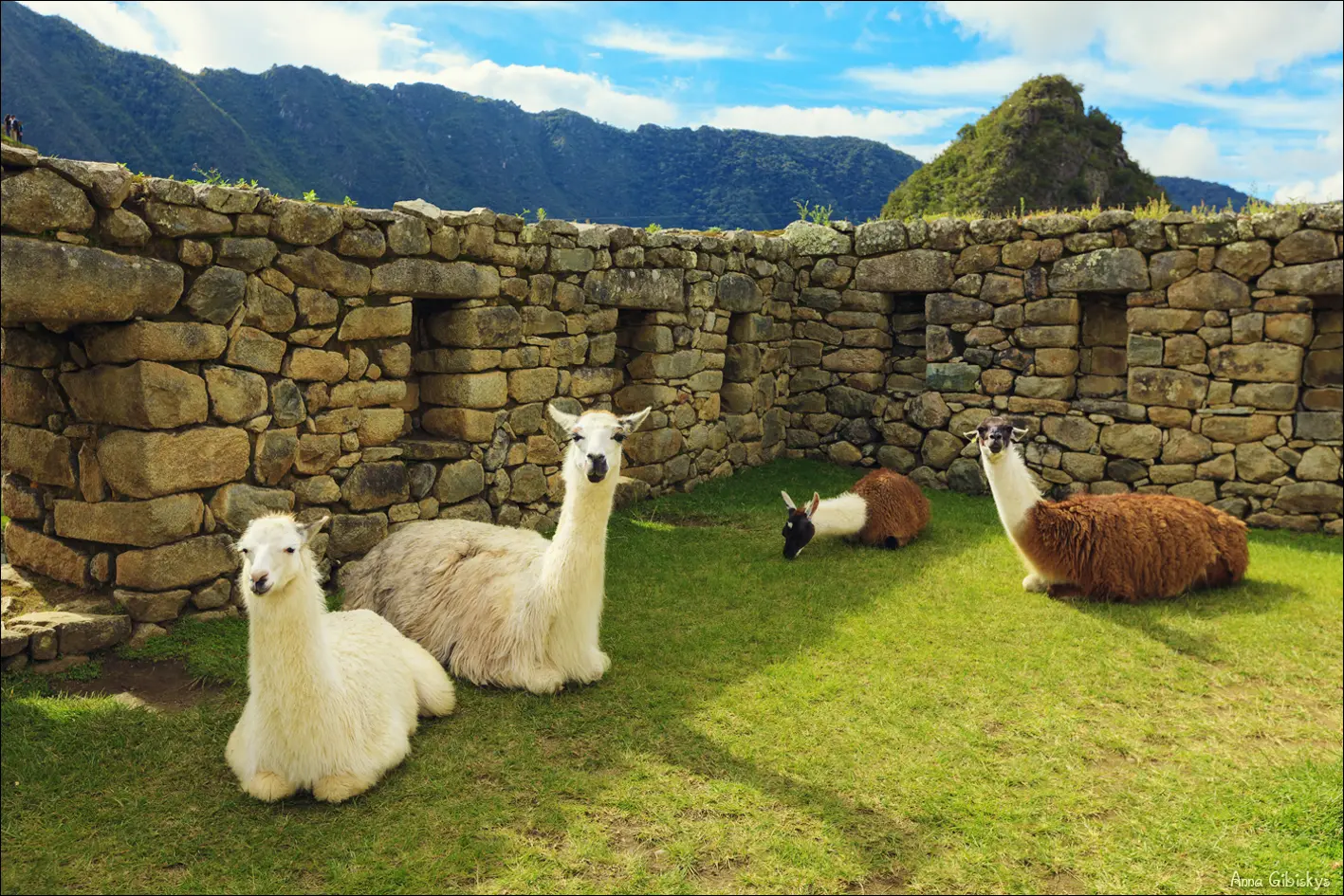
- Alpacas and llamas — herded by local families throughout the valley; you’ll walk alongside them daily
- Vicuñas — wild camelids at high altitude, graceful and elusive; frequently spotted near the passes
- Andean dogs and horses — working animals of the communities
Frequently spotted:
- Andean Condor (Vultur gryphus) — one of the most famous Andean animals, a bird of prey that can reach a three-metre wingspan. Often soaring above the Condor Pass — named for a reason
- Hummingbirds — multiple species in the valley sections
- Andean Goose, Andean Lapwing — common near the glacial lakes
With luck:
- Andean Fox (Culpeo) — occasionally seen near campsites at dusk
- Viscacha — rabbit-like rodents that blend into rocky terrain; watch carefully near boulders
- Spectacled Bear — rare but possible in the lower cloud forest zones; South America’s only bear
Flora highlights:
- Polylepis (Queuña) forests — ancient twisted trees growing above 4,000m; globally rare and ecologically critical
- Ichu grasslands — the golden puna landscape covering the high passes
- Wild orchids and bromeliads — lower valley sections near community areas
Bring binoculars if wildlife is important to you — and always ask your guide to point out what they see. Local guides know exactly where to look.
One of the distinctive features of the Lares Trek is that it ends at Ollantaytambo — the magnificent Inca fortress town in the Sacred Valley — from where you board a train through the mountains to Aguas Calientes (Machu Picchu Pueblo).
The journey from Ollantaytambo to Machu Picchu:
| Step | Details | Duration |
|---|---|---|
| Arrive Ollantaytambo (Day 3 end) | After final hiking day, vehicle transfer | ~1 hour from Patacancha |
| Train: Ollantaytambo → Aguas Calientes | Scenic mountain rail journey | ~1h 30min–2 hours |
| Night in Aguas Calientes | Hotel stay included in our package | Overnight |
| Bus: Aguas Calientes → Machu Picchu gate | Winding mountain road | ~25 minutes |
| Guided tour of Machu Picchu (Day 4) | 2-hour guided visit with licensed guide | 2 hours + free time |
| Return: Bus → train → Cusco | Aguas Calientes → Ollantaytambo → Cusco | ~3–4 hours total |
About the train: The rail journey from Ollantaytambo to Aguas Calientes is spectacular in its own right — the tracks descend through the Sacred Valley as the mountains close in, cloud forest appears, and the Urubamba River runs alongside the tracks. Many trekkers say this 90-minute journey is one of the most beautiful train rides they’ve ever taken.
All train and bus tickets are included in our Low Cost package. You don’t need to manage bookings, transfers, or timing — we coordinate everything.
The Lares Trek is the best multi-day Andean trek for first-timers — and this is a genuine recommendation, not marketing language. Its combination of moderate distances, cultural stops that naturally pace the day, and the psychological motivation of the community visits makes it uniquely well-suited to people doing their first high-altitude trek.
You do NOT need prior trekking experience if you:
- Can walk briskly for 3+ hours without needing to stop
- Are willing to acclimatize properly in Cusco for 2–3 days before the trek
- Are prepared for genuine cold at night (gear matters more than experience)
- Have no serious cardiovascular or respiratory conditions
Honest expectations for first-timers:
- Day 1 is gentle — the hot springs warm you up literally and figuratively
- Day 2 will test you — the ascent to Condor Pass (4,750m) is hard regardless of experience. Walk slowly, breathe deeply, trust your guide
- Days 3–4 feel progressively easier as you descend and your body adjusts
- Machu Picchu on Day 4 hits differently when you’ve earned the approach through the mountains
Minimum fitness benchmark: If you can climb 10 flights of stairs without stopping to catch your breath and walk 45 minutes at a fast pace, you have the baseline fitness needed. Acclimatization will matter far more than your gym record.


