Choose the 5-day Salkantay if this is your first high-altitude trek, you want time to photograph Humantay Lake and the pass properly, and you want the detour up to the Llactapata ruins. Choose the 4-day Salkantay if you’re an experienced hiker on a tight schedule and you’re fine trading Llactapata and a relaxed pace for two fewer nights on the trail.
The two itineraries cover mostly the same terrain — same pass, same peak, same final approach to Machu Picchu — but they are not the same trek with one day trimmed off. The 4-day version compresses the walking, cuts specific stops, and demands more from your body each day. If you pick it without the fitness to back it up, you’ll finish exhausted rather than satisfied.
This isn’t a “both are valid, it depends on you” answer dressed up as a decision. For most first-time trekkers, 5 days is the right call. The 4-day version is a genuine option only if you meet the physical bar described below.

Salkantay 4 Days vs 5 Days: Comparison Table
| 5 Days (Classic) | 4 Days (Challenge) | |
|---|---|---|
| Total distance | 70–74 km (43–46 miles) | Approx. 60–65 km (37–40 miles) — shorter due to route shortcuts |
| Daily walking hours | 6–7 hours average | 8–10 hours average |
| Highest point | Salkantay Pass, 4,630 m (15,190 ft) | Salkantay Pass, 4,630 m (15,190 ft) — identical |
| Difficulty | Moderate to Challenging | Challenging to Very Challenging |
| Llactapata visit | Usually included | Usually skipped |
| Cocalmayo hot springs | Usually included | Usually skipped |
| Permits required | None | None |
| Cost | Aprox. $550 and $650 USD per person | Aprox. $550 and $650 USD per person |
Neither version requires a permit, so the decision comes down to fitness, time, and what you’re willing to cut — not availability.
The Differences That Actually Matter
It’s not one day shorter, it’s compressed
The 4-day itinerary doesn’t just remove a night — it fits nearly the same distance into less time by walking longer daily hours and skipping optional stops. On the 5-day route you’re covering roughly 70–74 km (43–46 miles) at 6–7 hours a day. On the 4-day route, total distance drops to around 60–65 km (37–40 miles)
I confirm our 4-day Salkantay route spans a demanding 62 kilometers. As operations manager, I always warn trekkers: you are not saving effort by choosing the shorter version; you are concentrating it. Because we compress what is typically a 5-day journey into just 4 days, your daily hiking hours will regularly climb to 8 or 10 hours of sustained trekking.
Day two is particularly grueling, as you will tackle the high pass and then continue a long, steep descent into the cloud forest on the same day. This itinerary is specifically designed for highly fit, well-acclimatized hikers who thrive under physical pressure.
If you prefer a balanced pace with more time for recovery at camp, the 5-day option is always our primary recommendation. but daily hours climb to 8–10. You’re not saving effort by choosing the short version — you’re concentrating it.
Llactapata is the biggest trade-off
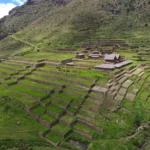
The 5-day itinerary usually includes the climb to the Llactapata ruins, which gives you a distant view of Machu Picchu from another mountain before you arrive at the citadel itself — a genuinely different vantage point most visitors never see. The 4-day version usually cuts this to save time and go directly toward Hidroelectrica. If seeing Machu Picchu from Llactapata matters to you, that alone should settle the decision in favor of 5 days.
Cocalmayo hot springs: recovery or skip
After two cold nights near the pass, the stop at the Cocalmayo hot springs on the 5-day route is genuine physical relief, not just a nice-to-have. The 4-day itinerary typically skips it to keep moving toward Aguas Calientes. If your legs are already tired from the compressed pace, missing this stop is felt more than it sounds on paper.
Recovery time between hard days
Both routes cross the same 4,630 m (15,190 ft) pass, so the altitude challenge itself doesn’t change. What changes is recovery. On the 5-day route, your body gets a full extra day to recover between the pass and the final push to Machu Picchu. On the 4-day route, that recovery window shrinks, and the days immediately after the pass are also your longest walking days. This is the main reason the 4-day version is harder than “one less day” implies — you’re asking a tired body to do more, not less, right after the hardest section.
Humantay Lake: full stop or quick photo
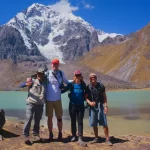
Both itineraries include Humantay Lake at 4,120 m (13,517 ft), but the time you spend there differs. On the 5-day route it’s typically a proper stop — enough time to sit, acclimatize a bit more, and take photos without rushing. On the 4-day route it tends to be a shorter visit, since the day’s schedule has less slack built in.
On our 4-day itinerary, we intentionally allocate a full 1.5 to 2 hours at Humantay Lake. Many operators treat this stop as a rushed detour, but in our experience, the altitude and the sheer beauty of the turquoise water demand proper time to absorb. Because our private transport gets us to Challacancha early, we typically arrive at the lake by late morning or early afternoon.
This timing is a massive operational advantage, as it allows our groups to explore the moraine ridges and take photographs long after the large crowds of daily tour buses have already departed back to Cusco.
It ensures our trekkers experience the glacier in total peace before heading down to our Soraypampa camp.


Which Itinerary to Choose for Your Case
First time at altitude, no rush
Book the 5-day Salkantay. The moderate pace gives your body more time to adjust between the pass and the final days, and you keep Llactapata and the hot springs, which most first-timers say were worth the extra day afterward. This is also the itinerary we recommend to most travelers who haven’t done a multi-day trek above 3,000 m (9,840 ft) before. Book it through our 4-day Salkantay Trek to Machu Picchu page.
Experienced hiker, limited vacation days
Book the 4-day Salkantay Challenge. If you regularly do cardio, have completed multi-day treks before, and your trip dates are fixed, the compressed itinerary lets you finish in less time without skipping the pass or the peak itself. Be honest about your fitness before choosing this — the daily hours are meaningfully longer, not just the trip overall.
Traveling with a mixed-ability group
If your group includes people with very different fitness levels, the 5-day pace is the safer shared choice. The 4-day itinerary’s longer daily hours are harder to manage as a group when paces vary, and slower hikers on that schedule can end up walking in the dark. Talk to us directly about your group’s makeup before booking either option — we can help you figure out which pace actually fits everyone, not just the strongest hiker in the group.
FAQs
Is the Salkantay 4-day trek significantly harder than the 5-day version? Yes. Total distance is similar to slightly shorter, but daily walking hours increase from roughly 6–7 to 8–10, with less recovery time after the pass. That combination, not the single missing day, is what makes it harder.
Do both itineraries reach the same highest point? Yes. Both cross the Salkantay Pass at 4,630 m (15,190 ft). The altitude challenge itself is identical — what changes is how much time your body gets to recover around it.
Which itinerary includes Machu Picchu entry, and is it the same for both? Both itineraries end at Machu Picchu.
Both our 4-day and 5-day Salkantay packages include the standard Machu Picchu main entrance ticket (Circuit 2 or equivalent classic circuit assigned by the Ministry of Culture). The baseline ticket inclusions and circuit access do not differ between the two packages.
However, the key operational difference lies in time management. On the 5-day trek, you wake up fully rested in Aguas Calientes on Day 5, giving you ample time to add optional mountain permits like Huayna Picchu or Machu Picchu Mountain without rushing.
On the 4-day trek, because you must balance your sanctuary visit with same-day return train schedules, adding Huayna Picchu requires strict coordination with early morning entry slots. Both add-ons must be requested far in advance during booking due to daily permit caps.
Can I upgrade from the 4-day to the 5-day itinerary after booking? Switching between the 4-day and 5-day Salkantay itineraries after booking is possible, but it requires a minimum of 30 days’ advance notice prior to your departure date.
When you book, our operations team immediately secures non-refundable Machu Picchu entrance tickets and specific train departures for your scheduled final day. Altering the length of your trek completely shifts the dates for these tightly regulated tickets.
Furthermore, we must adjust our campsite reservations, chef schedules, and private transport logistics. Last-minute changes (under 30 days) are rarely accommodated during the peak dry season, as train seats and park tickets for the newly requested dates will likely be sold out.
Is the 4-day version cheaper than the 5-day version? For the 2026/2027 seasons, both the 4-day and 5-day Salkantay itineraries generally run between $550 and $650 USD per person. Many trekkers mistakenly assume that dropping a day significantly reduces the price, but this is rarely the case.
The core operational costs—Machu Picchu entrance permits, train tickets from Aguas Calientes, guides’ wages, and the logistical expense of deploying private transport—remain largely identical. In fact, compressing the transport logistics into a shorter timeframe sometimes increases operational complexity.
The price difference between the two routes is minimal; the real deciding factor should always be your physical fitness and how much time you want to spend enjoying the trail.
For the full route breakdown — daily distances, altitude profile, and what to expect on any Salkantay itinerary — see our Salkantay Trek: The Complete Guide. If your dates are still flexible, our guide to the best time to do the Salkantay trek will help you decide when to go before you decide how many days to spend doing it. And if you’re weighing Salkantay against a different route entirely, our Lares vs. Salkantay comparison covers that decision in more detail.