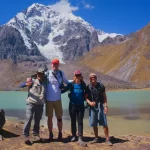
The best time to do the Salkantay trek is May to September, during the dry season, when trails are firm, skies are usually clear, and you get unobstructed views of Nevado Salkantay at 6,271 m (20,574 ft). October and April are solid shoulder-season options with fewer people on the trail. February is the one month we recommend you skip.
- Go May–September for the most reliable weather and the classic postcard views of the pass.
- Go October or April if you want a quieter trail and don’t mind a chance of rain.
- Avoid February — this is peak rainy season, landslide risk is at its highest, and it’s also when the Inca Trail is closed for maintenance.
Unlike the Inca Trail, Salkantay has no permit system and no daily hiker quota, so you can usually book with short notice regardless of the month you choose. That flexibility is the trek’s biggest practical advantage — you’re not racing to reserve a permit five months out.
The Real Weather on the Salkantay Trek, by Altitude
Salkantay isn’t one climate — it’s four or five, stacked on top of each other over 70–74 km (43–46 miles). What you feel depends far more on where you are on the trail than on what the calendar says.
Cusco, before you start — 3,400 m (11,150 ft): Cold, dry nights year-round. Daytime sun is intense even in the rainy season. Expect roughly 15–20 °C (59–68 °F) by day and close to freezing after sunset.
Soraypampa camp — 3,900 m (12,795 ft): This is where most people feel the cold hardest, because it’s your first night at altitude. Daytime temperatures sit around 12–17 °C (54–63 °F) with strong sun; nights drop to -5 °C (23 °F) in the dry season, a little milder but wetter in the rainy months.
Soraypampa 5:00 a.m. Temperatures in June & July: In peak dry season (June and July), Soraypampa sits at 3,900 meters (12,800 feet) directly below the Humantay and Salkantay glaciers. When our crew wakes at 5:00 a.m. to prepare warm coca tea for the camp, our guides’ digital thermometers regularly read between -4°C and -2°C (24°F to 28°F), with colder mornings dropping as low as -6°C (21°F).
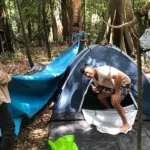
You will reliably find a crisp layer of frost coating the outside of your tent. Standard three-season sleeping bags are insufficient for these alpine conditions, which is why we provide four-season rated sleeping bags (rated to -10°C / 14°F) alongside insulated sleeping pads so our trekkers stay warm and well-rested before tackling the pass.
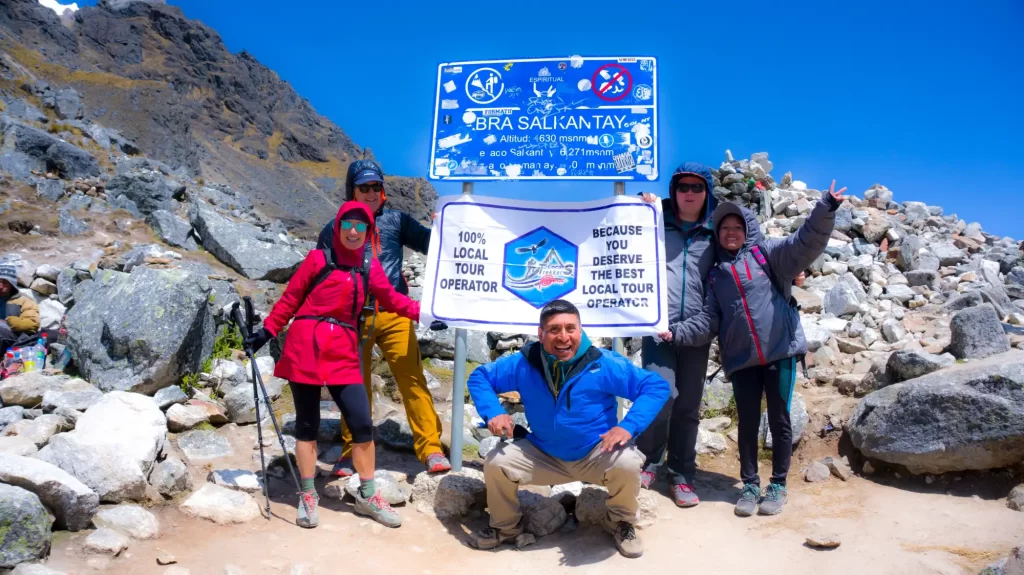
Salkantay Pass — 4,630 m (15,190 ft): The coldest, windiest point of the whole route. Even on a clear dry-season morning, wind chill can make it feel well below the air temperature. Snow is possible at the pass in any month, dry season included.
Descent into the cloud forest and Cocalmayo hot springs area — below 2,900 m (9,500 ft): A different world. Humid, green, and warm — 20–22 °C (68–72 °F) is normal, even in the rainy season. This is also where afternoon rain, when it happens, tends to arrive first and hardest, since you’re dropping into the high jungle.
The rainy season (November–April) doesn’t mean rain all day. It usually means clear mornings and cloud or showers from early-to-mid afternoon, worst in January and February.


Availability and Booking
There are no permits for Salkantay, which changes how you should plan compared to the Inca Trail. You don’t need to book six months in advance to guarantee a spot.
That said, “no permits” doesn’t mean “no planning.” June, July, and August are peak season in Cusco overall — flights, hotels, and Machu Picchu train tickets sell out well before departures do.
Recommended Booking Lead Times for July & August?
For high-season departures in July and August, your booking timeline depends on the specific route. If your trek involves the Classic Inca Trail, government permits sell out 4 to 6 months in advance. For non-permit routes like Salkantay, Ausangate, or Lares, we strongly recommend booking 8 to 12 weeks prior to your target start date.
While non-permitted trails do not sell out in the traditional sense, high-season bottlenecks occur with prime train tickets (such as afternoon Vistadome seats from Aguas Calientes) and high-quality dome or campsite availability. Booking within 3 weeks of departure often requires compromises on train schedules or campsite locations.
Shoulder months (May, September, October, and to a lesser extent April) are where the flexibility really pays off. It’s realistic to book a Salkantay trek with a week or two of notice and still get a spot, which isn’t true for the Inca Trail once high season hits.
Pricing for a private or small-group departure varies by season, group size, and itinerary length (4 or 5 days).
While exact pricing for the 2026 and 2027 seasons fluctuates based on fuel rates, private transport logistics, and updated park entrance fees, our comprehensive Salkantay Trek packages typically range between $550 and $650 USD per person. This covers all ground transport, high-quality camping equipment, meals, and expert guiding—though, in line with our operational policy, we never include or manage airplane flights.
The greatest advantage of the Salkantay route, however, goes beyond its competitive cost: it is the logistical flexibility. Because this route does not rely on strictly limited, non-refundable government permits like the Classic Inca Trail, our operations team has the agility to absorb unexpected, last-minute date shifts.
If your travel itinerary is delayed, we can usually adjust your Salkantay departure seamlessly. Conversely, missing a scheduled Inca Trail permit date means losing the trek entirely.
How Many People Will Be on the Trail With You
Honestly: it depends entirely on the month and the day you start.
In June, July, and August, Salkantay is busy — not Inca-Trail-busy, since there’s no daily cap, but you will share campsites and the pass itself with other groups, particularly around Soraypampa and the Salkantay Pass viewpoint mid-morning.
May, September, and October thin out noticeably. You’ll still see other trekkers, but not in the same numbers, and you’ll get longer stretches of trail to yourself.
November through March, outside of the Christmas–New Year window, is quiet. Some days you’ll go an hour or more without passing another group. The trade-off is the weather risk described above.
Group sizes on our own departures run.
Group Size Policy: Dry Season vs. Rainy Season
At Local Trekkers Peru, we operate small groups to preserve trail integrity, ensure safety, and maintain a high guide-to-trekker ratio.
- Dry Season (May – October): Our average departure carries 6 to 8 trekkers, capped at a strict maximum of 10 participants per lead guide (groups reaching 8 or more always include an assistant guide).
- Rainy Season (November – April): Average group sizes drop to 3 to 5 trekkers, with a maximum cap of 8 participants.
Maintaining smaller groups during the rainy season allows our team to monitor trail conditions closely, assist over slippery or muddy terrain, and manage logistics efficiently during unexpected weather shifts.
What to Pack, Month by Month
Some gear is non-negotiable regardless of when you go: a warm sleeping bag rated to at least -10 °C (14 °F), a headlamp, sun protection (UV at this altitude is brutal even under cloud), and broken-in waterproof boots.
May–September (dry season): Prioritize warmth over waterproofing. A down jacket rated for -5 °C (23 °F) nights, thermal base layers, a warm hat and gloves for the pass, and sunglasses with UV protection — the glare off the glacier is intense. Rain gear is still worth packing as insurance, but you likely won’t need it daily.
October and April (shoulder season): Split the difference. Bring the same warm layers as dry season, plus a proper waterproof shell and pack cover, since afternoon showers become more likely.
November–March (rainy season): Waterproofing becomes the priority. A full rain jacket and rain pants, a dry bag or liner for your pack, and quick-dry (not cotton) clothing for the lower, humid sections near Cocalmayo. Trekking poles help more here too, since the descent from the pass gets muddy.
Across every month, layering is the actual skill you need — you can start a morning at -5 °C (23 °F) near the pass and finish the afternoon at 20 °C (68 °F) in the cloud forest, on the same day, on the same trail.

Pros, Cons, and Is This Your Month?
Dry season (May–September) pros: clearest views of Nevado Salkantay, most stable trail conditions, easiest logistics. Cons: busier campsites, colder nights, higher demand for Cusco hotels and Machu Picchu train tickets around the same dates.
Shoulder season (April, October) pros: a good balance of decent weather and thinner crowds. Cons: you’re gambling slightly on afternoon rain.
Rainy season (November–March, excluding February) pros: green landscapes, quiet trails, often better pricing. Cons: muddier descents, more limited mountain views, and a real chance of a washed-out afternoon.
February: we don’t recommend it. This is when rainfall and landslide risk peak in the region, and it’s also when the Inca Trail closes for its annual maintenance — a signal worth taking seriously even on a trek that doesn’t require permits.
If reliable weather and the best shot at clear pass views matter most to you, book May through September. If you’d rather trade a few afternoon showers for a quiet trail and lower prices, look at the shoulder months or the early rainy season.
For the full breakdown of the route itself — daily distances, altitude profile, and what each day actually looks like — see our Salkantay Trek: The Complete Guide. If you’ve settled on your dates, our 4-day Salkantay Trek to Machu Picchu departs year-round and, because there’s no permit system to work around, can usually accommodate the timing you’ve landed on above.
Acclimatization matters more than the month you pick. Spend 2–3 full days in Cusco at 3,400 m (11,150 ft) before you start walking, regardless of season. No amount of good weather compensates for skipping that.