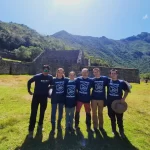
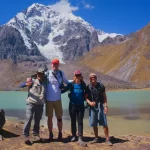
The Lares Trek follows a herding corridor that Quechua communities in the Lares Valley have used for centuries, long before anyone walked it with a backpack. It crosses high pastureland north of the Sacred Valley, past glacier-fed lagoons and over a pass above 4,400 m (14,435 ft), through hamlets where families still herd alpacas, farm native potatoes at altitude and weave on backstrap looms. It ends, like every trek in this region, at Machu Picchu.
This is a trip chosen on purpose, not a fallback for travelers who missed Inca Trail permits. If what draws you to the Andes is the people who live there rather than the stonework they left behind, Lares is the better route. We are Local Trekkers Peru, a locally owned operator based in Cusco. This guide covers the route, the communities, the difficulty, when to go, and how Lares compares against the Inca Trail and Salkantay.
What Is the Lares Trek?
The Lares Trek is a 3 or 4 day high-altitude walk through the Lares Valley, in the province of Calca, north of the Sacred Valley. It links scattered communities living above 3,800 m (12,467 ft), crosses at least one mountain pass, then descends toward the Sacred Valley, where you take the train from Ollantaytambo to Aguas Calientes and visit Machu Picchu the following day.
Three things it is not, all worth knowing before you book.
It is not an archaeological route. There are no Inca sites of consequence along the way and no stone road underfoot. You walk on herding paths. If your reason for trekking to Machu Picchu is to see ruins on the way there, the Inca Trail is the correct choice and this page will not talk you out of it.
It is not easy just because it is cultural. Nights are cold, the air is thin, and most of the walking happens above 3,800 m (12,467 ft). “Cultural” describes what you see, not how hard it is.
It is not one fixed route. Several different itineraries share the name “Lares Trek,” starting at different points and visiting different communities. Two travelers can both say they hiked Lares and have walked substantially different valleys. Before you book, ask any operator exactly which version they run.
Key Facts
| Maximum altitude | 4,450 m (14,600 ft), Ipsaycocha Pass |
| Duration | 3 or 4 days (2 or 3 nights) |
| Distance | 30 to 40 km (18.6 to 24.9 miles), varies by itinerary |
| Difficulty | Moderate to challenging |
| Start point | Calca or the town of Lares |
| Climate | Cold and dry; night temperatures can drop to -5 °C (23 °F) |
| Accommodation | Camping, with the crew setting up and breaking camp |
| Permits | None required, unlike the Inca Trail |
| Ending | Train from Ollantaytambo to Aguas Calientes, Machu Picchu the next day |
Itineraries: 3 Days or 4 Days
The 4-day version is the complete one. Three days of real walking, more time above the treeline, and, most importantly, unhurried hours in the communities rather than a wave as you pass through. The cultural side of this trek does not work at speed: it needs afternoons in a village, not a photo stop. The day by day breakdown, with campsites and hiking times, is in our 4-day Lares Trek guide, and you can see dates and conditions on our 4-day Lares Trek.
The 3-day version compresses the route: fewer kilometers, usually one pass instead of two, and less time in the valley. It works if your days in Peru are tight or if you want a shorter first experience at altitude, but it trims exactly the part that makes this trek worth choosing. Details are on our 3-day Lares Trek.

The Route Day by Day
Day 1. Early departure from Cusco through the Sacred Valley to the trailhead. A moderate acclimatization walk, first contact with the valley, and camp in herding country above 3,800 m (12,467 ft).
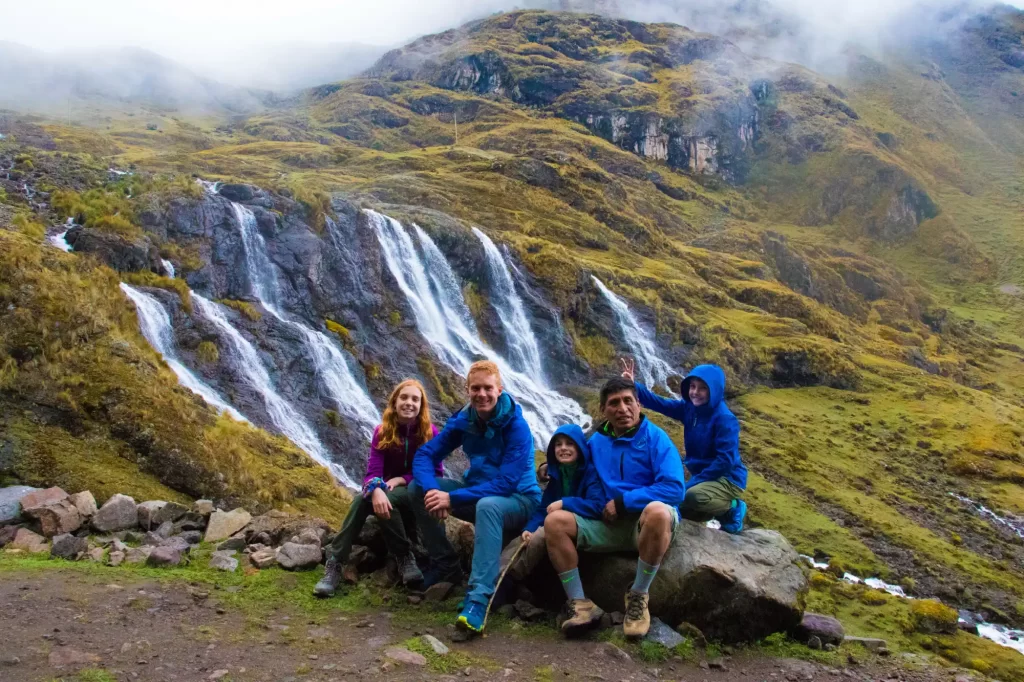
Day 2. The pass day, and the day that decides how you remember the trek. A long climb to the high point, with glacier-fed lagoons including Ipsaycocha and Aruraycocha along the way, then a descent into the next valley. Cold at the top, often windy, and slow going in thin air.
Day 3. A gentler descent toward the Sacred Valley, the end of the walking, and transfer to Ollantaytambo for the train to Aguas Calientes.
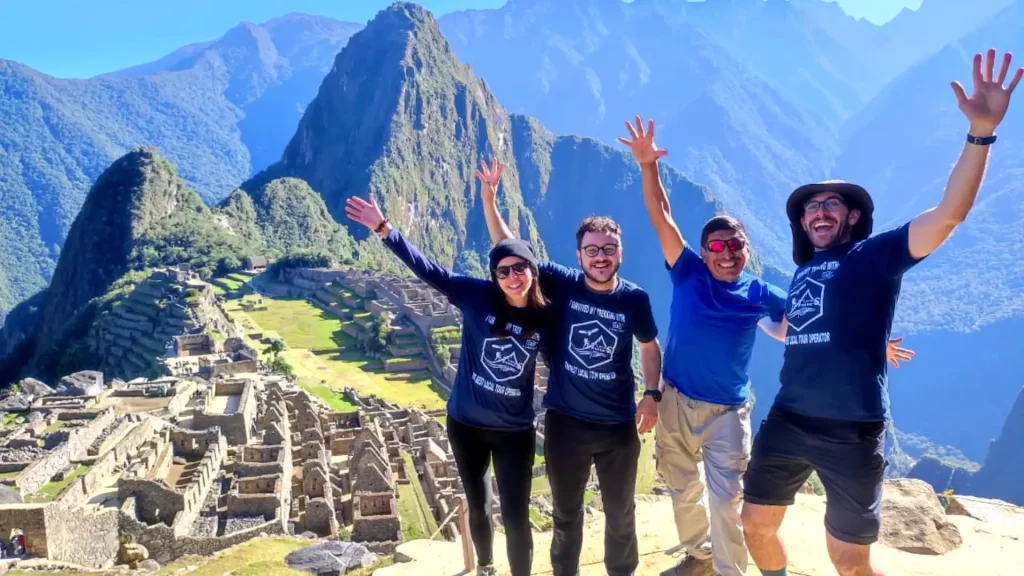
Day 4. Guided visit to Machu Picchu in the morning, then the train and road transfer back to Cusco.
That is the skeleton. Which communities you pass, where you camp and how the days divide change between itineraries, so treat it as shape rather than schedule. The full version is in our 4-day Lares Trek guide.
The Communities of the Lares Valley
This is the reason the route exists, and it deserves more than the three adjectives most trek pages give it.
What people actually do up there. The economy of the Lares Valley runs on three things. Herding alpacas and llamas for wool and meat, at altitudes where almost nothing else survives.
High-altitude farming of native potatoes, oca and olluco, in varieties bred for specific soils and frost patterns and grown in plots scattered across different elevations to spread risk.
And weaving, which is not a craft demonstration for visitors but a real part of household income. These are working settlements. A group of hikers passing through is a minor event in the day.
How the dyeing works. The colors come from what grows nearby and what can be traded for. Cochineal, an insect that lives on prickly pear cactus, yields deep reds and, with different mineral additives, purples and oranges.
Plant material such as chilca and q’olle gives greens and yellows. Minerals and mordants shift the same dye bath toward different shades, and the recipes are household knowledge, adjusted by eye.
The wool is washed, spun by hand on a drop spindle (often while walking, which surprises most visitors), dyed, then woven on a backstrap loom anchored around the weaver’s waist.
How long a poncho takes. Months. Not hours, and not an afternoon. Between spinning, dyeing and weaving, a full-size piece with complex patterning represents an enormous amount of work spread across whatever time is left over from herding and farming.
Understanding that changes how the price of a textile looks when someone offers you one. The patterns are not decorative filler either: motifs and color combinations identify particular communities, and a weaver can often tell you where a piece came from by looking at it.
Why Quechua is the first language in these houses. Spanish arrived in the valley through schooling, radio and migration, not through daily life. In many households Quechua is what is spoken at home and around the cooking fire, and Spanish is the second language, used with outsiders and in town.
Older women in particular may speak little Spanish at all. Learning a few words before you go, allillanchu for hello, sulpayki for thank you, changes the quality of every encounter even when your guide is translating. Our guide to Quechua is a good place to start.
The etiquette that actually matters. Four rules, and they are not suggestions:
- Ask before photographing. Every time, including children, and accept no as an answer without negotiating. Some communities do not permit photographs at all.
- Do not hand out sweets, money or gifts to children. It encourages begging, pulls children away from school toward the trail, and there is no dentist within a day’s travel. If you want to contribute, ask your guide about the community fund or the school.
- Buy textiles directly and do not haggle the price down. Buying from the weaver is the single most effective thing you can do for the household economy of the valley. Haggling over the equivalent of a few dollars on a piece that took weeks is not a cultural exchange.
- Enter houses only if invited, and follow your guide’s lead on where to sit and what to accept.
What to expect in each settlement, and how the visits are structured, is in our guide to the villages of the Lares Trek.
The Lares Hot Springs
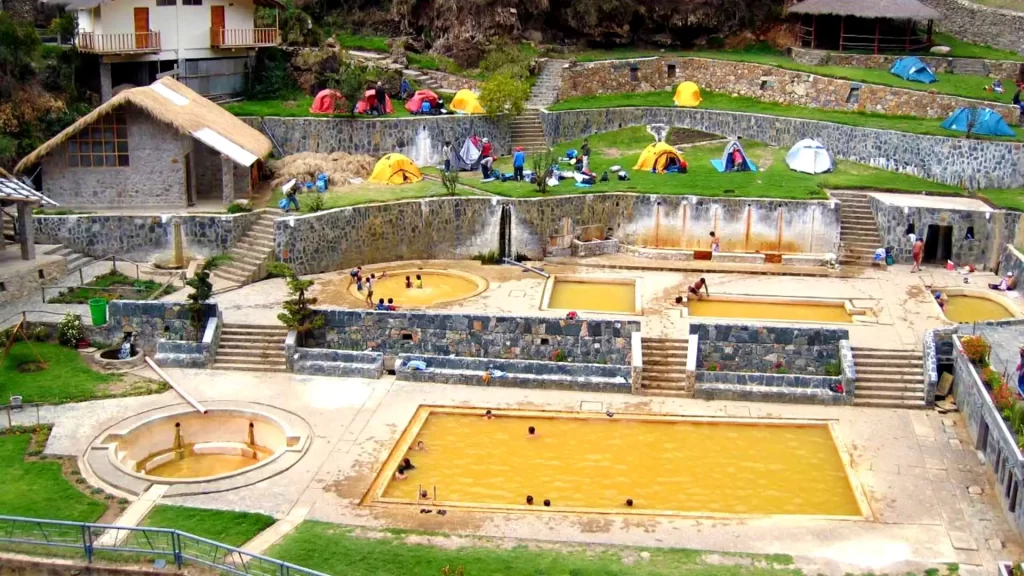
The town of Lares has thermal pools fed by volcanic activity, and they give the whole valley its name. Depending on the itinerary, the stop falls at the start of the trek, as the close of the transfer day, or at the end as a reward after several cold nights on the mountain.
Set expectations correctly: these are rustic pools, closer to a local bathhouse than a spa. Different pools sit at different temperatures, the facilities are basic, and locals use them alongside visitors, which is precisely the appeal. Bring a towel and sandals. Do not get in on the day you arrive at altitude, or while you have symptoms of altitude sickness, since hot water and thin air are a poor combination.
Opening hours, entry cost and where the springs best fit in the trek are covered in our guide to the Lares hot springs.
Difficulty and Preparation
Moderate to challenging, and the challenge is altitude rather than terrain. Daily distances run around 10 to 15 km (6 to 9 miles), which is unremarkable at sea level, but almost all of it happens above 3,800 m (12,467 ft), with a pass over 4,400 m (14,435 ft) and several hundred meters of climbing in single stretches. There is nothing technical: no exposure, no scrambling, no equipment beyond boots and poles.
Acclimatization matters more than fitness, and this is the point travelers most often get wrong. Two full days in Cusco before you start is the minimum, three is better, and that time cannot be made up later. Someone who arrives moderately fit but properly acclimatized will have a better day 2 than a marathon runner who landed 36 hours earlier. Our guide to altitude sickness in Cusco covers how to use those days and which symptoms mean you stop.
For training, weeks of long walks with elevation gain do more than gym work. You need to be comfortable walking five or six hours on consecutive days, not fast.
Best Time to Hike the Lares
Dry season, April to October, is the main window: clear skies, firm ground and very cold but stable nights. May through July give the cleanest days and the lowest temperatures. April and October sit on the shoulders, with greener landscape and fewer people.
Wet season, November to March, brings mud, cloud on the passes and afternoon storms. With proper waterproofs it is walkable, and you get a green valley almost entirely to yourself.
The point most travelers miss: Lares never closes. The Inca Trail shuts completely from February 1 to 28 every year for maintenance. Lares runs through February. If that is when your leave falls, this is not a compromise, it is one of the few trekking routes to Machu Picchu still operating.
What to Pack
The essentials, in short:
- Broken-in waterproof hiking boots with ankle support.
- Layers: thermal base, insulating mid layer, windproof and waterproof shell.
- Sleeping bag rated to -10 °C (14 °F) if you are bringing your own.
- Warm hat and gloves, plus a sun hat: the swing between midday sun and night can exceed 25 °C (45 °F).
- Trekking poles, mostly for the descent off the pass.
- High-factor sunscreen, sunglasses and SPF lip balm.
- Refillable bottle and water purification tablets.
- Headlamp, energy snacks, personal medication, and small soles notes for buying textiles.
The full list, including what goes in the daypack versus the duffel and what you can rent in Cusco, is in our Lares Trek packing list. Boots are the purchase worth taking seriously, and our guide to choosing hiking boots covers fit and break-in time.
Lares vs Inca Trail
The comparison almost everyone makes. The short answer: two different trips with the same destination.
| Lares Trek | Inca Trail | |
|---|---|---|
| Focus | Living culture: herding, weaving, communities | Archaeology: Inca sites along the route |
| Arrival at Machu Picchu | Train from Ollantaytambo, entry from Aguas Calientes | On foot, through the Sun Gate |
| Crowds | Low; long stretches with nobody else | High; the daily quota fills in season |
| Permits | None required, book close to your dates | 500 per day for the whole route, of which roughly 190 to 210 go to trekkers; sells out 8 to 10 months ahead |
| Maximum altitude | 4,450 m (14,600 ft) | 4,215 m (13,828 ft) |
| Difficulty | Moderate to challenging; colder and higher | Challenging; more stone stairs and cumulative descent |
| Annual closure | Never closes | Closed February 1 to 28 |
| Duration | 3 or 4 days | 4 days (2-day short version available) |
Choose the Inca Trail if walking the original stone road and entering through the Sun Gate is the point, and if you can book the better part of a year ahead. Our complete Inca Trail guide covers the permit system in detail.
Choose Lares if people interest you more than ruins, if you are deciding late, if you are traveling in February, or if you want a trail where you can walk for an hour without seeing another group. For everything that reaches Machu Picchu on foot, side by side, see our guide to alternative routes to Machu Picchu.
Lares vs Salkantay
Salkantay is the mountain trek. It runs under a glaciated 6,000 m (19,685 ft) peak, crosses a considerably higher pass, and descends through cloud forest into coffee country. It is longer, harder and more visually dramatic, and it is the right choice if what you want from the Andes is scale.
Lares is shorter, colder per kilometer walked, and far more cultural. Where Salkantay gives you glacier and jungle, Lares gives you people and textiles. Neither is a lesser version of the other, and travelers who love one are often indifferent to the other. Our Lares vs Salkantay comparison sets them against each other on days, elevation, cost and who each suits, and the full mountain route is covered in our Salkantay Trek guide.
Frequently Asked Questions
Do I need a permit for the Lares Trek? No. There is no permit, no daily quota and no booking deadline. You do need a Machu Picchu entrance ticket, which we arrange, and those are worth securing early in high season.
Do you reach Machu Picchu on foot? No. The walking finishes in the Sacred Valley and you continue by train to Aguas Calientes, visiting Machu Picchu the next morning. Only the Inca Trail arrives through the Sun Gate.
Can I hike Lares in February? Yes. Lares operates year round, including February, when the Inca Trail is closed for the entire month. Expect rain and mud, mostly in the afternoons.
How fit do I need to be? Fit enough to walk five or six hours on consecutive days. The route is not technical. The altitude is the hard part, which is why days in Cusco beforehand matter more than time in the gym.
How cold does it actually get? Night temperatures at the high camps can drop to -5 °C (23 °F) in dry season. With a properly rated sleeping bag and dry thermals to sleep in, it is comfortable.
Can children do the Lares Trek? The 3-day version works for teenagers and children used to walking, provided they acclimatize in Cusco first.
Is it appropriate to buy textiles directly from families? Yes, and it is the most useful thing most visitors can do. Buy from the weaver, pay what is asked, and carry small soles notes since nobody in the valley takes cards.
Is the Lares Trek Worth It?
If you want a route to Machu Picchu where the walking matters as much as the arrival, yes. Lares is one of the few treks out of Cusco where the landscape comes with people in it: herders, weavers, children crossing a 4,000 m (13,123 ft) pass to get to school. That is not replicable, and it is not what you get on the other routes.
It is also the honest answer that Lares is the wrong trek for someone who came to Peru for Inca stonework. There is very little of it here, and no amount of scenery makes up for that if ruins are what you wanted.
If it does sound like your trip, our 4-day Lares Trek is the version we would recommend, since the extra day goes almost entirely into the communities.