Puerto Maldonado in Context
Puerto Maldonado sits at about 200 m above sea level, in the Madre de Dios region of southeastern Peru. If you’re coming straight from Cusco, that drop in altitude is the first thing you’ll notice, the air feels thicker and the headache you may have been managing at 3,400 m tends to disappear within a day.
Most of our passengers arrive on the 55-minute flight from Cusco, which is by far the fastest way in. There’s also a direct flight from Lima, useful if you’re skipping Cusco altogether or doing the Amazon first. Overland is possible via the Interoceanic Highway from Cusco, but it’s a long haul, closer to 10 hours by bus, and most people only choose it if flights are booked out or budget is the priority. We map out the logistics of combining this with a Cusco itinerary in our guide to adding a jungle extension onto a Cusco trip.
The town itself is a working river port, not a tourist showcase, and most travelers pass through it only long enough to transfer to a boat toward their lodge. Puerto Maldonado is also the launch point for Tambopata, the region this guide focuses on, since “puerto maldonado tambopata tours” almost always means the same trip: fly into Puerto Maldonado, then head into the reserve by river.
Tambopata vs Manu vs Iquitos
Tambopata is the realistic choice if your time is limited. Access is a short flight plus a 30-to-70-minute boat ride depending on the lodge, which means you can do a genuine jungle trip in as little as two days without losing most of it to transit.
Manu Biosphere Reserve is generally considered richer in wildlife diversity, but getting there involves a longer overland and river combination, often 1.5 to 2 days each way for the classic route, which only makes sense on a 5-day-plus itinerary. We compare both in detail, including which one fits which kind of traveler, in our Manu versus Tambopata comparison.
Iquitos, in the northern Peruvian Amazon, is a different ecosystem entirely and isn’t reachable overland from Cusco at all, it requires flying through Lima. It suits travelers building a separate Amazon-focused trip rather than an add-on to Cusco and Machu Picchu, which is why we don’t cover it as part of this cluster.
What You’ll See in Tambopata
Tambopata National Reserve itself has its own set of rules on group sizes, permitted trails, and entry logistics, all of which we cover in our Tambopata National Reserve visitor guide. The reserve is managed by SERNANP, and access to certain zones is limited to authorized operators with a permit.
Macaw and parrot clay licks
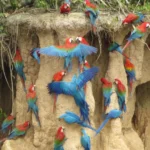
The collpas, riverbank walls where macaws and parrots gather to eat clay, are the single most requested activity. Sightings depend on weather and season more than luck alone, mornings after a dry stretch tend to bring bigger groups, while a recent rain can keep birds away entirely. We go deep into how a visit actually works in our guide to visiting the macaw clay lick, and if you’re deciding between the two main sites, our comparison of the Chuncho and Colorado clay licks breaks down the difference in distance, crowd size, and typical activity.
Lake Sandoval
An oxbow lake reached by a roughly 3 km walk from the river followed by a short canoe paddle across still water. It’s one of the better spots for spotting giant river otters, though we’re careful not to promise them, they’re present in the area but not guaranteed on any single visit. Full details on the walk and what to expect are in our Lake Sandoval travel guide.
Night walks, canopy towers and community visits
A guided night walk turns up insects, frogs, and the occasional snake more reliably than it turns up mammals, and it’s worth going in with that expectation. Canopy towers or zip-line style platforms, where available at your lodge, give a real shot at spotting macaws, toucans, or monkeys moving through the upper forest at dawn. Some itineraries include a stop at a Ese Eja or other local community, which varies a lot in depth from a quick craft stall to a genuine conversation about life on the river, worth asking your operator about directly. For what you’re actually likely to see across all of this, our Amazon wildlife guide is more useful than any single itinerary description, and if insects are what worry you rather than excite you, our guide to insects in the Peruvian Amazon covers what’s actually common versus rare.
Two, Three or Four Days: What Each One Covers
This is the decision most people are actually trying to make, and it comes down to how much you’re willing to lose to travel time versus how much you want to see.
| Length | What’s included | Best for | What you miss |
|---|---|---|---|
| 2 days, 1 night | One clay lick visit (subject to timing), a short jungle walk, one night at the lodge | Tight schedules, a taste of the Amazon without giving up a full day elsewhere | Lake Sandoval, a second clay lick attempt, canopy activities |
| 3 days, 2 nights | Clay lick, Lake Sandoval, a night walk, and more buffer if weather delays a boat transfer | The most balanced option for most travelers | A second clay lick morning, deeper community time |
| 4 days, 3 nights | Everything above plus a second clay lick attempt (useful if the first is rained out), canopy tower, and a slower overall pace | Serious wildlife watchers, or anyone who wants a buffer built in | Nothing major, this is close to the complete Tambopata experience |
We break this comparison down further, including which lodges suit which length, in our dedicated guide to choosing between 2, 3 and 4 days in Tambopata. Our own itineraries follow the same structure: the 2-day, 1-night Tambopata tour, the 3-day, 2-night Tambopata tour, and the 4-day, 3-night Tambopata tour.
Friajes and Seasonality
The dry season, roughly May to October, is when most lodges run at full capacity, trails are firmer, and boat travel is more predictable. It’s also when cold-air fronts called friajes occasionally push up from the south, usually between June and August, dropping temperatures noticeably for a day or two even in the jungle, worth having a light layer for even though it’s the Amazon.
The wet season, November to April, brings real rain, not the occasional shower, some trails flood or become impassable, and boat levels can affect which lodges are reachable at all. Wildlife activity doesn’t stop, and some travelers prefer the wet season for fewer crowds, but you should go in expecting delays to be part of the plan rather than an exception.
Inside a Jungle Lodge: What to Actually Expect
Most Tambopata lodges run on generator power for a few hours in the morning and evening, not around the clock, so don’t count on charging devices whenever you like. Mosquito nets over the beds are standard and necessary, especially at dusk. Cell signal disappears once you leave Puerto Maldonado, so tell people at home not to expect updates until you’re back.
Meals are simple and included in your package, typically Peruvian home-style cooking with rice, plantain, and river fish showing up often. Rooms are usually screened rather than fully sealed, which keeps them cooler but means insects are part of the experience, not a sign anything’s wrong. Packing the right layers and a headlamp matters more here than in Cusco; our jungle packing checklist covers exactly what to bring and what you can skip.
Health and Preparation
Yellow fever vaccination is generally recommended for the Peruvian Amazon, and some travelers combine it with malaria prophylaxis depending on their route and how long they’re staying, this is a conversation for your doctor or a travel clinic, not something to decide from a blog post. Insect repellent with DEET, long sleeves at dawn and dusk, and staying on marked trails cut down on most day-to-day risk. We lay out vaccine recommendations, timing, and what to ask your doctor in our Amazon Peru health and vaccines guide.
Frequently Asked Questions
How many days do I need in Tambopata? Three days, two nights is the most balanced option for most travelers, covering a clay lick, Lake Sandoval, and a night walk. Two days works if your schedule is tight, and four days adds a buffer against rain and a second clay lick attempt.
How do I get from Cusco to Puerto Maldonado? The fastest option is a 55-minute direct flight. Overland via the Interoceanic Highway takes close to 10 hours by bus and is mostly used when flights aren’t available or budget is the priority.
Is Tambopata or Manu better for wildlife? Manu generally offers more biodiversity but requires a much longer overland and river journey, often 1.5 to 2 days each way. Tambopata is the realistic choice if you have less than five days total for the Amazon portion of your trip.
Will I definitely see macaws at the clay lick? Sightings depend heavily on recent weather, dry mornings tend to bring larger groups, while rain can keep birds away entirely. A 3 or 4-day itinerary that allows a second attempt improves your odds noticeably over a single 2-day visit.
Is there phone signal in the jungle? No, once you leave Puerto Maldonado by boat, cell signal disappears for the rest of the trip. Most lodges have no wifi either, so plan on being offline until you’re back in town.
Do I need vaccines for the Peruvian Amazon? Yellow fever vaccination is generally recommended, and some travelers also discuss malaria prophylaxis with a doctor depending on their itinerary and length of stay. This should be confirmed with a travel clinic well before your trip, not decided last minute.
What’s the weather like in Tambopata? The dry season, roughly May to October, is more predictable and includes occasional cold fronts called friajes. The wet season, November to April, brings heavier rain that can affect trails and boat access, though wildlife stays active year-round.