Camping in Manu National Park is the detail that makes most travelers hesitate before booking a jungle trip. Sleeping in a tent, deep in the Amazon, sounds intense if you have never done it. The honest answer: it is safe, it is organized, and it is one of the best parts of the trip once you know what to actually expect.
This guide covers what the camp looks like, what you eat, what the night sounds like, and how safety works on the ground, so you can decide with real information instead of guesswork.
Manu Lodge vs Camping: Which One Is Right for You
Both options exist in Manu for a reason, and the right one depends on what kind of trip you want.
| Lodge | Camping | |
|---|---|---|
| Comfort | Solid walls, private bathroom | Tent, shared facilities |
| Wildlife access | Good, from fixed points | Closer, especially at night |
| Zone | Mostly Cultural Zone | Reserved Zone and remote areas |
| Best for | First-time jungle travelers | Travelers who want full immersion |
| Typical tours | 3 to 5 day Cultural Zone tours | 6 to 8 day Reserved Zone tours |
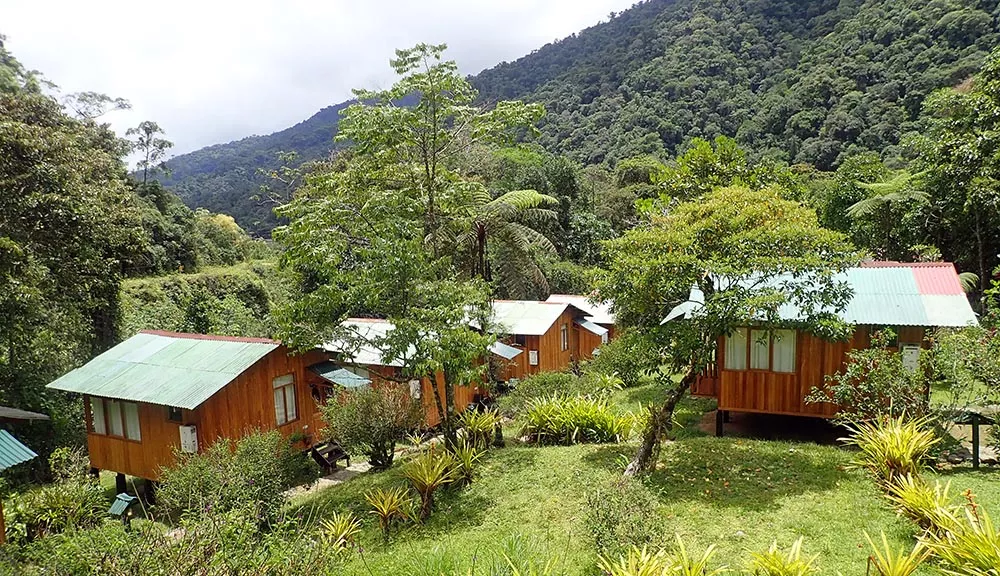
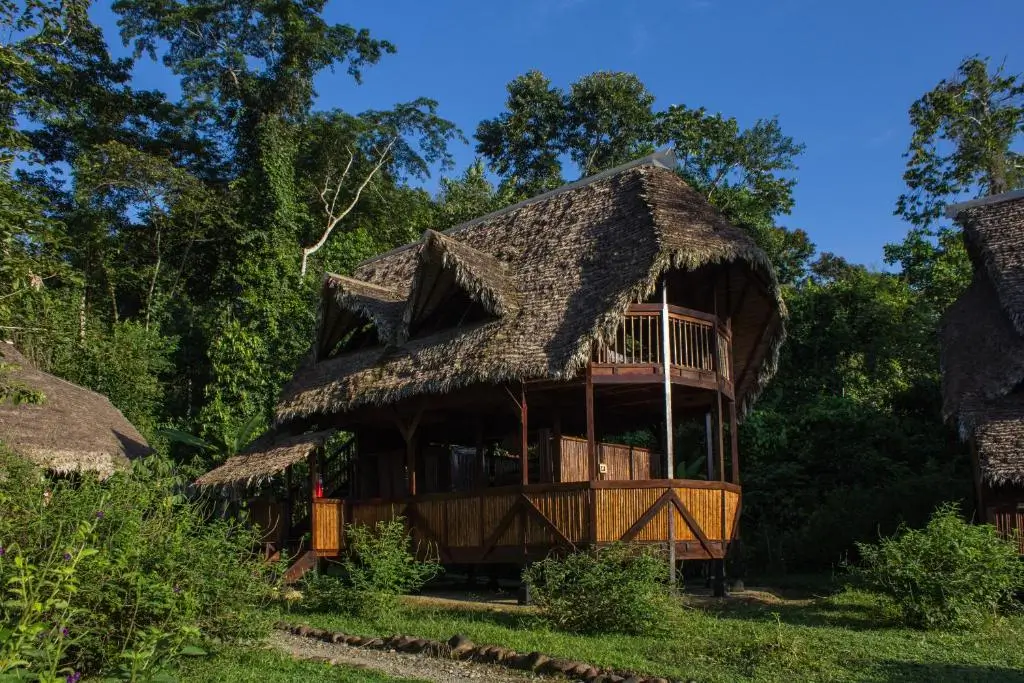
Lodges give you a comfortable base with standard amenities, and they work well for shorter Cultural Zone itineraries. Camping removes that layer between you and the forest: you fall asleep to the sound of the jungle and step out into it at dawn. If you are weighing which itinerary length fits you best, our comparison of Manu tours by duration breaks down what each one includes.
What the Camp Is Actually Like
This is usually the part travelers worry about most, so here is what to expect in practice.
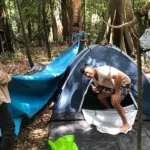
Tents are set up on raised platforms or cleared, flat ground, away from the riverbank and away from animal trails your guide has already checked. Each tent has a proper mattress, not a thin foam pad, and mosquito netting sealed around the entrance so nothing gets in overnight. Bathrooms are separate, basic structures near the camp, not inside the tent, and they are cleaned and set up before the group arrives.
None of this is improvised. Our camping gear is maintained specifically for jungle conditions, and you can see exactly what is provided on our camping equipment page and our premium gear options for travelers who want extra comfort.
Food at Camp
Meals are one of the most underrated parts of camping in Manu. Your expedition cook prepares full hot meals at camp, not packaged food, using fresh ingredients carried in for the trip. Breakfast, lunch, and dinner all happen at set times, and there is always more food than you expect for a remote location.
If you have dietary restrictions, they are handled without difficulty. Our team plans around vegetarian, vegan, and other common diets, detailed on our dietary options page, and you can read more about how our kitchen operates on our gastronomy page.
What the Night Sounds Like
The jungle does not go quiet at night, it changes shift. Once the sun goes down, tree frogs and insects take over from the daytime birds, building into a dense, layered wall of sound that is genuinely unlike anything most travelers have heard. Howler monkeys carry across long distances, and you will likely hear them well before you ever see one.
This is not something to brace for, it is one of the reasons people come back from Manu still talking about it months later. A night walk with your guide is usually included around camp, and it is where a lot of that sound starts to make sense: frogs, insects, and nocturnal birds you would never spot in daylight.
Safety at Camp
Camps are staffed and supervised the entire time you are there, not left unattended overnight. Your guide and support team know the terrain, know which areas to avoid, and are trained for the specific conditions of the Reserved Zone. For a full breakdown of how safety is handled throughout the trip, including at camp, see our guide on whether Manu National Park is safe and our page on the team on the ground.
The one rule that matters most: never leave camp alone, even for a short walk. The forest is dense enough that direction is easy to lose within a few meters, which is exactly why guides ask groups to move together after dark.
Which Tours Camp and Which Use Lodges
Reserved Zone tours are camping-based, since that area is farther from any lodge infrastructure. Our 6-day, 5-night Manu Reserved Zone tour is the most popular version of this itinerary, with longer options like the 7-day and 8-day tours for travelers who want more time deep in the reserve.
Cultural Zone tours, such as our 4-day, 3-night itinerary, are typically lodge-based, since that zone sits closer to established infrastructure. If you have not yet read the full picture of the reserve itself, our Manu Reserved Zone guide is the place to start.
Essential Planning Data
Altitude drops dramatically over the trip: you start in Cusco at 3,400 m (11,150 ft), descend through the cloud forest, and camp in the lowland jungle at around 300 m (980 ft). Because of that descent, it is worth reading up on how to handle the altitude change in Cusco before you fly in.
Climate at camp is tropical: daytime temperatures run 28°C to 35°C (82°F to 95°F), dropping to around 20°C (68°F) at night. The dry season, May to October, is the best window for camping, since trails are firmer and wildlife concentrates around water sources. Difficulty is moderate: no technical climbing, but expect humidity, heat, and uneven trails underfoot.
What to Pack for Manu Jungle Camping
- Clothing: lightweight, quick-dry long pants and long sleeves, for bugs and sun
- Footwear: sturdy hiking boots plus camp sandals; rubber boots are provided (see our camping equipment page)
- Gear: a high-lumen headlamp with spare batteries, a power bank, a dry bag for electronics
- Health: insect repellent with at least 20% DEET, reef-safe sunscreen, and any personal medication
For the full packing list across a jungle trip, not just camp nights, see our jungle packing checklist.
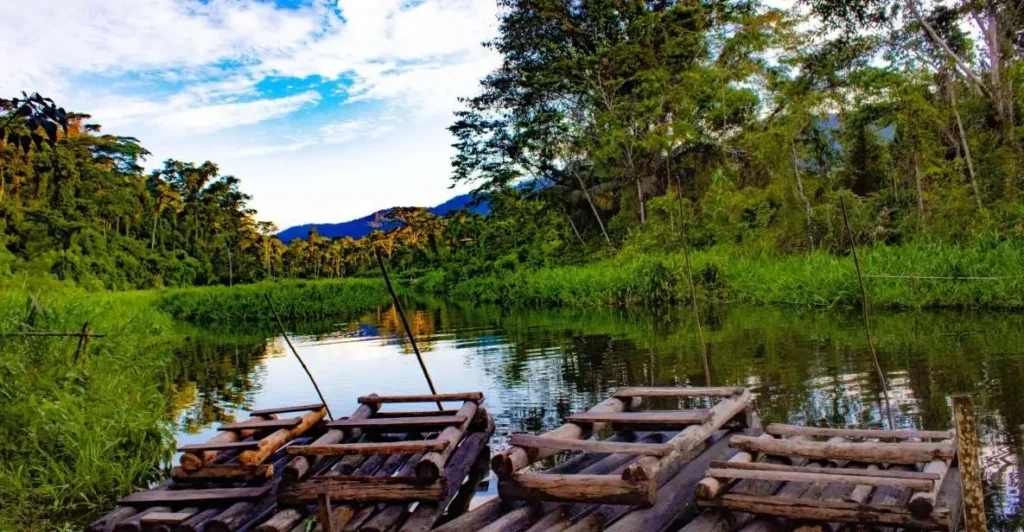
Local Trekkers Peru Tips for Camping in Manu
- Hydrate on the descent: the drop from Cusco to the jungle is steep, and dehydration on the way down causes more headaches than the heat itself.
- Set your body clock early: wildlife is most active at dawn, so a 4:30 or 5:00 AM start is normal, not exceptional.
- Shake out your gear: boots, clothing, and backpacks left overnight are a favorite hiding spot for insects and small frogs.
- Stay with your guide after dark: it takes only a few meters off the trail to lose your bearings in the forest.
Ready to Sleep Under the Amazon Canopy?
Camping in Manu is not something to be nervous about, it is the part of the trip most travelers end up loving most. Our 6-day, 5-night Manu Reserved Zone tour includes everything covered here: proper tents, real meals, a trained team on the ground, and a night walk you will not forget.
Frequently Asked Questions
Is camping in Manu National Park safe?
Yes. Camps are staffed and supervised throughout the night, set up on checked ground away from animal trails, and your guide manages all safety decisions on-site.
What is the difference between a lodge and camping in Manu?
Lodges offer solid walls and standard amenities, mostly in the Cultural Zone. Camping puts you directly in the Reserved Zone, closer to wildlife, with tents, real mattresses, and sealed mosquito netting instead of fixed structures.
What do you eat while camping in Manu?
Full hot meals prepared by an expedition cook using fresh ingredients, including for vegetarian, vegan, and other dietary needs.
How cold does it get at night while camping?
Nights cool down to around 20°C (68°F), a noticeable drop from daytime highs of 28°C to 35°C (82°F to 95°F).
Do I need my own tent or sleeping gear?
No. Tents, mattresses, and mosquito netting are provided as part of the tour, and rubber boots are supplied as well.
Which tours in Manu include camping?
Reserved Zone itineraries, including the 6-day, 5-night tour, are camping-based. Shorter Cultural Zone tours typically use lodges instead.
What is the best time of year to camp in Manu?
May to October, the dry season, when trails are firmer and wildlife gathers more predictably around water sources.