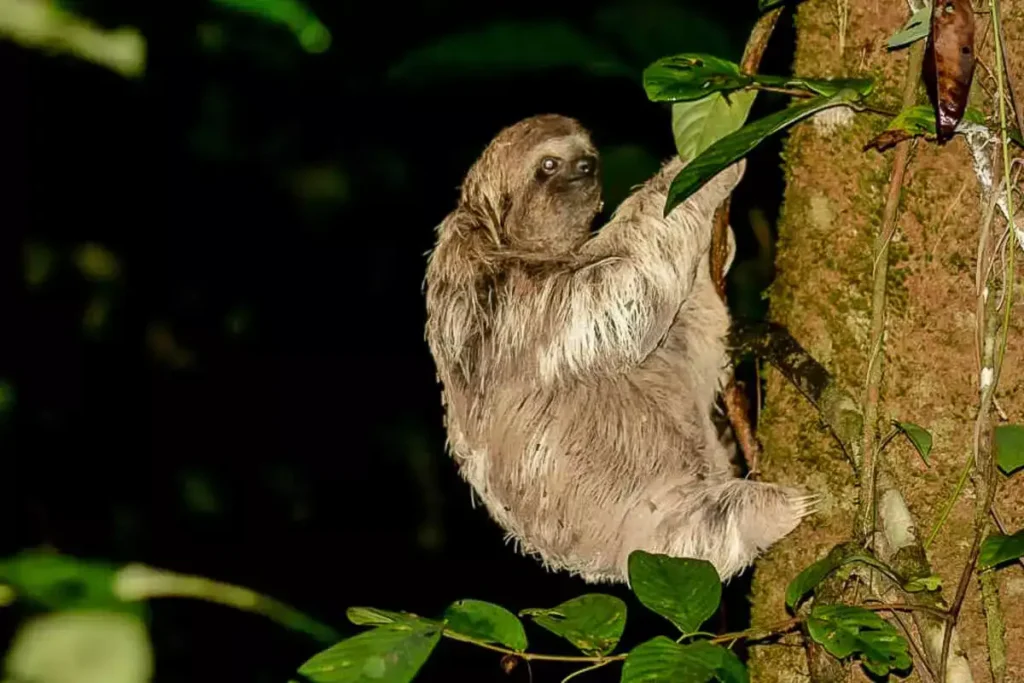
The jungle after dark is a genuinely different place, and a Manu jungle night walk is one of those activities travelers don’t expect to enjoy as much as they end up doing. Daytime excursions are built around birds and monkeys; once the sun drops, an entirely different set of animals takes over. This guide covers exactly what you’ll see, how the walk works, and what to bring. For the wider context on the destination, see our complete Manu Reserved Zone guide.
What You’ll Actually See After Dark
This isn’t a vague “amazing wildlife” pitch, here’s what guides consistently spot on a night walk:
- Tarantulas, often found resting in burrows or on tree bark, spotted by their eye-shine or the guide’s trained eye for their silhouette.
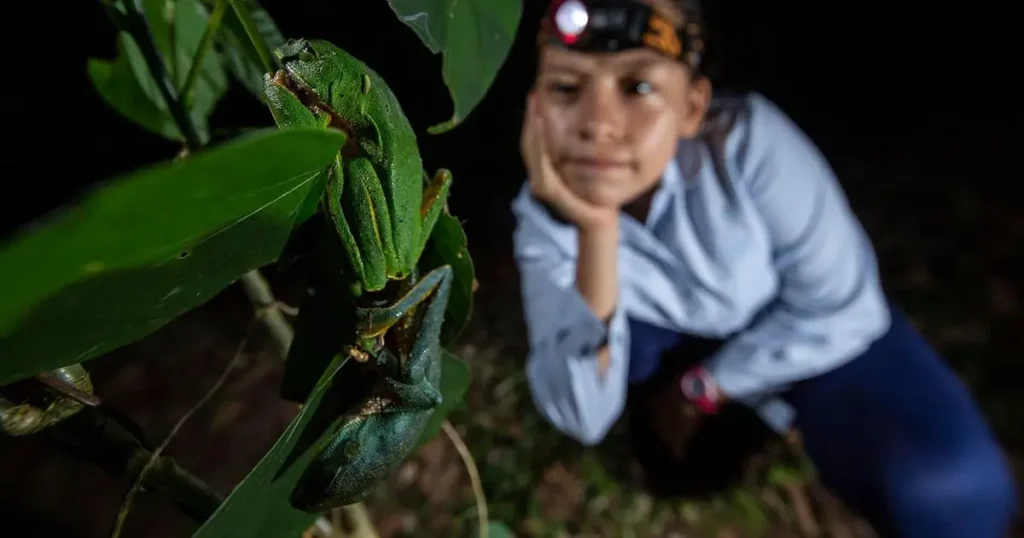
- Tree frogs, in a range of colors depending on species, usually clinging to leaves near the trail.
- Caimans, visible on the water as two glowing points of eye-shine reflecting back a headlamp beam.
- Stick insects, which are genuinely difficult to spot even when a guide points directly at one, since their camouflage is built for exactly this.
- Snakes, seen occasionally rather than reliably, usually at a distance and always left undisturbed.
- Night monkeys, one of the few primate species active after dark, sometimes visible moving through the lower canopy.
For more on what’s crawling and flying around specifically, our guide to the insects of the Peruvian Amazon goes deeper on tarantulas and their relatives.
How a Night Walk Actually Works
The group moves single file behind the guide, who leads with a headlamp and sets the pace. Silence matters more here than on any daytime activity, since sound carries and most of what you’re looking for relies on stillness rather than movement to stay hidden. The best timing is right after dusk, roughly 6:30 to 8:00 PM, when nocturnal activity is just beginning and predators start actively hunting.
Your guide will ask you to keep your headlamp beam steady and scan slowly across trees and underbrush rather than sweeping it around, since that’s what actually catches eye-shine without startling anything nearby.
What to Wear and Bring
Pack a strong headlamp or flashlight with extra batteries, since this is the one activity where your light genuinely is your visibility. Long sleeves and lightweight pants protect against mosquitoes and unexpected brush along the trail, and sturdy boots (rubber boots are often provided, but bring good socks) help on trails with roots and vines. Apply a heavy-duty DEET-based repellent generously before heading out. For the fuller packing list beyond just night-walk gear, check our jungle packing checklist.
Is a Night Walk in Manu Safe?
Yes, provided you stay with your guide and don’t wander off the trail on your own. Nothing about a night walk is inherently more dangerous than a daytime hike, it’s simply darker, which is exactly why sticking close to your guide matters more than usual. For a full breakdown of jungle safety more broadly, our guide on whether Manu National Park is safe covers wildlife risk, health prep, and what to expect.
Which Tours Include a Night Walk
Our 6-day, 5-night Manu Reserved Zone tour includes a night walk as part of the standard itinerary.
Camping Under a Jungle Sky
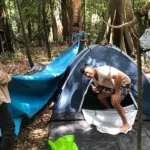
A night walk pairs naturally with camping nearby, since you’re already out after dark and the lodge or campsite is close by once the walk ends. Our guide to camping in the Manu jungle covers what a night under the Amazon sky looks like beyond just the walk itself.

Ready to Experience the Jungle After Dark?
A night walk is one of the activities travelers consistently mention afterward as a trip highlight, often more than they expected going in. Our 6-day, 5-night Manu Reserved Zone tour includes it as part of a full Reserved Zone itinerary, guided by naturalists who know exactly where to look.
Frequently Asked Questions
Is a night walk in Manu actually safe? Yes, as long as you stay with your guide and don’t leave the trail. The main risk factor is limited visibility, not the wildlife itself.
What animals will I actually see on a Manu night walk? Tarantulas, tree frogs, caimans (by their eye-shine on the water), stick insects, occasional snakes, and sometimes night monkeys.
Do I need my own headlamp for a night walk? Yes, bring a strong headlamp or flashlight with extra batteries. It’s the main tool you’ll rely on for the entire activity.
What time does the night walk start? Typically right after dusk, around 6:30 to 8:00 PM, when nocturnal wildlife activity is just picking up.
Is the night walk included in every Manu tour? It’s included on our 6-day, 5-night Reserved Zone tour.
Do I need special clothing for a night walk? Long sleeves, lightweight pants, and sturdy boots, plus a heavy-duty DEET-based repellent applied before heading out.
Is the night walk difficult or physically demanding? No. Trails are mostly flat, though uneven in spots from roots and vines, so the challenge is more about visibility than physical exertion.