Manu National Park has over 800 recorded bird species across its elevation range, from Andean cloud forest down to lowland Amazon rainforest — more habitat variety in one protected area than almost anywhere else in Peru. No guide can promise you’ll see any specific species on a given trip, but the range of microclimates genuinely gives birders a realistic shot at macaws, cock-of-the-rock, and, with real patience, harpy eagle.
This isn’t casual sightseeing birding. Early starts, silence, and a guide who knows specific calls and lek sites matter more here than in almost any other Peru itinerary. If you want convenience over a real chance at rare species, this isn’t the trip for that trade-off.
Why Manu’s Elevation Range Makes It Such Strong Birding
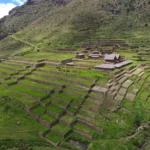
Manu’s route from Cusco descends through Paucartambo and into cloud forest before reaching Atalaya, where the trip continues by boat down the Alto Madre de Dios River to Boca Manu and the Reserved Zone. That descent — from Cusco at roughly 3,400 m (11,150 ft) down toward lowland rainforest — passes through genuinely different bird communities at each elevation band, not just a single ecosystem with more of the same species.
Our dedicated birding itinerary spans an incredible elevation gradient, dropping from the 4,000-meter (13,123-foot) Acjanaco Pass down to the 300-meter (984-foot) lowland Amazon basin. We intentionally prioritize the classic cloud-forest “Manu Road” corridor for the first two days rather than rushing directly to the river.
This overland route is legendary among birders, offering unparalleled access to mixed-species flocks, the Andean Cock-of-the-rock lek, and high-altitude hummingbirds that you simply cannot see in the deep jungle. Bypassing this road means missing half of the park’s endemic species.
We take our time descending through the elfin and cloud forest layers before boarding our motorized boats at Atalaya for the journey into the Reserved Zone.
Access to the Reserved Zone itself is controlled by SERNANP, with mandatory check-in at Limonal and authorized operators only — Local Trekkers Peru is one. This isn’t a bureaucratic footnote for birders specifically: it’s part of why bird density and diversity here holds up better than in more heavily visited parts of the Amazon.

Species You Have a Real Chance of Seeing
Cock-of-the-rock: Peru’s national bird, known for vivid red-orange plumage and an elaborate lek display where males gather to compete for mates. Established leks make this one of the more reliably observed species on this list, though timing around dawn still matters.
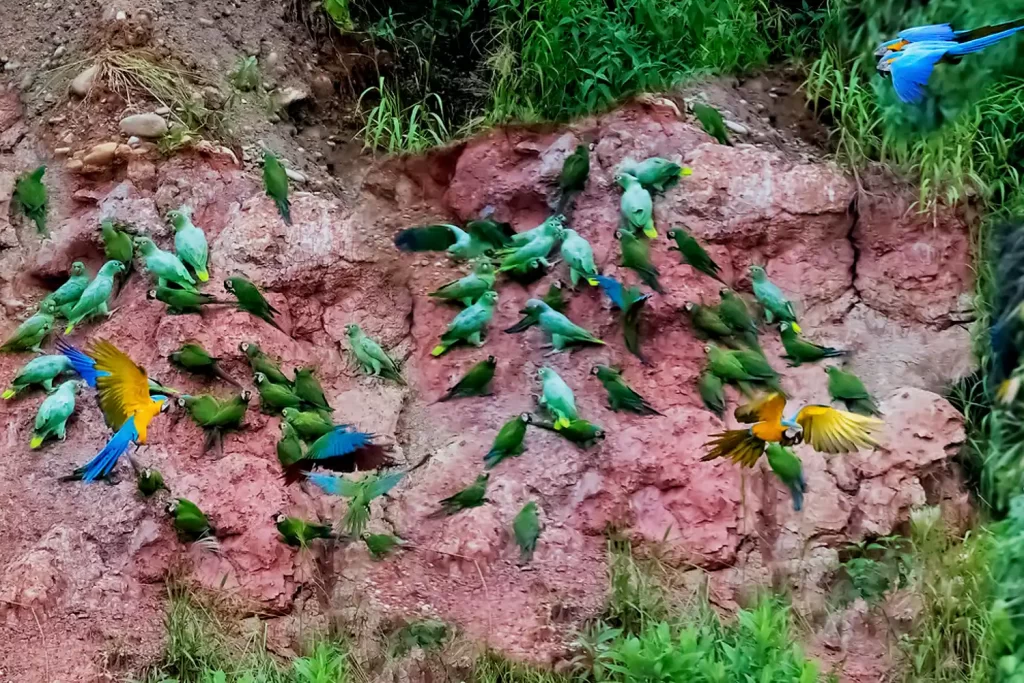
Macaws and parrots: Scarlet and blue-and-yellow macaws are among the most visible birds in the park, especially at clay licks, where dozens of individuals gather at once to eat mineral-rich clay — genuinely one of the best single wildlife spectacles in the Amazon when the timing lines up.
For our birding-focused expeditions, visiting a highly active clay lick is non-negotiable. Our itineraries specifically target the renowned Blanquillo Macaw Clay Lick (Collpa Blanquillo). While there are smaller licks in the Cultural Zone, Blanquillo offers the highest concentration of red-and-green macaws, alongside dozens of parrot and parakeet species.
We secure spots in the camouflaged floating blinds well before dawn, providing serious birders and wildlife photographers the perfect vantage point.
In our operational experience, this specific location delivers the most consistent and spectacular avian activity in the entire Manu basin, making it the undeniable centerpiece of our lowland birding days.
Harpy eagle: The apex predator of the canopy, and genuinely rare anywhere in the world. Manu is one of the stronger regions in Peru for a chance sighting, but “stronger chance” isn’t a promise — treat any operator claiming reliable harpy eagle sightings with real skepticism.
Hummingbirds: Dozens of species across the park’s elevation bands, with different species concentrated in cloud forest versus lowland zones — part of why the elevation range itself is the draw for serious birders, not any single habitat.
Toucans and other canopy species: Common and visible across multiple zones, often the easiest higher-profile sightings on a given day when rarer species aren’t showing.
Best Time and Conditions for Birding
Dry season, May to October, gives the most reliable access and the best conditions for clay-lick activity, since birds concentrate around rivers and mineral sites when the landscape is otherwise drier. Average lowland temperatures sit around 32 °C (90 °F). One detail birders specifically need to plan for: between June and September, cold fronts called friajes can drop temperatures to around 10 °C (50 °F), even in the jungle — pack a real jacket, since a sudden cold morning changes both your comfort and which species are active.
Rainy season, December to March, brings access challenges — roads can be cut off entirely — but January and February also bring fruiting trees that draw birds and other wildlife toward more accessible areas. That’s a genuine trade-off worth explaining honestly rather than steering every reader toward dry season by default: harder logistics, but potentially different and concentrated activity.
During the peak rainy season (January through March), navigating into Manu requires deep operational flexibility. Landslides along the high-altitude Manu Road are frequent, and river debris can slow down motorized boats.
If the primary cloud forest road from Paucartambo becomes impassable, we reroute our groups via the Interoceanic Highway toward Puerto Maldonado, utilizing alternative river access to reach our lodges safely.
We constantly monitor river levels, as flooded trails can limit walking access in the lower basin. Consistent with our safety policies, we never rely on unpredictable charter flights into local airstrips during these months, as torrential rains frequently ground them.
Safety and reliable ground logistics always come first.
Getting There and Trip Logistics
Difficulty is easy to moderate — most birding happens from boats, established trails, or roadside stops, not technical hiking. What’s genuinely demanding is the schedule: expect dawn starts, since the first hours of daylight are when bird activity peaks and when guides can hear and locate calls most reliably.
What to bring: binoculars (8×42 or 10×42 is the standard range), a telephoto lens if photography matters to you, lightweight neutral-colored clothing that doesn’t rustle, DEET-based insect repellent, and a genuinely waterproof daypack — brief downpours happen even in dry season, and some of the best bird activity follows right after a shower.
Recommended stay for serious birding is longer than a standard wildlife trip — more days means more elevation zones covered and more chances at species that only show up in specific habitat.
For a standard wildlife and cultural introduction to Manu, we typically recommend a 5 to 6-day itinerary. However, for a dedicated birding expedition, our absolute minimum recommendation is 8 days.
Birding requires extreme patience and deliberate, slow pacing. An 8-day schedule allows us to spend two full days specifically targeting the altitudinal gradients along the Manu Road—where endemic cloud-forest species reside—before transitioning to the river.
It also provides buffer time to stake out canopy towers or the Blanquillo clay lick without feeling rushed. Attempting a specialized birding trip in fewer than 8 days means you will spend too much time in transit and not enough time silently observing the canopy.
The Mistakes We See Most Often
The most common one is treating this like general wildlife tourism rather than birding specifically, and underestimating how much silence and early starts actually matter. Rustling synthetic gear, loud conversation on the trail, or skipping the 4:30 AM starts genuinely costs sightings — this isn’t a minor preference, it changes what you’ll actually see.
The most common mistake our specialist guides see with birding clients is arriving with highly unrealistic expectations about spotting the Harpy Eagle. While Manu is a pristine habitat for them, Harpy Eagles are incredibly elusive apex predators with massive territories.
We see travelers get so hyper-focused on this single species that they ignore the hundreds of other phenomenal, rare birds surrounding them. The second biggest mistake is bringing underpowered optics.
The Amazon canopy is dense and towering; a standard pair of compact binoculars is virtually useless in the dim, high-contrast light of the rainforest. We always advise bringing professional-grade binoculars (like 8×42 or 10×42) and a quality spotting scope.
The second is packing for general jungle heat and being caught off guard by a friajes cold front between June and September — a real jacket isn’t optional insurance on this trip, it’s standard gear for that window.
The third is booking too short a trip for the specific species someone is hoping to see. A rare, elevation-specific bird you’re hoping for might simply not be in the zone your itinerary covers if the trip is compressed to save a day or two.
FAQs
Will I definitely see a harpy eagle in Manu? No responsible operator can promise this. Manu is a genuinely strong region for a chance sighting, but harpy eagles are rare everywhere, and any guarantee should be treated as a red flag.
Do I need to be an experienced birder to enjoy this trip? No — a good guide identifies calls and species for you. Experienced birders get more out of it because they can spot subtler activity themselves, but this trip works for genuine beginners too.
What’s the difference between a general Manu wildlife trip and a birding-focused one? Our birding-specific itineraries differ drastically from our standard Reserved Zone tours in three key ways: pacing, scheduling, and leadership. Standard tours cover more ground and focus on mammalian megafauna, moving steadily along the trails.
In contrast, our birding groups move at a deliberate crawl, often standing still for an hour at a single fruiting tree to monitor mixed-species flocks.
We start much earlier—often hiking out well before 4:30 a.m. to catch the dawn chorus—and we stay out later. Most importantly, these departures are strictly led by our elite, ornithology-trained guides who possess encyclopedic knowledge of Amazonian bird calls.
Their ability to identify a species by a single, distant chirp is the core advantage of this tour.
What do people ask you most before booking a birding trip to Manu? Before committing to a specialized birding trip, the question our operations team gets most often on WhatsApp is: “Can you provide a guarantee or checklist of the exact endemic species we will see, and who exactly is the guide?” Serious birders want assurance of our guide’s expertise before investing in a deep Amazon trip.
We always respond by sharing our specialized eBird lists from recent departures and confirming the assignment of one of our dedicated ornithology guides.
We set honest expectations: while we cannot guarantee a Harpy Eagle or a specific Antpitta, we guarantee that our specialized guides know exactly which micro-habitats, bamboo thickets, and elevations to target to maximize your life-list additions.
Is Manu better for birding than other parts of the Peruvian Amazon? The elevation range is the real differentiator — few other single destinations in Peru move through as many distinct bird communities in one trip, which is why serious birders specifically choose Manu over lowland-only Amazon destinations.
Next Step
For general wildlife beyond birds — jaguar, giant otter, and the rest of what shares this habitat — see our complete guide to the animals of Manu. For the full picture of the park’s zones and regulations, our Manu National Park: The Definitive Guide covers the background this article doesn’t repeat. We’re also working on a dedicated clay-lick guide for photographers and birders — not live yet, but worth checking back for. When you’re ready to book, our Manu Reserved Zone 6-day, 5-night tour has current departure details.