Manu National Park protects one of the most biodiverse stretches of the Peruvian Amazon, with jaguar, giant river otter, black caiman, spectacled bear, tapir, and over 800 recorded bird species living across its zones. No guide can promise you’ll see any specific animal — these are wild animals in undisturbed habitat, not a zoo — but Manu genuinely gives you a better chance at rare sightings than almost anywhere else in Peru, especially in the Reserved Zone, where Local Trekkers Peru runs its trips.
What you actually see depends on season, luck, and patience. Early mornings and late afternoons are when most wildlife is active, and silence on the boat or trail matters more than any piece of gear you bring.
Why Manu Is So Biodiverse
Manu spans three zones with very different access rules. The Cultural Zone is open to general visitors. The Reserved Zone — where our tours operate — has controlled access managed by SERNANP, Peru’s national protected-areas authority, with check-in required at the Limonal control point and authorized operators only.
The Intangible Zone is entirely off-limits, protecting uncontacted indigenous communities and the most untouched habitat in the park.
The park’s biodiversity comes from its range of elevation and climate, from lowland Amazon rainforest up through cloud forest toward the Andes.
Manu National Park boasts one of the most dramatic elevation gradients on the planet, which is exactly why its biodiversity is so staggering. From our operational experience, the park’s absolute upper reaches crest just above 4,000 meters (around 13,123 feet) near the Acjanaco Pass, where the Andean puna begins its steep plunge into the cloud forest.
Many online sources generalize this, but when our private vans cross that pass on Day 1, you will physically feel the chill of the high Andes before we descend thousands of meters into the steaming lowland Amazon basin.
Because of this massive altitude span, our packing lists rigorously require both cold-weather layers for the initial crossing and lightweight, breathable gear for the jungle floor.
That range of habitat in one protected area is why Manu was designated a UNESCO Biosphere Reserve in 1977 and received further UNESCO recognition in 1987.


The Animals You Have the Best Chance of Seeing
Jaguar: The Manu jaguar is elusive by nature, but this is one of the few places in Peru where sightings genuinely happen, most often near rivers and in remote stretches of the Reserved Zone, early morning or late afternoon. A sighting is never guaranteed on any given trip — treat it as a real possibility, not an expectation.
Giant river otters: Living in family groups along oxbow lakes and calm river stretches, these are diurnal and social, which makes them one of the more reliably visible large mammals in the park when you’re in the right spot at the right time of day.
Black caiman: Found along rivers and lake edges, most active and visible after dark with a spotlight from a guided boat — a genuinely different kind of sighting than daytime wildlife viewing.
Spectacled bear: South America’s only bear species, present in Manu’s forest zones but genuinely difficult to spot — sightings are rare even for experienced guides, and worth mentioning honestly rather than oversold.
Tapir: The largest land mammal in the Amazon, most often encountered near clay licks or riverbanks, typically at dawn, dusk, or overnight.
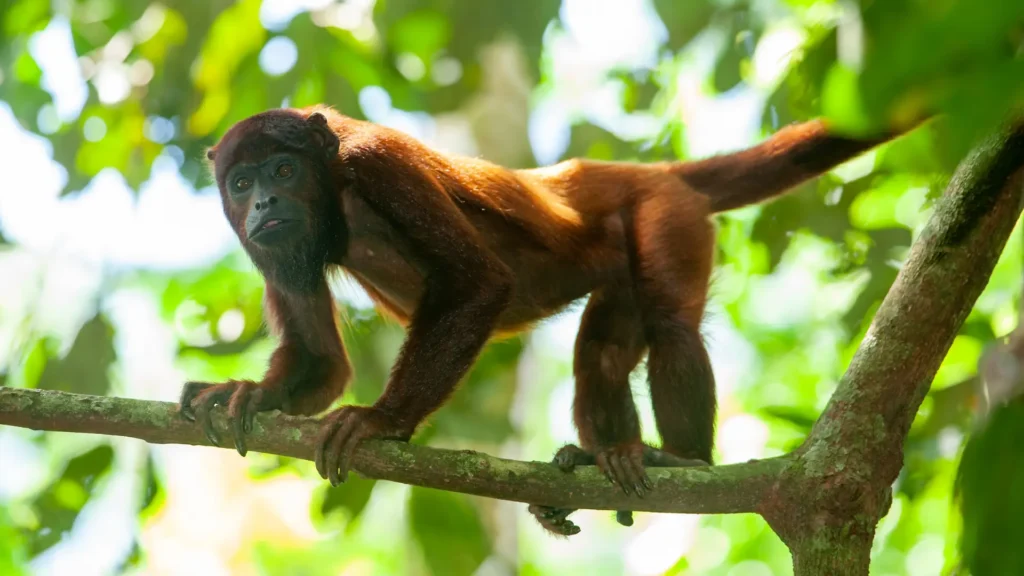
Primates: Manu is one of the best places in Peru to observe wild monkeys, including howler monkeys, spider monkeys, squirrel monkeys, and emperor tamarins, most active in early morning hours.
Birds: With over 800 recorded species, Manu is a genuine destination for birdwatchers — macaws, toucans, hoatzins, and occasionally harpy eagles. Clay licks are the best single spot to see dozens of species at once, since macaws and parrots gather there to eat mineral-rich clay.
For our birdwatching and wildlife-focused clients, the absolute highlight of our deep Manu itineraries is our visit to the renowned Macaw Clay Lick (Collpa) at Blanquillo. While there are smaller licks scattered throughout the Cultural Zone, Blanquillo offers the most spectacular and reliable daily activity.
Our guides position our groups in specialized, camouflaged viewing blinds well before dawn. As the sun rises, hundreds of vibrant red-and-green macaws, alongside various parrot and parakeet species, descend on the mineral-rich riverbank to neutralize toxins in their diet.
We explicitly include this specific location because, in our extensive operational experience, it consistently delivers the high-density wildlife encounters our trekkers travel to the Amazon to see.
Reptiles and amphibians: Frogs, boas, and lizards round out the park’s wildlife, many active only at night — this is where traveling with a certified local guide matters most, since spotting and safely observing nocturnal species isn’t something to attempt alone.
When to Go for the Best Wildlife Chances
Dry season, May to October, is the most reliable window — trails and river access are stable, and average temperatures sit around 32 °C (90 °F). One detail travelers don’t expect: between June and September, cold fronts called friajes can push temperatures down to around 10 °C (50 °F) even in the jungle. Pack a real jacket for this trip, not just lightweight rainforest clothing.
Rainy season, December to March, brings a different trade-off. Roads can be cut off entirely, which affects itinerary logistics.
During the peak rainy season from January to March, the winding dirt road from Paucartambo down through the cloud forest frequently experiences landslides.
While some operators try to push through risky conditions, we prioritize safety. If the primary overland route is impassable, we pivot to alternative access points, often routing via the Interoceanic Highway to Puerto Maldonado, followed by a specialized upriver boat journey into the reserve.
Consistent with our company policy, we do not rely on local charter flights to small airstrips like Boca Manu, as these are notoriously unreliable and frequently canceled due to poor visibility.
Our operations team constantly monitors road conditions, and we will proactively adjust your transit logistics to ensure safe forward progress.
January and February specifically bring fruiting trees that draw wildlife toward accessible areas, which can mean better sightings despite the harder access — a genuine trade-off worth explaining rather than dismissing the rainy season outright.
Getting There and What to Expect Logistically
The standard route runs Cusco → Paucartambo → Atalaya, then by boat down the Alto Madre de Dios River to Boca Manu and into the Reserved Zone.
Reaching the pristine depths of the Manu Reserved Zone is a serious commitment, requiring two full days of transit from Cusco. Day one involves a scenic 8 to 10-hour overland journey across the Andes and down through the cloud forest to our initial lodge in the Cultural Zone.
On day two, we transition to our private motorized riverboats. We navigate down the Alto Madre de Dios River and up the Manu River for another 6 to 8 hours, depending on current water levels, finally arriving at our deep-jungle lodge.
We always tell clients to view this travel as part of the expedition itself; our guides point out changing ecosystems and riverbank wildlife, making every transit hour highly rewarding.
Difficulty is moderate — this is guided exploration by boat and short trail walks, not technical trekking. Recommended stay is 4 to 7 days; shorter trips see less of the park and generally fewer wildlife encounters, simply because more time in the Reserved Zone means more chances.
Pack insect repellent and sunscreen, lightweight long-sleeved clothing for sun and insect protection, a genuine rain jacket, binoculars, and a camera with zoom if wildlife photography matters to you.


The Mistakes We See Most Often
The most common one is expecting guaranteed sightings of specific animals, especially jaguar or spectacled bear, based on marketing from other operators or trip reports online. Manu offers a real chance, not a guarantee — any operator promising otherwise is overselling what wild habitat can deliver.
The most common mistake our senior guides see on Manu expeditions is travelers arriving with absolutely no warm clothing, assuming the Amazon is boiling hot 24/7.
They completely underestimate the “friajes”—sudden Patagonian cold fronts that can sweep into the jungle between May and August, dropping temperatures down to a biting 10°C (50°F) overnight. Additionally, the initial overland crossing over the Acjanaco Pass and the high-speed, early morning riverboat rides generate a freezing wind chill.
When clients only pack shorts and t-shirts, they spend the first two days miserable. We constantly remind our trekkers during the briefing to pack a high-quality fleece jacket, a warm beanie, and long pants.
You can always shed layers, but you cannot survive a friaje comfortably without them.
The second is underestimating the friajes cold fronts and packing only for tropical heat. Travelers who bring lightweight jungle clothing exclusively are genuinely uncomfortable if a cold front hits during a June–September trip.
The third is choosing too short a stay. A 4-day trip covers meaningfully less ground and fewer wildlife zones than 6–7 days, and the difference in sighting variety over that extra time is real, not just a sales pitch for a longer package.
FAQs
Will I definitely see a jaguar in Manu? No responsible operator can promise this. Sightings happen more often here than almost anywhere else in Peru, but jaguars are wild and elusive — treat any guarantee from a company as a red flag.
What’s the difference between the Cultural Zone and the Reserved Zone? The Cultural Zone is open to general visitors with fewer restrictions. The Reserved Zone, where our tours run, has controlled access managed by SERNANP, with mandatory check-in and authorized-operator-only entry — this is where the best wildlife density typically is.
Is Manu safe to visit given the remote access? Access is remote by design, which is part of why the wildlife is undisturbed. Traveling with a certified, authorized operator matters here more than almost any other destination in Peru, precisely because of that remoteness.
What do people ask you most before booking a Manu trip? Before committing to a deep jungle expedition, the single most frequent question our WhatsApp team receives is: “Will I definitely see a jaguar, and are the animal sightings guaranteed?” We take great pride in giving an honest, ethical answer: the Amazon is a wild, vast ecosystem, not a zoo.
While Manu offers some of the highest biodiversity on Earth and our indigenous guides are master trackers, we never guarantee specific apex predator sightings.
We educate our clients that the magic of Manu lies in the holistic experience—spotting elusive giant river otters, hearing howler monkeys at dawn, and understanding complex jungle ecology.
Setting this realistic expectation ensures that when a jaguar does step out onto the riverbank, it feels like an earned privilege.
How many days should I plan for the best wildlife experience? 6–7 days gives meaningfully more sighting opportunities than a 4-day trip, since more time in the Reserved Zone means more chances at the animals that are naturally harder to encounter.
Next Step
For the full picture of the park’s zones, regulations, and planning details, see our Manu National Park: The Definitive Guide. We’re also building out more specific Manu guides — on the best season to visit and on what to pack for the friajes cold fronts specifically — not live yet, but worth checking back for. When you’re ready to book, our Manu Reserved Zone 6-day, 5-night tour has current departure details.