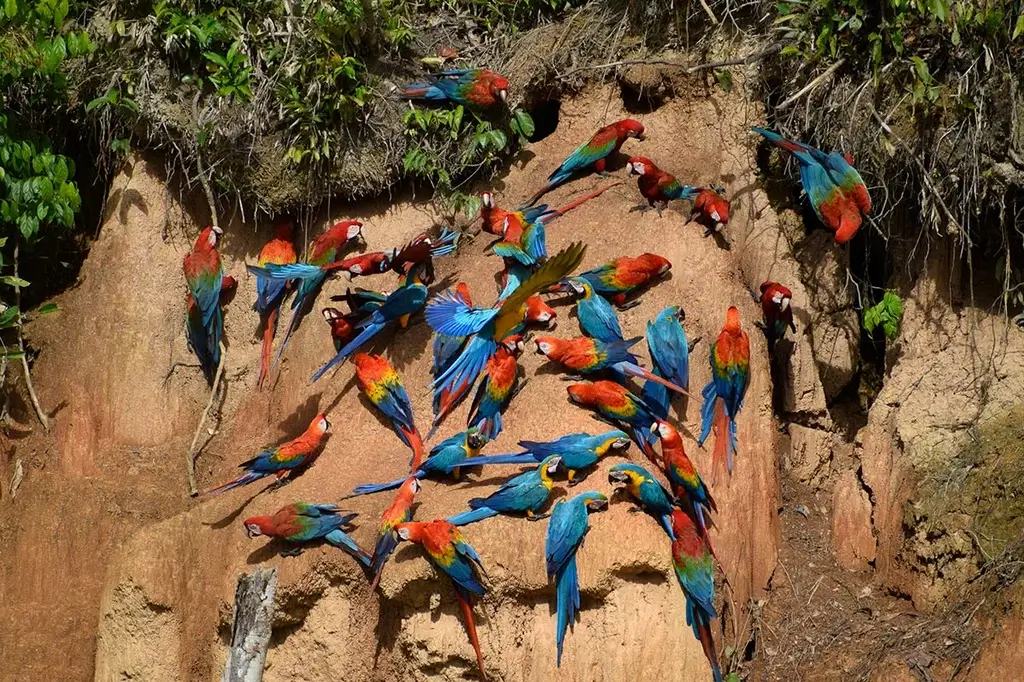
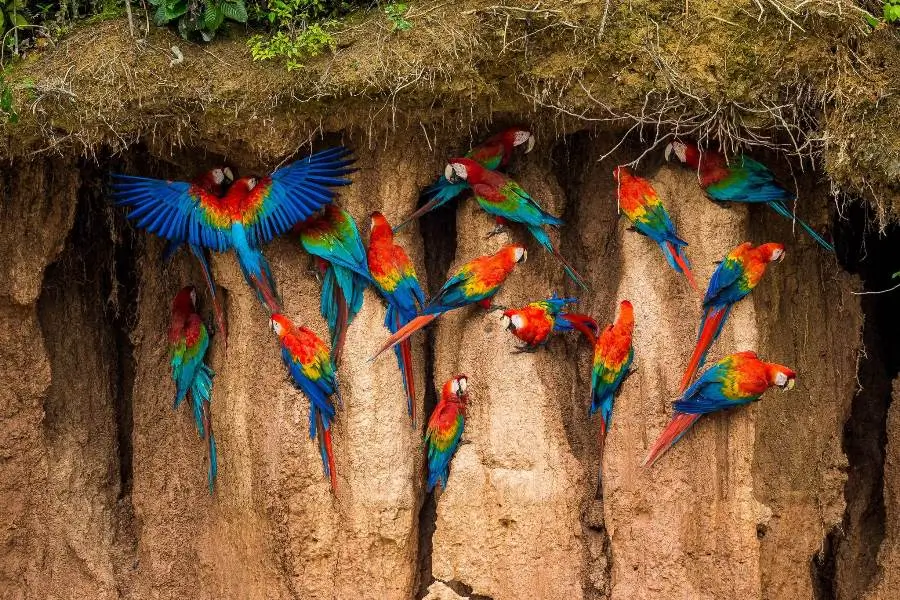
A collpa is an exposed clay riverbank where macaws, parrots and other birds gather to eat soil. The leading explanation is that the clay helps neutralize toxins from the unripe seeds and fruits in their diet and adds minerals that are otherwise scarce in the rainforest canopy; it’s the dominant hypothesis among researchers, not a settled fact. In Tambopata, two clay licks draw almost all the visitor traffic: Collpa Chuncho and Collpa Colorado. If you want the broader picture of planning a trip to the reserve, our Puerto Maldonado and Tambopata planning guide covers logistics beyond the clay licks themselves.
Collpa Chuncho vs Collpa Colorado at a glance
| Collpa Chuncho | Collpa Colorado | |
|---|---|---|
| Location | Upper Tambopata River, inside the reserve’s buffer zone | Lower Tambopata, closer to the national reserve’s main lodge area |
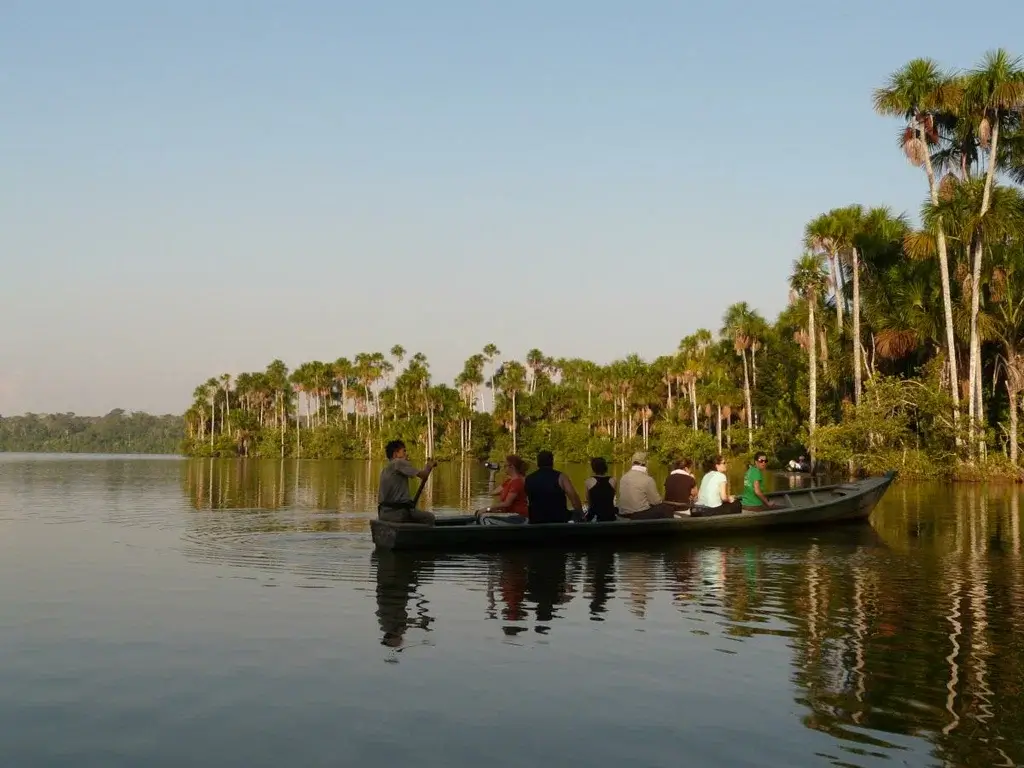
| Boat time from Puerto Maldonado | Roughly 5-6 hours upriver | Roughly 3-4 hours downriver/upriver depending on lodge |
| Arrival at the lick | Pre-dawn, usually before sunrise | Mid-to-late morning |
| Most likely species | Larger macaws (red-and-green, scarlet) in bigger numbers | Mixed parrots and macaws, somewhat smaller gatherings |
| Minimum tour length | 3 days and 2 nights | 2 days and 1 night |
| Typical lodging | Lodges further upriver, closer to the lick | Lodges in the lower Tambopata corridor |
Consult the tour page for current pricing and availability, since boat schedules and lodge allocations shift with the season.
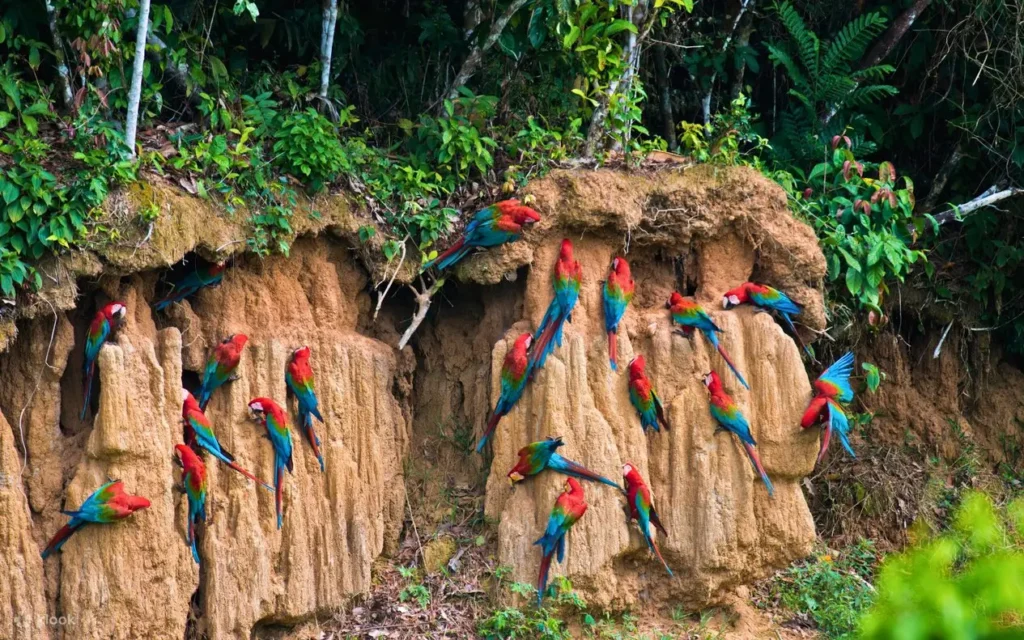
Collpa Chuncho: the early start that decides everything
Reaching Chuncho means leaving the lodge in the dark, often well before 5 a.m., so you’re seated in the hide across the river while the light is still grey. Guides push for this timing because activity tends to build in the first hour of daylight and drop off once the sun is fully up. The boat ride upriver the day before already eats into your first day, which is why Chuncho only makes sense as part of a 3- or 4-day Tambopata itinerary rather than a quick add-on. If your schedule allows it, our 2-day, 1-night Collpa Chuncho tour compresses the trip, though most visitors get more out of the 3-day, 2-night version, which allows for a second attempt if the first morning is quiet.
Collpa Colorado: the more accessible option
Colorado sits closer to the lodges of the lower Tambopata, so the wake-up call is later and the boat transfer shorter. You can reasonably fit it into a 2-day trip without losing most of your first day to travel. The trade-off is a somewhat smaller and more mixed gathering of birds compared to Chuncho’s larger macaw flocks, though on a good morning the difference isn’t always obvious to a first-time visitor. Colorado also sits closer to the general trail network described in our Tambopata National Reserve visitor guide, so it pairs easily with an afternoon walk the same day.
What actually determines whether the birds show up
No agency can guarantee a clay lick performance, and anyone who tells you otherwise is overselling. Rain is the main disruptor: macaws avoid the exposed bank in a downpour, and a wet morning can mean little or no activity. Wind, the recent presence of a predator like a hawk near the bank, and the time of year all shift the odds as well, with drier months generally producing more consistent sightings than the height of the rainy season. Our broader guide to the macaw clay licks of Tambopata goes into more detail on seasonal patterns if you’re trying to time a trip around them.
How to behave at the hide
- Keep your voice down; sound carries across the water and can spook birds already at the bank.
- Stay behind the guide’s line at the hide rather than moving toward the riverbank.
- Skip the flash on any photo or video; a sudden flash can scatter the entire flock.
- Wear neutral, muted clothing rather than bright colors, which macaws are quick to notice.
Which one fits your trip
- 2 days: Colorado is the realistic choice; Chuncho’s travel time alone won’t fit.
- 3 days: Either works, but 3 days is the minimum for Chuncho done properly, with one full lookout morning.
- 4 days: Chuncho, with a buffer morning in case the first attempt is rained out or quiet.
- Photographers: Chuncho, for the larger flocks and the pre-dawn light, though a longer lens and patience matter more than which collpa you pick.
- Traveling with children: Colorado, since the shorter boat ride and later start are easier on a family schedule.
If you’re still deciding between destinations rather than clay licks, our comparison of Manu versus Tambopata for an Amazon trip may help you settle that first. And before any Amazon trip, it’s worth checking our health and vaccines guide for the Peruvian Amazon, since recommendations differ from what you’d need in the highlands. For a wider sense of what else you might spot beyond macaws, see our guides to Amazon wildlife in Peru and to the animals of the Amazon rainforest.
Frequently asked questions
Is Collpa Chuncho better than Collpa Colorado? Neither is strictly better; Chuncho tends to draw larger macaw flocks but requires a pre-dawn start and at least 3 days, while Colorado is more accessible and fits a 2-day trip with a later wake-up and shorter boat ride.
How early do you have to wake up for Collpa Chuncho? Most groups leave the lodge before 5 a.m. to reach the hide while it’s still dark, since activity at the bank tends to build in the first hour after sunrise and taper off once the sun is high.
Can I visit both clay licks on the same trip? It’s possible on a longer itinerary of 4 days or more, but most 2- or 3-day tours are built around a single collpa because of how much boat travel each site requires from Puerto Maldonado.
What animals can I expect to see at the clay licks? Large macaws like scarlet and red-and-green macaws are the main draw, along with various parrot and parakeet species; exact numbers and species mix vary by day and season, so no sighting is guaranteed.
Why do clay licks sometimes have no activity? Rain, strong wind, and the recent presence of a predator near the bank are the most common reasons birds skip a morning; it also varies by season, with the drier months generally producing more consistent activity.
Which clay lick is better for photography? Collpa Chuncho is generally preferred by photographers because of its larger macaw gatherings and pre-dawn light, though a good telephoto lens and patience matter as much as the site itself.
How many days do I need for a clay lick tour? Collpa Colorado can be done in 2 days and 1 night; Collpa Chuncho needs a minimum of 3 days and 2 nights because of the longer boat transfer upriver and the early start required.