Uros, Taquile and Amantaní homestay trips get bundled together in most itineraries, but they’re three very different visits: one is a floating village a short ride from the port, the other two are real islands that take most of a day to reach. Here’s how they compare before you decide what to book.
| Uros | Taquile | Amantaní | |
|---|---|---|---|
| Distance from Puno | 5–7 km | ~35 km | ~40 km |
| Sailing time | 30–45 min | 2.5–3 hours | 3–3.5 hours |
| What you’ll see | Reed islands, boat rides, handicrafts | Hilltop village, hand-woven textiles, community lunch | Family homes, terraced fields, evening dance |
| Typical time on site | 45 min–1 hour | 2–3 hours, including the climb and lunch | Overnight, from afternoon to the next morning |
| Can you sleep there? | No | No | Yes, this is the only one |
If you’re still deciding how to build your Titicaca trip around these three stops, our Puno and Lake Titicaca travel guide walks through the whole region, and our piece on getting from Cusco to Puno by bus, train or plane covers the transfer most travelers ask about first. For background on the lake itself before you get to the islands, see our overview of Lake Titicaca.
The Uros Floating Islands: Reed, Reality and Respectful Visits
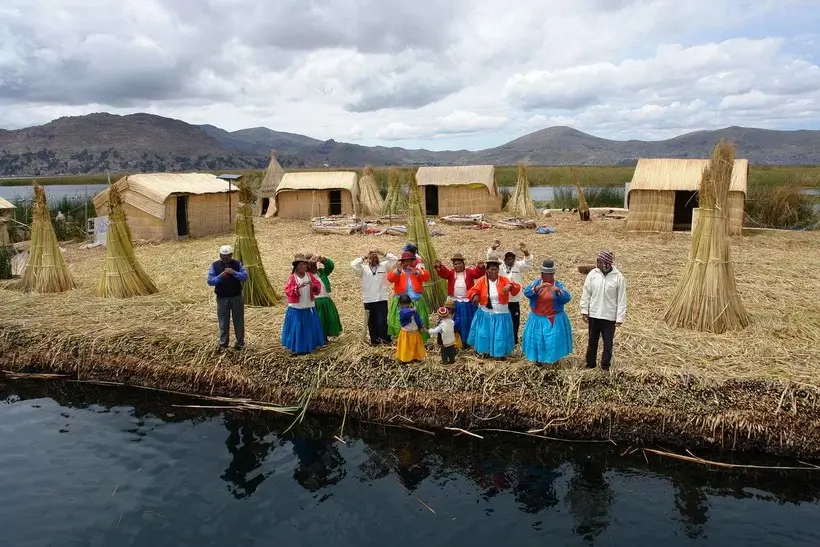
The Uros islands get a reputation as a “souvenir stop,” and it’s worth being upfront about why. Most boats visit one or two islands out of dozens, families take turns hosting groups, and the model in front of you — the woven boat rides, the handicraft table, the songs in several languages — is staged for visitors. That doesn’t mean it’s fake; it means it’s a business, and it’s worth understanding as one.
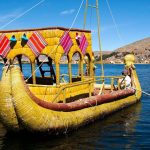
The islands themselves are real and built the way they’ve always been built: layers of totora reed cut from the lake bed, stacked over a floating base of reed roots, replaced from the top every couple of weeks as the bottom layers rot in the water. Families pay for the ride you take on a totora boat and for photos with woven crafts because that income, not fishing alone, is what keeps many households on the islands going today. Sailing here is like stepping onto a rotating stage where each family’s turn to host visitors is also their turn to earn.
A more respectful visit means treating it as what it is: buy something directly from the family hosting you rather than bargaining hard, ask before photographing anyone up close, and don’t expect the pre-tourism version of daily life — that changed decades ago. The islands sit inside the Reserva Nacional del Titicaca, managed by SERNANP, which protects the totora reed beds the islands are built from and the wildlife living among them.
Taquile: The Island of Weavers
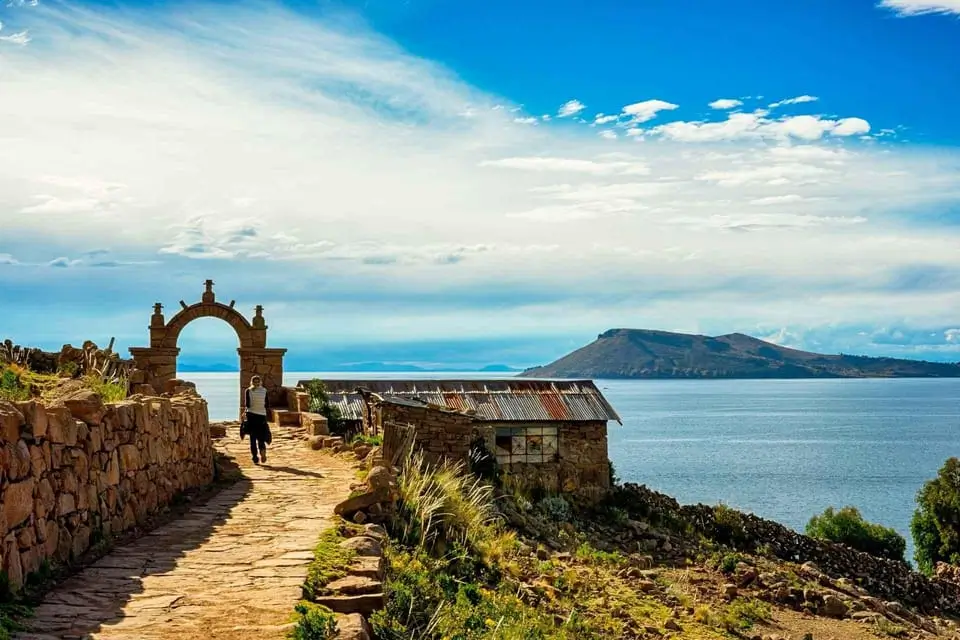
Taquile is the opposite experience: a real hilltop village where residents live off farming, fishing and weaving, with tourism as one income stream among several rather than the whole economy. Boats dock below the village, and reaching the main square means climbing stone steps that top out around 3,950 meters — expect to feel it in your chest even if you’re used to Cusco’s altitude, since Taquile sits noticeably higher.
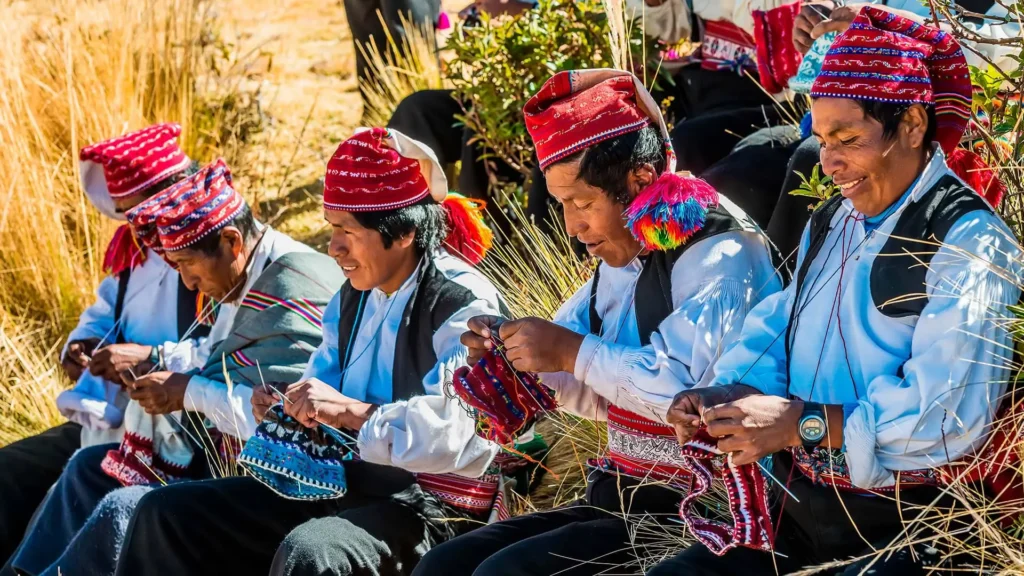
The island’s textile tradition is recognized by UNESCO as Intangible Cultural Heritage of Humanity, and it’s not a display for tourists: men knit from childhood, and the patterns and colors on a chullo hat or a woven belt still signal a person’s marital status and role in the community. For more on how these garments fit into Andean life more broadly, our guide to traditional Peruvian clothing covers the wider context. Taquile is also a Quechua-speaking island, and if you want to understand the language behind the greetings you’ll hear, our piece on Quechua, the sacred language of the Inca Empire is a good primer.
Most day tours build in a community lunch on the island — usually fried trout, quinoa soup or a similar set menu — cooked and served by a local family, eaten at long tables with a view over the lake. Between the climb, the lunch and the walk back down, plan on two to three hours on the island itself.
Amantaní: The Only Island Where You Sleep in a Local Home
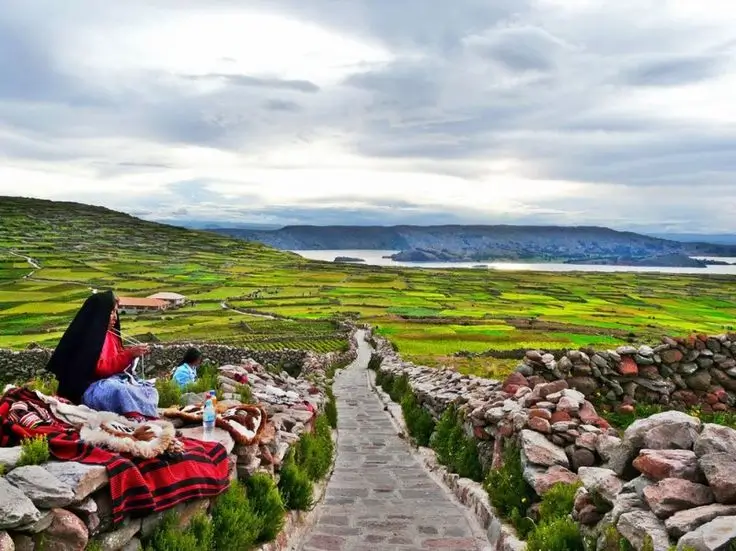
Amantaní is the one island in this trio where you actually stay overnight, in a family’s home rather than a hotel. Boats arrive early afternoon, host families meet arriving groups at the dock, and you’ll likely walk 15 to 20 minutes uphill to reach the house — carrying your own bag, since there’s no porter service here.
It’s standard practice to bring a small gift for the host family, and it matters what you bring: basic food staples like rice, sugar, oil or pasta are genuinely useful and appreciated, while sweets for children or cash handed directly to a host can create dependency or awkwardness. If you’re unsure how much cash to carry for the trip overall, our guide to money in Peru covers denominations and tipping norms that apply here too.
What a Homestay Night on Amantaní Is Actually Like
Set expectations before you go: most homes don’t have hot showers, and many use a basic latrine or a simple bathroom rather than anything close to a hotel bathroom. Electricity is limited, often solar-powered and only for a few hours in the evening, so bring a headlamp.
Dinner is cooked and eaten with the family, usually a simple soup followed by a main of potatoes, quinoa or rice with vegetables — filling, not fancy. Most groups walk up to one of the island’s two hills afterward for sunset views, then come back down for a communal evening event where families dress visitors in borrowed traditional clothing for a dance with music from a local band.
Nights get genuinely cold. Amantaní sits above 3,800 meters, and even with the extra blankets most families provide, pack thermal layers — this isn’t the kind of cold a light jacket solves. Mornings start early with breakfast before the boat back, so it’s a short night more than a restful one, but it’s the closest most visitors get to seeing how the island actually runs day to day.
One-Day Tour vs. Two-Day Tour: Which Islands You’ll See
A one-day tour from Puno typically covers Uros and Taquile, returning the same evening — workable if your schedule is tight, but it means no homestay and less time on each stop. A two-day, one-night tour adds Amantaní and the overnight stay, which is the only way to include it. For a broader look at how to structure two full days around Puno beyond just the islands, our 2-day Puno and Lake Titicaca itinerary lays out a fuller plan.
| One-Day Tour | Two-Day, One-Night Tour | |
|---|---|---|
| Islands included | Uros, Taquile | Uros, Amantaní, Taquile |
| Homestay | No | Yes, one night on Amantaní |
| Best for | Limited time, no interest in an overnight stay | Travelers who want the fuller, slower experience |
| Physical demand | Lower — no overnight logistics | Higher — carrying a bag uphill, cold nights |
What to Pack and Basic Photo Etiquette
Bring cash in small denominations, since there are no ATMs on any of these islands; warm layers for Amantaní’s nights; a headlamp; sunscreen and a hat for the intense midday sun on open water; and closed shoes for the stone steps on Taquile.
On photo etiquette: always ask before photographing someone directly, especially in the Uros islands where people are used to cameras but still appreciate being asked, and expect that some families may decline or ask for a small tip in return. Group and landscape shots are generally fine without asking; close-up portraits of individuals are not something to assume is welcome.
Ready to book? Check current departure times and the tour rate on our 2-day, 1-night traditional Titicaca tour page if you want the Amantaní homestay included, or see our full-day Titicaca tour if you’re working with a single day — consult the tour page for the current rate before booking.
FAQ
Which island should I visit if I only have one day? A one-day tour typically covers Uros and Taquile, which gives you both the floating islands and the hilltop weaving village without an overnight stay. If a homestay matters to you, you’ll need the two-day version instead, since Amantaní isn’t part of standard one-day routes.
Is visiting the Uros islands worth it, or is it too touristy? It’s genuinely staged in parts, and being honest about that is fair. The islands themselves are real and still built from totora reed the traditional way, and a short, respectful visit with fair purchases directly from a hosting family is a reasonable way to see it.
What should I bring as a gift for my Amantaní host family? Basic food staples work best — rice, sugar, cooking oil or pasta — rather than sweets for children or cash handed directly to hosts. It’s a small gesture that’s genuinely useful to the household rather than something that creates awkward expectations.
Is there hot water or a real bathroom on Amantaní? Not usually. Most homestays have a basic latrine or simple bathroom, and hot showers are rare. Electricity tends to be limited to a few evening hours, so bring a headlamp and set your expectations closer to rustic than to a hotel stay.
How cold does it get on Amantaní at night? Cold enough to notice, especially since the island sits above 3,800 meters. Families usually provide extra blankets, but pack thermal layers of your own — a light jacket alone won’t be enough once the sun goes down.
Do I need to speak Spanish or Quechua to do a homestay? No. Most host families are used to visitors who don’t speak either language, and tour guides typically help translate the basics. A few greetings in Quechua go a long way as a gesture, even if the rest of the conversation happens through gestures and goodwill.
Can I visit all three islands in one trip? Yes, but only on a two-day, one-night tour. A single-day trip only fits Uros and Taquile, since reaching Amantaní and getting the homestay experience takes the extra overnight to make the distance and timing work.