The Inca Trail is a section of the road network built by the Inca Empire over 500 years ago, connecting Cusco to Machu Picchu. The most-hiked version today is the Classic Inca Trail: 4 days, 43 km (26 miles), crossing Warmiwañusca — Dead Woman’s Pass — at 4,215 m (13,828 ft), and ending with a walk-in arrival at Machu Picchu through Inti Punku, the Sun Gate. It’s the only route to the citadel that arrives this way, on foot, through the original entrance the Incas themselves used.
Beyond the trek itself, this is also one of the most heavily regulated hikes in the world — capped at 500 people per day and requiring permits booked months in advance. Understanding both the history and the logistics is what separates a well-prepared trip from a rushed one.
What the Inca Trail Actually Is
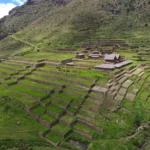
The Inca Trail was part of a much larger network of roads, the Qhapaq Ñan, used for communication, trade, and ceremony across the Inca Empire. Chaskis — official messengers — used these routes to relay information across vast distances, and priests and nobles traveled them for religious and administrative purposes. The section connecting Cusco to Machu Picchu passed through villages, agricultural terraces, and religious sites, much of which remains intact today, including stonework and terracing built without wheels or modern metal tools.
The trail and the Machu Picchu sanctuary were recognized by UNESCO in 1983. Walking it today means walking largely the same stone path used centuries ago — not a modern trail built to approximate the historical route, but sections of the actual original construction.

Types of Inca Trail Routes
Classic Inca Trail (4 days, 3 nights): 43 km (26 miles), crossing Warmiwañusca at 4,215 m (13,828 ft) on day 2 — the hardest day of the trek. Difficulty is moderate. Daily capacity is capped at 500 people including guides and staff, roughly 200 tourist spots. This is the only route that reaches Machu Picchu through the Sun Gate.
Short Inca Trail (2 days, 1 night): Roughly 12 km (7.5 miles), a shorter option for travelers with less time or a lower fitness baseline. It still requires a permit and advance booking — the “short” version doesn’t mean less regulated.
Other routes into the same region: If the Classic Inca Trail’s permits are unavailable for your dates, alternatives exist without the same permit system — our comparison of Lares and Salkantay covers two of the most common substitutes, both of which can be booked with far less lead time. The Inca Trail via Choquequirao and Inca Trail routes through the Sacred Valley also exist as longer or less-traveled variants, worth asking about directly if the Classic route doesn’t fit your dates.
What You Actually Need to Do the Trek
- A confirmed reservation with an authorized agency. Independent hiking isn’t permitted on this route under any circumstances.
- A reasonable fitness baseline. You don’t need to be an athlete, but some training beforehand — cardio and leg strength specifically — makes day 2’s climb to Warmiwañusca meaningfully easier.
- Proper gear: broken-in waterproof boots, a daypack, sufficient water capacity, sunscreen, and insect repellent for the lower, more humid sections.
- 2–3 acclimatization days in Cusco before starting, since the city itself sits at 3,400 m (11,150 ft) — high enough to affect most travelers arriving from sea level.
- Travel insurance that covers high-altitude trekking specifically, not just general trip cancellation.
- Your original passport, matching exactly the one used at booking — permits are non-transferable and tied to that specific document.
Curiosities and Facts Worth Knowing
The trail includes well over a thousand stone steps carved directly into rock along its steepest sections.
While many blogs claim the Classic Inca Trail has exactly 70,000 or 100,000 steps, as operations managers, we advise our trekkers not to fixate on a fabricated number. There is no official step count recorded by the Ministry of Culture, and modern fitness trackers vary wildly due to the uneven, rugged nature of the ancient stones.
What is undeniably true is that Day 2 (climbing to Dead Woman’s Pass) and Day 3 (descending to Wiñay Wayna) involve thousands of steep, irregular stone steps. Instead of counting steps, we train our clients to prepare for continuous, high-impact descents.
Relying on a fixed number creates false expectations; preparing your legs for hours of relentless, uneven downhill terrain is what actually matters on the trail.
It crosses genuinely distinct climate zones in a single 4-day trek — high Andean puna near the pass, cloud forest on the descent, and warmer, more humid subtropical forest as you approach Machu Picchu — which is part of why packing for temperature swings matters more here than on most treks of this length.
Along the way, you pass Inca sites that aren’t accessible any other way: Runkurakay, a small circular structure likely used as a waystation; Sayacmarca, perched on a ridge; Phuyupatamarca, whose name translates roughly to “town above the clouds”; and Wiñay Wayna, one of the largest and best-preserved sites on the route, reached on the final day before the Sun Gate.


The Mistakes We See Most Often
The most common one is underestimating how far in advance booking needs to happen. Travelers who assume they can decide on the Inca Trail a month or two before their trip often find their preferred dates — especially May through September — already gone, and end up either shifting to a different route entirely or missing the trek altogether.
The absolute most common—and stressful—mistake we see first-time bookers make is purchasing their international and domestic airline tickets before securing their Inca Trail permits. Trekkers often lock in rigid, non-refundable flight itineraries, assuming trail permits will naturally be available for those exact dates.
When they finally contact us, they discover the permits for their narrow travel window sold out months ago. Because the Ministry of Culture strictly caps entry at 500 people per day, we cannot magically create availability. Furthermore, as a strict operational policy, we do not sell or manage airplane flights.
Our strongest advice is always to book your Inca Trail permit with us first, wait for our official government confirmation, and only then purchase your flights to match your secured dates.
The second is treating the “historical” framing as purely educational and skipping physical preparation, since the trail’s cultural significance doesn’t make Warmiwañusca any less demanding at 4,215 m (13,828 ft). Fitness and history are separate parts of preparing for this trek, not substitutes for each other.
The third is bringing a passport that doesn’t exactly match the one used at booking — a renewal, a different document, even a passport with the same name but a different number can result in being turned away at the checkpoint. Confirm this weeks before you fly, not the morning you leave for the trailhead.
FAQs
Can the Inca Trail be done without a guide? No. Every hiker must be accompanied by a certified guide from an authorized agency — independent hiking isn’t permitted on this route.
Are there restrooms along the trail? Yes, basic facilities exist at the official campsites, though they’re simple rather than resort-standard — worth setting expectations accordingly.
Can I camp anywhere I want along the route? No. Only the official, government-designated campsites are permitted. This is enforced, not just a suggestion.
What happens if it rains during my trek? Rainy season (November to March, excluding February’s closure) can make some sections slippery, particularly the stone steps. Authorized agencies plan around this with appropriate gear and pacing, but it’s still worth packing real waterproofing rather than assuming it won’t affect you.
What do people ask you most before booking the Inca Trail? Before committing to a booking, the most frequent question our operations team gets on WhatsApp is: “How should I structure my days in Cusco to acclimatize without exhausting myself before Day 1?” Trekkers want to know the best way to prepare their bodies for the altitude.
We consistently advise against standard, crowded day trips that involve too much driving or heavy walking. Instead, we highly recommend adding a VIP Sacred Valley tour to their itinerary.
This premium alternative allows trekkers to explore essential archaeological sites at a lower altitude than Cusco, offering excellent acclimatization with minimal physical strain.
It perfectly sets up the body for the Inca Trail, ensuring our clients start their trek feeling energized rather than already fatigued.
Next Step
If you’re weighing whether the Classic Inca Trail is the right fit before you book, our 5 essential tips for hiking the Inca Trail covers the practical side in more depth, and our guide to the best season for the Inca Trail will help you time your booking around weather and crowd levels. If you’re still choosing between operators, see our guide to the best Inca Trail tour companies. We’re also building a complete Inca Trail guide with the full route background in one place — not live yet, but it will sit alongside this article once published. When you’re ready, our 4-day Classic Inca Trail to Machu Picchu page has current departure availability.