You booked the flight. Somewhere in the confirmation email or a forum thread, someone mentioned that Cusco sits at 3,399 meters (11,152 feet) above sea level — higher than most ski resorts, higher than anywhere most travelers have ever slept. If that number didn’t mean much until now, this guide is for you.
This isn’t a “best things to do in Cusco” list. It’s a risk-management plan disguised as an itinerary: get your body used to the altitude in the first three days so that when you finally hike to Rainbow Mountain, Humantay Lake, or Machu Picchu, you actually enjoy it instead of gasping through it — or missing it entirely because you’re stuck in bed with a headache. Once you’re through the acclimatization window, you can start picking from the wider best day tours from Cusco — but that comes later. First, the body.
What Happens to Your Body in the First 24 Hours at 3,400m
Cusco’s air has roughly 35% less oxygen per breath than sea level. Your body doesn’t know that when you step off the plane, and it takes 48 to 72 hours before you start breathing more efficiently and adapting.
In the meantime, most travelers notice some combination of:
- A dull headache, especially in the afternoon or evening
- Shortness of breath on stairs or slight inclines
- Fatigue that feels disproportionate to what you’ve actually done
- Loss of appetite or mild nausea
- Trouble sleeping, or waking up feeling like you were holding your breath
- A faster resting heart rate
None of this means something is wrong — it’s your body responding to lower oxygen, and for most visitors it’s mild and temporary. The real mistake is ignoring it and adding exertion, alcohol, or a heavy meal on top of it, which is what turns normal discomfort into a ruined day or two. We cover the physiology and warning signs in more depth in our complete guide to altitude sickness in Cusco. Here’s the practical part: what to actually do, day by day.
Day 1: Arrival — Do Almost Nothing
Your only job on day one is to let your body catch up. This is the day most itineraries get wrong by scheduling a half-day tour “since you’re already up.”
What to do:
- Take it slow from the airport. Walk, don’t rush, don’t carry heavy bags up hills.
- Hydrate more than feels necessary — altitude increases fluid loss through breathing and urination, and dehydration makes altitude symptoms worse.
- Eat light meals: soups, bread, rice, fruit. Avoid heavy, fatty, or very large meals that force your body to work harder digesting instead of adapting.
- Take a short nap if you need one — 30 to 60 minutes. Enough to recover from the flight, not so long you throw off your sleep schedule and wake up groggy and disoriented.
- Take a slow walk around your neighborhood in the late afternoon, flat ground only, just to keep circulation moving without raising your heart rate.
- Go to bed early.
What NOT to do:
- No high-altitude excursions — no Rainbow Mountain, no Humantay Lake, no Sacred Valley hikes, nothing above Cusco’s own elevation.
- No alcohol. It dehydrates you and depresses breathing, which is exactly the wrong combination at 3,400m.
- No intense exercise, gym sessions, or “let’s just walk it off” hikes uphill.
- No long naps (2+ hours) — they mess with your sleep cycle and can make you feel worse when you wake.
- Don’t skip meals entirely even if you’re not hungry; your body still needs fuel.
If you want context on what Cusco’s weather and climate will feel like while you’re doing this — since afternoon rain and cold nights are common depending on the season — our Cusco weather guide by season and zone is worth a quick read before you land.
Day 2: City Tour and Nearby Ruins — Moderate Effort
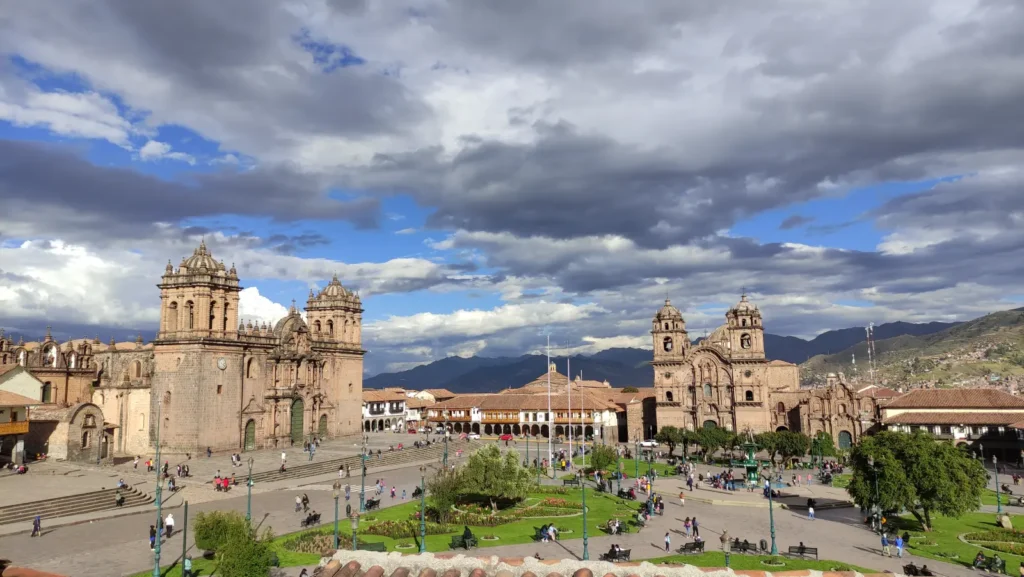
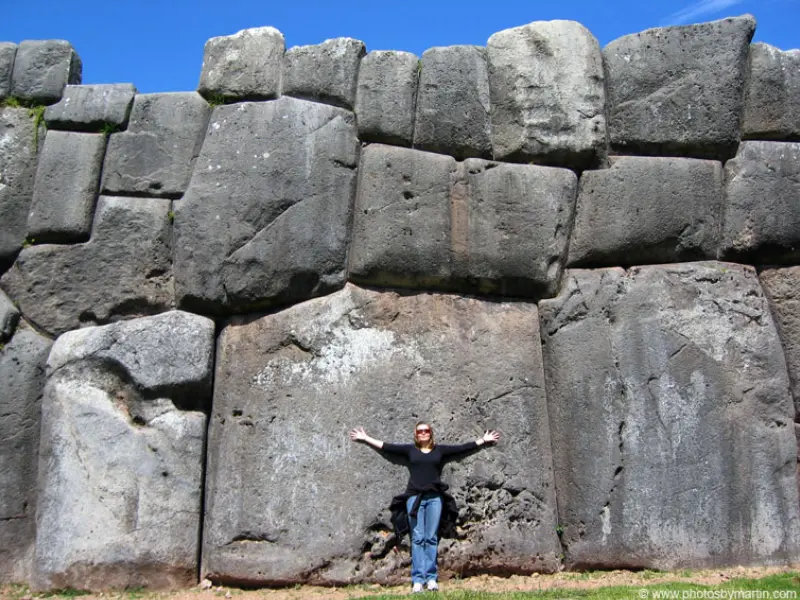
By day two, most travelers feel noticeably better than they did stepping off the plane. This is the day to introduce light activity — walking through the historic center, visiting a museum, or joining a half-day city tour that includes the nearby Inca sites (Sacsayhuamán, Q’enqo, Puka Pukara, Tambomachay). These sites sit at or slightly above Cusco’s altitude, so the exertion should stay moderate: walking on cobblestones and some stairs, not steep hiking.
A half-day Cusco city tour is the classic way to do this — guided, paced, nothing beyond walking. If you’d rather move at your own speed, a bike tour of the city is another good low-intensity option, since cycling flat urban terrain is often easier on the lungs than climbing stairs on foot.
If you’re visiting multiple Inca sites, museums, or the Cathedral, check whether they’re covered by the Cusco Tourist Ticket (BTC) — it’s usually cheaper than paying individual entries for more than two or three sites. If city walking still leaves you more winded than expected, that’s normal for day two; keep the pace easy and save any real exertion for day four onward.
Travelers who prefer archaeology and countryside over city streets can instead take a half-day tour to the South Valley of Cusco, covering sites like Tipón and Pikillacta at a similarly gentle pace. Either option works — the point of day two is light, guided activity, not a physical test.
Day 3: Sacred Valley — Lower Altitude Works in Your Favor
This is the piece most first-time visitors get backwards. Many assume the Sacred Valley is “extra” altitude on top of Cusco, so they save it for later. It’s the opposite: towns like Pisac, Urubamba, and Ollantaytambo sit around 2,800 meters — roughly 600 meters lower than Cusco. Spending day three there is effectively a partial descent, one of the most useful things you can do on an acclimatization schedule, and it lets you cover real sightseeing without adding altitude stress.
A full-day Sacred Valley tour typically covers the Pisac market and ruins, lunch in the valley, and the fortress of Ollantaytambo, all below Cusco’s elevation. If you want to go beyond the standard circuit, the Maras, Moray, and Salineras route adds the agricultural terraces of Moray and the salt pans of Salineras, both also lower than Cusco. For a broader sense of what’s worth prioritizing, see our guide to 15 essential locations in the Sacred Valley.
By the end of day three, most travelers have had one rest day, one moderate day, and one lower-altitude day — exactly the sequence that prepares you for real exertion starting on day four.
Day 4 Onward: Now You’re Ready for the High-Altitude Highlights
This is when Vinicunca (Rainbow Mountain), Humantay Lake, and the Seven Lagoons (Ausangate) come into play — all above 4,300 meters, some closer to 5,000. These hikes involve real cardiovascular effort where oxygen is genuinely scarce, and should never be the first thing you do after landing.
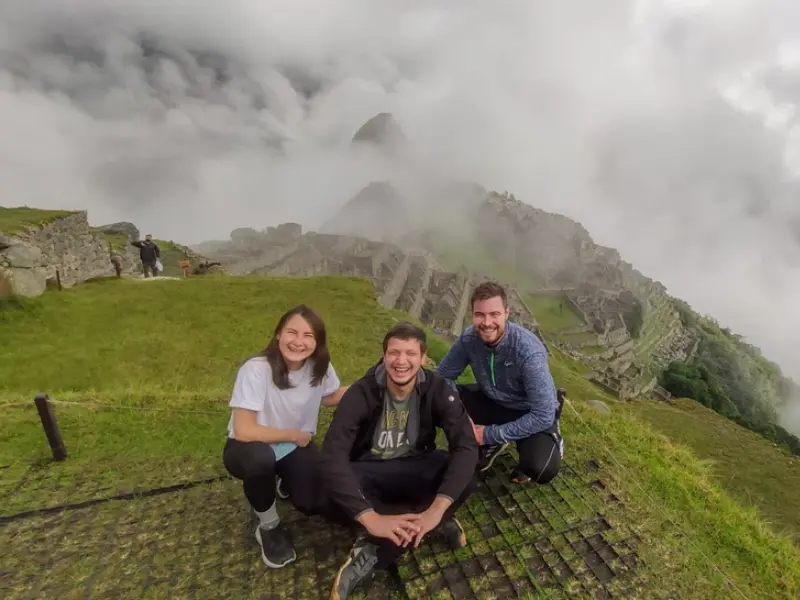
Machu Picchu itself sits lower than Cusco (around 2,430m), but getting there means a travel day of trains, buses, and walking at altitude before you descend — not something to stack onto your arrival day. Our Machu Picchu altitude guide breaks down how its elevation compares to Cusco’s and how to plan the visit.
The Two Mistakes We See Most Often
Landing and heading to Rainbow Mountain the next day. It’s a full-day hike reaching close to 5,000 meters, done by travelers who were at sea level 24 hours earlier — the single most common cause of ruined trips and turned-back hikes we see.
Stacking Machu Picchu onto the arrival day or day two. Between flights, trains, and walking at the site, this leaves no buffer for how you’re actually feeling, and burns one of the most expensive, hardest-to-reschedule parts of the trip on your worst-adjusted days.

Coca Leaves, Coca Tea, and Altitude Pills: What They Actually Do
You’ll be offered coca tea (mate de coca) at nearly every Cusco hotel, and coca leaves are sold everywhere for chewing. Traditionally used across the Andes for centuries, many travelers and locals report that coca eases mild symptoms like headache and nausea. It is not a cure for altitude sickness and won’t protect you if you overexert yourself. We cover its cultural and practical role in The Coca Leaf: The Andean Antidote.
Over-the-counter and prescription altitude medications also exist. Because these involve dosing and individual health factors we can’t assess remotely, we won’t recommend specific products or amounts here. Talk to a doctor or travel clinic before your trip — ideally a few weeks out, so there’s time to get a prescription if one is right for you.
When It Stops Being Normal
Mild headache, tiredness, and shortness of breath during days one and two are expected. The following are not, and mean you should stop, rest, and consider descending or seeking medical attention:
- A headache that gets worse instead of better, or doesn’t respond to rest and hydration
- Vomiting, especially repeated
- Confusion, loss of coordination, or difficulty walking in a straight line
- Shortness of breath at rest, not just on exertion
- A cough that produces pink or frothy fluid, or a feeling of chest tightness
These can be signs of more serious altitude illness (HAPE or HACE), which, while uncommon, requires prompt descent and medical care rather than waiting it out. If in doubt, tell your hotel or guide immediately — Cusco’s medical staff deal with altitude cases regularly and know how to respond.
FAQ
Do I really need three full days before doing anything strenuous? Most healthy travelers feel meaningfully better after 48–72 hours. Three days is a reasonable, conservative buffer — some people adjust faster, some slower.
Can I skip Cusco and go straight to a lower town to avoid altitude? Some travelers fly in and head almost immediately to the Sacred Valley to sleep lower the first night. It can help, but you’ll still need to spend time in Cusco at some point, so acclimatization is delayed, not avoided.
Is altitude sickness dangerous for everyone? No — most cases are mild and resolve with rest, hydration, and time. Risk isn’t reliably predicted by fitness or age, which is why a cautious first few days makes sense for almost everyone.
What if I only have 3 or 4 days total in Cusco? Prioritize the Sacred Valley and city sites over Rainbow Mountain or Humantay — lower-altitude, moderate-effort days are safer to compress than high-altitude hikes.
Does everyone need altitude pills? No. Many travelers acclimatize fine with rest, hydration, and a paced schedule. Whether medication makes sense for you depends on your health history — that’s a conversation for a doctor, not a blog post.