In the highlands south of Cuscofar from the hustle and bustle of Machu Picchu and the busiest routes, stands an archaeological site as impressive as it is unknown to many: Waqrapukara. Its name, which in Quechua means “fortress of horns”, not only describes its unique shape, but also its sacred and strategic character. For those seeking an authentic experience, full of history, nature and Andean spirituality, Waqrapukara is a must-see.
Contents
Location and access
Waqrapukara is located in the district of Acos, in the province of Acomayo, about three hours by car from the city of Cusco. The starting point for the hike is usually the peasant community of Llusita, where visitors must register and pay a community fee of around 15 to 20 soles. From there, the ascent takes between two and three hours, depending on the visitor’s pace and physical condition. It is also possible to hire horses in the area to facilitate the journey, especially recommended for those who are not used to the altitude or prefer a more relaxed experience.
A common internet search is “how to get to Waqrapukara from Cusco”, and the most practical answer is still to hire a tour or private transport to Acos, and from there follow local directions. Signage has improved in recent years, but a community guide will always be the best option for understanding the historical and cultural context of the site.
Meaning and history
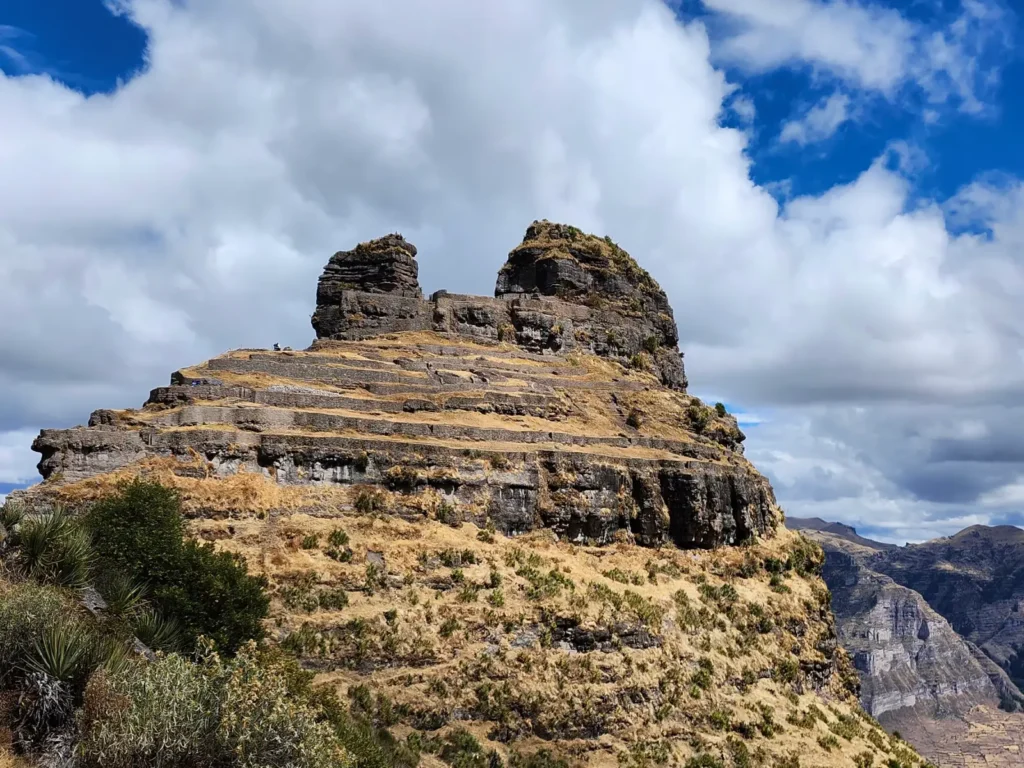
The name Waqrapukara is not decorative. It comes directly from the Quechua: “waqra” (horn) and “pukara” (fortress or fortified high place). From certain angles, the rock formations that crown the peak actually look like two horns emerging from the mountain, a powerful image that inspired both its name and its symbolic function.
Although there is still no absolute consensus among archaeologists, it is believed that the site was originally built by pre-Inca cultures, possibly the Qanchis or Collaguas, and later expanded and used by the Incas as a ceremonial and astronomical observation center. Its privileged location – more than 4,300 meters above sea level – made it a strategic point to watch over the surrounding valleys and, at the same time, a place of connection with the divine. Many visitors describe a deep sense of tranquility and spiritual energy when standing on the summit, something that reinforces the theory of its ritual use.
What to see and what to expect
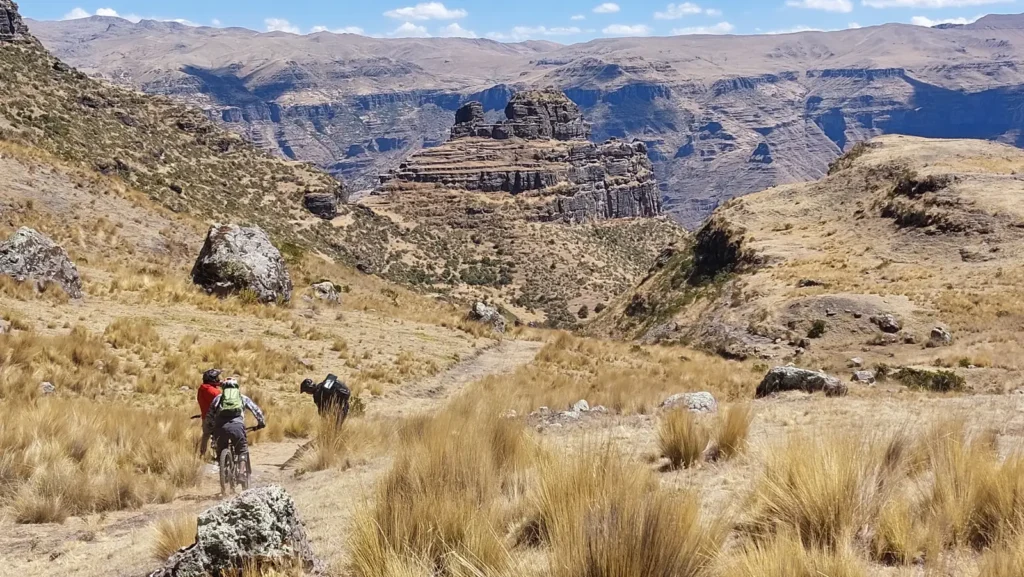
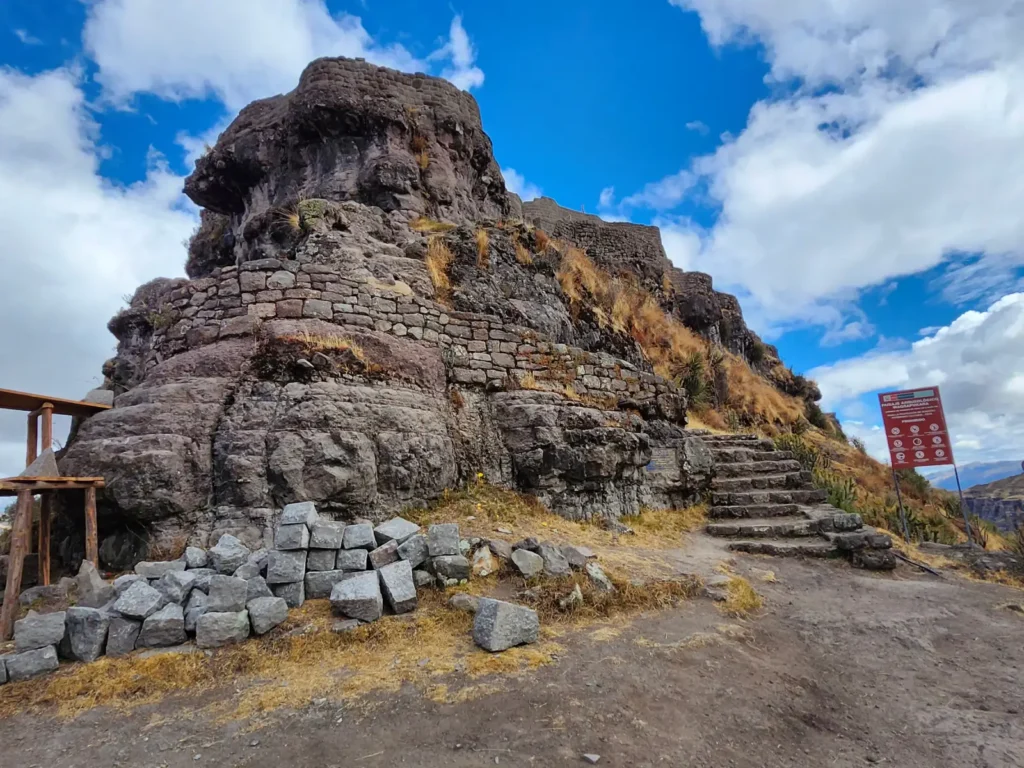
Once at the top, the effort of the ascent is rewarded with panoramic views that encompass deep valleys, highland lagoons and seemingly endless mountain ranges. The archaeological structures, although not as extensive as in other Inca sites, are well preserved: finely carved stone walls, ceremonial enclosures, agricultural terraces and tunnels that invite exploration.
The most photographed, without a doubt, are the rock “horns” that give the place its name. It is common to see visitors posing among them, with the Andean sky as a backdrop. But Waqrapukara is not just a backdrop for photos. It is a place to walk calmly, listen to the wind, watch the flight of Andean birds – sometimes even condors – and feel the presence of those who built this sanctuary centuries ago.
Ideal season and preparation
The best time to visit Waqrapukara is during the dry season, which runs from April to October. In these months, roads are firmer, clear skies allow for full views, and the likelihood of rain is minimal. Between November and March, conditions can become more challenging: slippery roads, dense fog and cooler temperatures.
Altitude is a factor to consider. At more than 4,300 meters, it is essential to acclimatize beforehand in Cusco or Sicuani, hydrate constantly and avoid sudden efforts. Warm clothing, sunscreen, a hat, energy snacks and enough water are essential. Hiring a local guide not only enriches the visit, but also directly supports the communities that guard this heritage.
Waqrapukara compared to other destinations
The idea is not to compete with Machu Picchu, but to offer a complementary alternative. While Machu Picchu impresses with its grandeur and architectural sophistication, Waqrapukara captivates with its isolation, natural energy and connection to the ancestral. It is an ideal destination for travelers seeking to escape the crowds and live a more intimate experience with Andean culture.
In recent years, Waqrapukara has gained popularity on social media, especially among photographers and travelers looking for “hidden gems” of Peru. Searches such as “Waqrapukara Instagram” or “Waqrapukara photos” have grown exponentially, which has boosted local tourism, but has also generated the need to manage the flow of visitors to preserve the environment.
Costs and lodging
There is no official ticket issued by the Ministry of Culture, as in other archeological sites. Access is managed directly with the Llusita community for a maintenance and conservation fee. It is also possible to hire local guides for an additional fee, which usually ranges between 30 and 50 soles.
For those who wish to stay in the area, the closest lodging options are in Sicuani or Cusco. Some families in Acos offer basic lodging with rural experience, ideal for those seeking cultural immersion. It is advisable to coordinate in advance, especially in high season.
Conclusion
Waqrapukara is not just another destination on Cusco’s list of archaeological sites. It is a complete experience: a physical journey to the top of the mountain, and a spiritual journey to the essence of the Andes. It combines history, adventure, nature and tradition in one place, and does so without sacrificing authenticity or tranquility.
For those who seek to go beyond the obvious, Waqrapukara represents a unique opportunity to connect with deep Peru, with its ancient roots and unspoiled landscapes. It is worth the effort, planning and respect that this place deserves.