If there’s one reason a longer Manu tour is worth the extra days, it’s the oxbow lakes. Cocha Salvador and Cocha Otorongo are where the Reserved Zone’s wildlife actually concentrates, and they’re the main reason a 6 to 8-day itinerary sees animals that a short Cultural Zone visit simply doesn’t. This guide covers what these lakes are, how a visit actually works, and which of our tours reach them. For the wider context on the Reserved Zone itself, see our complete Manu Reserved Zone guide.
What Is an Oxbow Lake (a Cocha), and Why It Matters
An oxbow lake, called a cocha locally, forms when a meandering river cuts off one of its own bends over time, leaving behind a crescent-shaped body of still water no longer connected to the main current. Because the water stops moving, these lakes turn into calm, nutrient-rich ecosystems that concentrate far more life per square meter than the surrounding jungle or the river itself. That’s the practical reason they matter for wildlife watching: still water draws prey, and prey draws the predators people actually come to Manu hoping to see.
Giant River Otters: The Flagship Species
The giant river otter is the animal most associated with these lakes, and for good reason. This is an endangered species that lives in tight, social family groups and hunts cooperatively, mostly for fish, right in these calm waters. On a standard jungle tour that doesn’t reach a cocha, giant otters are close to impossible to see; this is genuinely one of the only reliable places in the Peruvian Amazon to encounter them, which is part of why oxbow lake time gets built specifically into the longer Manu itineraries rather than treated as a side stop.
Cocha Salvador vs. Cocha Otorongo
Both lakes sit inside the Reserved Zone, but the visit itself looks different at each one.
| Cocha Salvador | Cocha Otorongo | |
|---|---|---|
| How you view it | Silent, paddle-driven catamaran on the water | 15 m (50 ft) observation tower on the shore |
| Size | The largest lake in the Reserved Zone | Smaller, closer to the main trail network |
| Typical sightings | Giant otter families, black caimans, macaws overhead | Monkeys in the canopy, birdlife, otters from a distance |
| Best for | Travelers who want to be on the water | Travelers who prefer solid ground, good for families |
On Cocha Salvador, exploring by catamaran keeps disturbance to a minimum, which is exactly why otter families tolerate boats close enough for a real look. Keep an eye on the muddy banks for black caimans and on the canopy above for macaws passing overhead.
At Cocha Otorongo, the observation tower does the work instead of a boat, giving you an elevated, stationary vantage point over the water. It’s a strong spot for birdwatchers and for catching monkeys moving through the canopy, without needing to get into a boat at all.


How the Visit Actually Works
Cocha visits are built around early mornings, since wildlife activity peaks around dawn; expect a wake-up call as early as 4:30 AM on the day of a lake visit. On the water, guides keep the group quiet, since sound carries a long way over still water and otters and birds spook easily. Time at each cocha typically runs a few hours rather than a quick stop, enough to actually wait out a sighting instead of passing through.
Which Manu Tours Reach the Oxbow Lakes
This is the detail that trips people up when booking: not every Manu itinerary reaches Cocha Salvador or Cocha Otorongo. Our 6-day, 5-night Manu Reserved Zone tour is built around full access to both lakes, and our 7-day, 6-night and 8-day, 7-night itineraries add extra time at the cochas on top of that, which is where the higher odds of jaguar and tapir sightings come from.
If you’re still deciding how many days to book, our full comparison of Manu tours by duration breaks down exactly what each itinerary length includes.


Camping Near the Cochas
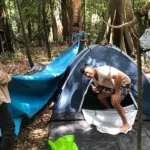
Most Reserved Zone itineraries that include the oxbow lakes also involve camping nearby, which is part of what makes the early dawn departures manageable. Our guide to camping in the Manu jungle covers what a night under the Amazon sky actually looks like, and our camping equipment is set up specifically for this kind of humid, remote environment.
Practical Facts for Your Visit
The area around the lakes sits low and hot: altitude ranges from 300 to 400 m (984 to 1,312 ft) above sea level, and daytime temperatures regularly pass 30°C (86°F) with high humidity year-round. The dry season, May to October, is the best time to visit, since animals concentrate more predictably around shrinking water sources. Pack lightweight long sleeves, DEET-based repellent, solid binoculars, and a waterproof poncho or dry bag for your camera gear, humidity and sudden downpours are both a given here.
Ready to See the Oxbow Lakes for Yourself?
Cocha Salvador and Cocha Otorongo are the reason to book a longer Manu itinerary rather than a short one. Our 6-day, 5-night Manu Reserved Zone tour is built around full access to both lakes, with naturalist guides who know exactly when and where to look. Contact us to start planning your dates.
Frequently Asked Questions
What is an oxbow lake, and why does Manu have them? An oxbow lake forms when a meandering river cuts off one of its bends, leaving behind a still, crescent-shaped body of water. In Manu, this still water concentrates wildlife far more densely than the surrounding jungle.
Can I see giant river otters anywhere else in Manu besides the oxbow lakes? Not reliably. The oxbow lakes are close to the only place in the Reserved Zone where sightings are consistent rather than a matter of luck.
How long does a visit to Cocha Salvador or Cocha Otorongo take? Typically a few hours per visit, often at dawn when wildlife activity is highest, rather than a brief stop.
Do I need to be a strong swimmer or comfortable in boats to visit Cocha Salvador? No. The catamaran is paddle-driven and stable, and life jackets and guide supervision are standard on the water.
Which Manu tour should I book if I specifically want to see the oxbow lakes? Our 6-day, 5-night Reserved Zone tour is built around full access to both cochas. The 7 and 8-day versions add extra time there for higher odds of rarer sightings.
Is Cocha Otorongo accessible without getting in a boat? Yes. The observation tower lets you view the lake from the shore, which makes it a good option if you’d rather stay on solid ground.
What’s the best time of year to visit the oxbow lakes? The dry season, May to October, when water levels drop and animals gather more predictably around what’s left of the open water.