Contents
- 1 A World-Renowned Natural Sanctuary
- 2 Geographical Location and Access: Between the Mountains and the Deep Jungle
- 3 Unparalleled Biodiversity: Nature’s Living Laboratory
- 4 Indigenous Peoples: Guardians of the Rainforest
- 5 Sustainable Tourism: Explore Without Harming
- 6 Threats and Challenges: The Fight for Conservation
- 7 Why Manu Matters to the World
- 8 Conclusion: A Legacy We Must Protect Together
A World-Renowned Natural Sanctuary
The Manu Nature Reserve, located in southeastern Peru, is much more than a protected area. It is a living testament to the biological and cultural wealth that still exists on our planet. Declared a Natural World Heritage Site by UNESCO in 1987 and recognized as a Biosphere Reserve, Manu represents one of the most diverse and intact ecosystems on the planet. Its conservation benefits not only Peru, but also the global balance of life on Earth.

Geographical Location and Access: Between the Mountains and the Deep Jungle
The Manu Reserve extends across the regions of Madre de Dios and Cusco, covering an area of more than 1.8 million hectares. Its territory descends from 4,000 meters above sea level in the Andes to 200 meters in the low Amazon jungle. This unique altitudinal gradient allows for a variety of ecosystems: from montane and cloud forests to floodplains and Amazonian lakes.
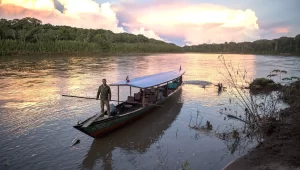
Access to the reserve requires planning. The most common route starts from Cusco, crossing the Abra Acjanaco, descending through the Andean-Amazonian transition zone, until reaching the lodges and research centers in the Alto Madre de Dios river area. The journey, although challenging, is part of the experience: dirt roads, navigable rivers, and the growing sensation of entering a world not yet dominated by man.

Unparalleled Biodiversity: Nature’s Living Laboratory
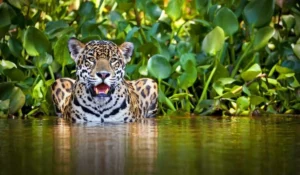
Manu is considered by biologists and conservationists to be one of the most biodiverse places on the planet. It is home to more than 200 species of mammals, including the jaguar, the Andean tapir, the spectacled bear, and 13 species of primates. As for birds, there are over 1,000 registered species, representing almost 10% of all the birds in the world. It is common to see red and blue macaws gathering at clay collpas, a unique natural spectacle.
The botanical wealth is equally impressive. More than 15,000 species of higher plants have been identified, many of them endemic or not yet classified by science. From tiny orchids to centuries-old canopy trees, every corner of Manu holds secrets waiting to be discovered. The rivers and lakes are also home to a huge variety of fish, amphibians, and reptiles, including black caimans and anacondas.

Indigenous Peoples: Guardians of the Rainforest
The Manu Reserve not only protects flora and fauna, but also living cultures that have inhabited these territories for centuries. Indigenous communities such as the Matsigenka, Yine, and Harakmbut maintain traditional lifestyles based on shifting agriculture, fishing, and sustainable hunting. Their ancestral knowledge of medicinal plants, natural cycles, and forest management is invaluable.
In addition, in exclusion zones of the reserve, there are groups living in voluntary isolation, such as the Mashco-Piro and others whose identity is still protected. The Peruvian government, through the National Service of Natural Protected Areas (SERNANP), has established intangible zones where entry is not permitted, respecting their right to live without external contact. This coexistence between biological and cultural conservation makes Manu a unique model of comprehensive protection.

Sustainable Tourism: Explore Without Harming
Visiting the Manu Reserve is a transformative experience, but it must be done responsibly. Tourism is regulated and only allowed in specific areas, always accompanied by authorized guides and certified operators. Activities include interpretive walks, wildlife viewing, river navigation, visits to macaw clay licks, and stays in eco-lodges.
The focus of tourism in Manu is low impact and high educational value. It is not about seeking extreme thrills, but about learning to listen to the jungle, understand its rhythms, and respect its limits. Sleeping to the sound of insects, watching a jaguar cross stealthily, or contemplating the flight of a harpy eagle are experiences that change one’s perception of the natural world.
Threats and Challenges: The Fight for Conservation
Despite its protected status, the Manu Reserve faces constant threats. Illegal agricultural expansion, gold mining, species trafficking, and climate change put its integrity at risk. The construction of unplanned roads and demographic pressure in neighboring areas also lead to habitat fragmentation.
The response has been a joint effort between the state, NGOs, local communities, and the scientific community. Satellite monitoring projects, community patrols, environmental education, and the promotion of sustainable alternative economies are some of the strategies underway. The key is to strengthen local governance and ensure that the benefits of conservation directly reach those who protect it on a daily basis.
Why Manu Matters to the World
The Manu Reserve is not a luxury, it is a global necessity. It acts as a climate regulator, capturing millions of tons of carbon dioxide. Its rivers feed watersheds that sustain human and wildlife life downstream. Its forests generate oxygen, recycle nutrients, and maintain the balance of species that, if they disappear, trigger unpredictable chain reactions.
In addition, Manu is a natural laboratory for science. Each expedition reveals new species, behaviors, or ecological interactions. In a world where the sixth mass extinction is advancing, places like Manu are the last refuges of hope for planetary biodiversity.
Conclusion: A Legacy We Must Protect Together
The Manu Nature Reserve is a reminder of what the planet can offer when it is respected. It is a sanctuary, a living archive, an ancestral home, and a dream destination for those seeking to reconnect with the essential. But its future is not guaranteed. It depends on sound public policies, citizen awareness, responsible tourism, and a global commitment to life in all its forms.
Protecting Manu is not just Peru’s task. It is a responsibility shared by humanity. Because the Manu rainforest is not only home to nature… it is home to the future.