Imagine walking the same stone paths that the Incas traversed more than 500 years ago, surrounded by towering mountains and a mystical cloud forest. Many travelers believe that the only prize of this route is reaching the wonder of the world, but the real magic lies in the journey itself.
If you are wondering what to see on the Inca Trail, the answer is a fascinating collection of ancient cities hidden in the Andes. In this article, we will discover the Inca Trail archaeological sites, unraveling the mysteries that make this route a life-changing experience.
Exploring the Inca Trail archaeological sites: An open-air museum
The classic 4-day Inca Trail places is designed to surprise you step by step. It is not just a physical hike; it is a pilgrimage. Throughout the Inca Trail ruins tour, you will find true gems of pre-Hispanic architecture.


The first wonders: Llactapata and Runkurakay
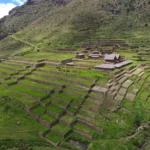
Shortly after starting your Inca Trail Peru trekking, you will encounter Llactapata, an extensive agricultural complex that supplied other citadels. Further on, after conquering the challenging Dead Woman’s Pass, you will discover Runkurakay, a semicircular structure that served as a lookout post and tambo (resting place).
Ceremonial centers: Sayacmarca and Conchamarca
Among the most photogenic Inca sites on the Inca Trail is Sayacmarca, or “Inaccessible Town.” Built on a rocky escarpment, it offers spectacular views. Very close by is Conchamarca, a small but detailed enclosure that functioned as an astrological observatory.
The final stretch: phuyupatamarca wiñay wayna inti punku
As you get closer to the goal, the Inca Trail attractions become more impressive. Phuyupatamarca (“The city above the clouds”) dazzles with its ceremonial baths. Then you will reach Wiñay Wayna (“Forever Young”), considered by many to be the most beautiful site before the final citadel. Finally, you will cross the Inti Punku (Sun Gate), the exact spot where you will have your first panoramic view of Machu Picchu.
The fascinating history of the Inca Trail Peru
To understand what to visit on the Inca Trail, we must first understand its purpose. This route was part of the Qhapaq Ñan, the immense road network of the empire. The Inca Trail Peru route history tells us that this specific path was not commercial, but strictly religious and reserved for the nobility.
By walking here, you are traveling through the most sacred Inca Trail Inca heritage. Every step carved into the bedrock and every temple strategically positioned in the Machu Picchu route archaeological sites was intended to spiritually prepare the traveler before their arrival at the sacred citadel.
Valuable Data: Preparation for your Inca Trail sites trek
Don’t let yourself be carried away only by the beauty of the archaeological sites of the Inca Trail; it is essential to be well prepared. Here are the real facts you need to manage:
- Altitude: The highest point is the Warmiwañusca Pass (Dead Woman’s Pass) at 4,215 m.a.s.l. The lowest point is Aguas Calientes at 2,040 m.a.s.l.
- Weather: Variable. Intense cold in the high parts at night (can drop to 0°C) and humid/subtropical weather when approaching Machu Picchu.
- Best season: The dry season, from May to October, is ideal to avoid heavy rains. February is closed for maintenance.
- Difficulty: Moderate to demanding. Requires good physical condition due to long days of hiking and thousands of stone steps.
- What to bring: Broken-in trekking boots, rubber-tipped poles, layers of thermal clothing, waterproof jacket, headlamp, and a good repellent for the high jungle.


Expert Tips: Inca Trail archaeological sites guide
As local specialists, at Local Trekkers Peru we know the secrets of the Inca Trail ruins. Here are our best tips to make the most of the route:
- Smart acclimatization: Arrive in Cusco at least 2 or 3 days before the trek. Do not head straight to the mountain. Drink coca tea and hydrate constantly.
- Make the most of your time in Wiñay Wayna: Many groups pass by due to fatigue. Take at least 45 minutes to explore its agricultural terraces; there are usually fewer people and the energy of the place is unmatched.
- Understand your package: Always ask about what the Inca Trail tour includes. A good service must guarantee your permits (which sell out months in advance), comfortable tents, an expert mountain chef, and well-paid, equipped porters.
- Sunrise at Inti Punku: Get up early on the last day. Arriving at the Sun Gate with the first rays of light dissipating the fog over Machu Picchu is a life-changing experience.
Conclusion
Exploring the Inca Trail archaeological sites is much more than an extreme hike; it is a total immersion into the engineering, spirituality, and resilience of one of history’s greatest civilizations. Every ruin tells you a piece of the history of the Andes.