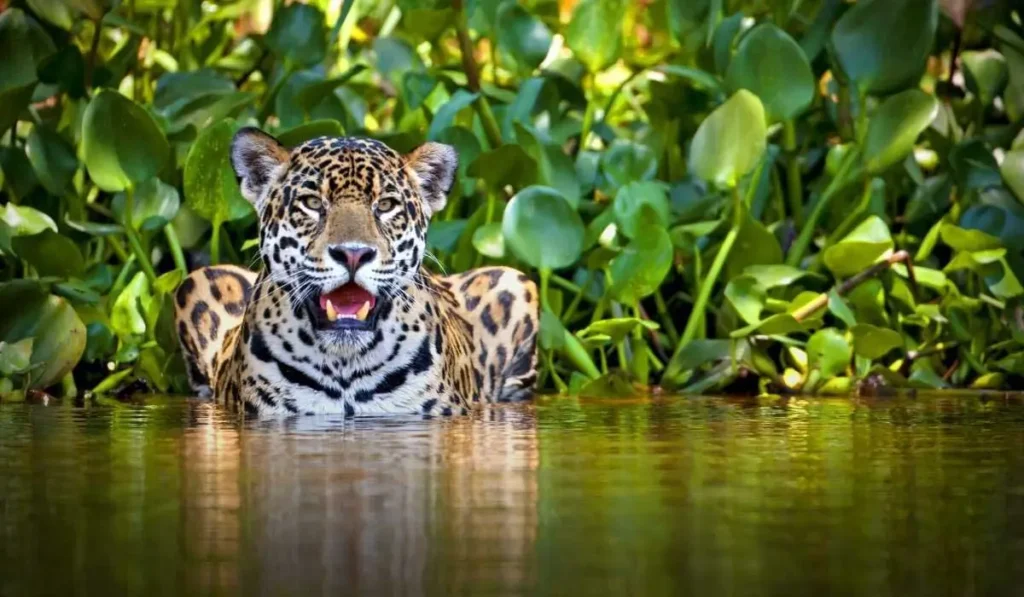
A confirmed jaguar sighting is the top item on most travelers’ Manu wish list, and we’d rather be honest with you upfront: no tour, ours included, can promise one. Jaguars are shy, well camouflaged, and genuinely elusive, even in the areas where they’re most commonly seen. What we can do is explain exactly what raises your odds, so you go in with realistic expectations and a trip that’s worth it either way. For the full picture of where jaguars fit into a Manu trip, see our complete Manu Reserved Zone guide.
Where and When Jaguars Are Actually Seen
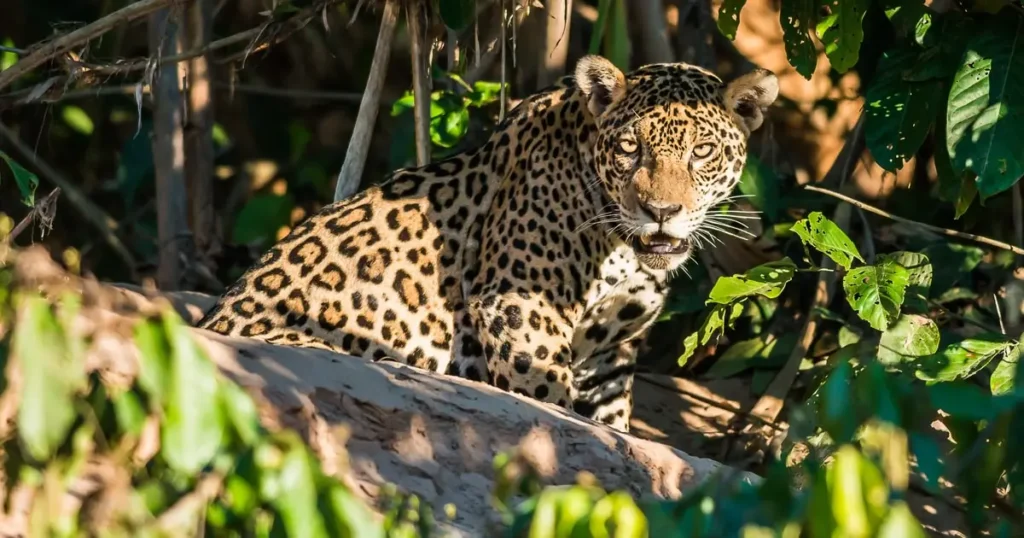
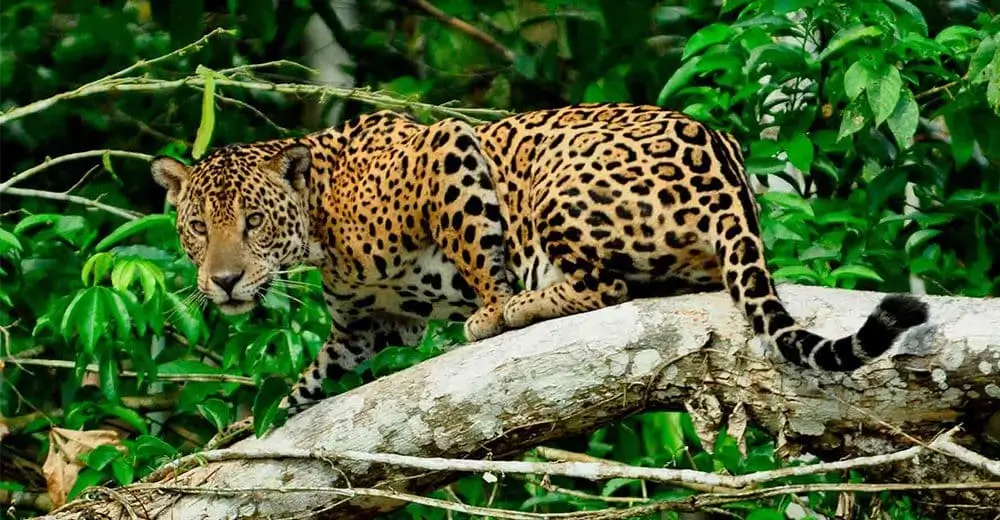
Jaguars are spotted almost exclusively from the river, on the sandy riverbanks where they come to hunt capybaras or rest in the sun. This is a dry-season pattern specifically: from May to October, river levels drop and expose the wide sand beaches jaguars favor, whereas in the wet season those beaches are underwater and sightings become far less likely. Within a day, the best windows are early morning and late afternoon, when temperatures are cooler and jaguars are more active, rather than the heat of midday.
Why the Reserved Zone Gives Better Odds
The Cultural Zone sees far more human traffic, boats, lodges, day visitors, and that alone makes it a poor place for a naturally shy predator to feel secure. The Reserved Zone is different: entry is limited, access is controlled, and the riverbanks stay undisturbed enough that jaguars actually use them. If you’re deciding how many days to spend in the Reserved Zone specifically because of this, our comparison of 4 vs 7-day Manu tours breaks down what extra days actually add to your odds.
| Factor | Lower odds | Higher odds |
|---|---|---|
| Zone | Cultural Zone | Reserved Zone |
| Season | Wet season (Nov-Apr) | Dry season (May-Oct) |
| Time of day | Midday | Early morning, late afternoon |
| Trip length | 3-4 days | 6-8 days, more river time |
How More Days Raise Your Chances
This isn’t a guessing game so much as simple math: more hours on the river during the golden hours means more chances for a sighting to line up. A 3 or 4-day Cultural Zone trip spends comparatively little time in jaguar habitat, while our 7-day, 6-night and 8-day, 7-night Reserved Zone tours build in the most river time of any of our itineraries, which is exactly where the odds improve most.
How Our Guides Actually Track Them
Local guides who spend thousands of hours on these rivers use a few consistent methods rather than luck alone:
- Listening for alarm calls: jaguars move silently, but monkeys and birds don’t stay quiet when a predator is nearby, and that’s often the first clue.
- Silence on the boat: cruising slowly along the Madre de Dios or Manu river with the group quiet is the single biggest factor within a guide’s control.
- Working the golden hours: dawn patrols and late-afternoon river sweeps, when light and animal activity both cooperate.
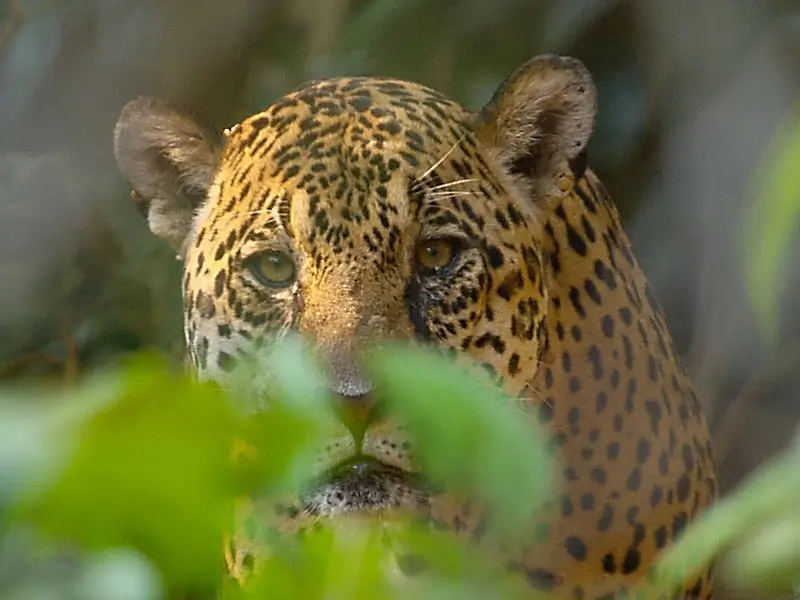
- Scanning the shadows: jaguars rarely sit in plain sight, so guides train their eyes on shapes and outlines under the overhanging riverbank vegetation rather than open ground.
What Else You’ll See, Jaguar or Not
Even on a trip without a jaguar sighting, and that’s the more common outcome, Manu delivers plenty on its own. Our guides regularly spot monkeys along the riverbanks and in the canopy, a wide range of species covered in our Manu birdwatching guide, and the broader mix of wildlife detailed in our guide to Manu’s animals. A jaguar sighting is the bonus, not the trip itself.
Practical Facts for Your Trip
Altitude in this part of the jungle runs low, from 150 to 300 m (492 to 984 ft), so altitude sickness isn’t a concern here. Expect tropical heat and humidity, with daytime temperatures between 25°C and 35°C (77°F to 95°F). Difficulty is low to moderate: most of the search happens from a motorized boat, so the physical demand is more about heat tolerance than exertion. Bring quality binoculars (8×42 or 10×42), a telephoto lens if you’re shooting photos (400mm or longer), and breathable, neutral-colored clothing.
Ready to Try Your Luck?
If maximizing river time in the Reserved Zone is your priority, our 7-day, 6-night Manu Reserved Zone tour is built around exactly that. We handle the permits, logistics, and river transport; you just need to show up ready with your binoculars.
Frequently Asked Questions
What are the real odds of seeing a jaguar in Manu? There’s no fixed number we can honestly give you, sightings vary trip to trip, but odds are meaningfully better in the Reserved Zone during the dry season on a longer itinerary than on a short Cultural Zone trip.
When is the best time of year to see a jaguar in Manu? The dry season, May to October, when low water levels expose the sandy riverbanks jaguars use to hunt and rest.
What time of day are jaguars most active? Early morning and late afternoon, the cooler parts of the day, rather than midday heat.
Does a longer Manu tour actually improve my chances of seeing a jaguar? Yes, mainly because it means more hours on the river during the times jaguars are active, not because of anything different about the tour itself.
Will I still enjoy my trip if I don’t see a jaguar? Most visitors do. Monkeys, birdlife, and the broader wildlife of the Reserved Zone are consistent sightings even on trips without a jaguar.
Can I see a jaguar in the Cultural Zone? It’s possible but far less likely, since the Cultural Zone sees more human traffic and jaguars naturally avoid disturbed areas.
What gear should I bring specifically for jaguar spotting? Binoculars (8×42 or 10×42 work well) and, if you want photos, a telephoto lens of at least 400mm, since sightings are usually at a distance.